INSIDER: Medical
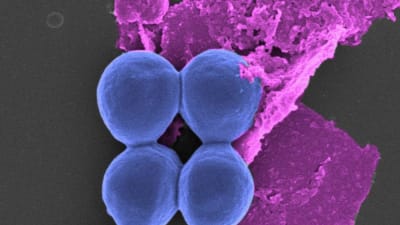
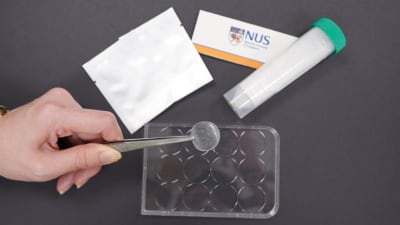
Researchers have invented a nano-thin superbug-slaying material that could one day be integrated into wound dressings and implants to prevent or heal bacterial infections. The...
INSIDER: Nanotechnology
In living organisms, cells have a very high capacity to process and communicate information by moving molecules or ions through tiny channels that span the cell membrane. Researchers have...
Podcasts: Medical
Medtech companies must adapt to a landscape that is now data-centric systems vs. equipment-centric.
News: Manufacturing & Prototyping
Sterling Medical Devices and RBC Medical Innovations has rebranded the combined company as Vantage MedTech. According to the company, leveraging decades of industry...
News: Medical
Excelitas Technologies Corp., which produces photonic solutions for the industrial and medical markets, has signed a definitive agreement with Heraeus Group (Hanau, Germany) to...
INSIDER: Robotics, Automation & Control
A collaboration between Lawrence Berkeley National Laboratory and Genentech, a member of the Roche Group, is working to break through drug-delivery bottlenecks by designing...
INSIDER: Medical
A team of researchers has recently developed easy-to-use oral films that enable painless, efficient, and discreet drug administration. The novel oral film releases drugs into the bloodstream via...
INSIDER: Sensors/Data Acquisition
A smart pill the size of a blueberry could be a game changer in the diagnosis and treatment of bowel diseases. That’s because it is the first technology compatible with ingestion that can...
Quiz: Robotics, Automation & Control
The sport of golf continues to evolve as technology enables golfers to increase distance and accuracy and improved overall performance. Take this quiz to learn more about the impact of medical technology on the sport and the players.
INSIDER: Manufacturing & Prototyping
New 3D printed hydrogel dressings can speed up and improve the healing process for patients with second-degree burns. The dressings have bioactive formulations to better address...
INSIDER: Medical
A photonic material-based “soft, ultrathin, radiative-cooling interface” that greatly enhances heat dissipation in devices, with temperature drops more than 56 °C,...
News: Medical
SABIC and SINOPEC announced the commercial operation of a new polycarbonate (PC) plant at their 50–50 joint venture (JV) — SINOPEC SABIC Tianjin Petrochemical Co. Ltd. (SSTPC). Khalid Hashim...
Products: Electronics & Computers
See the product of the month: A micro-coaxial cable from Times Microwave. It can be used for single-use and reusable sterilizable applications as a discrete transmission line or integrated into a cable bundle for higher-density solutions.
Features: Medical
With COVID behind them and patients and their physicians returning to elective procedures, Smith & Nephew is seeing strong market revenue growth in 2022, according to CEO Deepak Nath, who spoke during its first quarter trading update.
Global Innovations: Manufacturing & Prototyping
One of the challenges in treating burn victims is the frequency of dressing changes, which can be extremely painful. To bring relief to this pain and related problems, researchers have created a new type of wound dressing material using advanced polymers.
Products: Robotics, Automation & Control
This month's product focus is on pumps and valves, including tubular solenoids, flow sensors,
pneumatic micropumps, and a centrifugal pump.
Products: Tubing & Extrusion
See the new products and services, including servo motor drives, miniature linear voice coil servo motors, an extrusion crosshead, a micro drive, and more.
Briefs: Medical
Nearly 700k people in the U.S. die from heart disease every year. To help prevent those deaths, researchers have developed a new device to monitor and treat heart disease and dysfunction in the days, weeks, or months following such events.
Briefs: Medical
Heart valves can be surgically replaced, but children whose bodies are still growing may need multiple, highly invasive surgeries to replace their valves with larger ones, putting them at risk. Kevin Kit Parker’s team vowed to fix this problem.
Briefs: Medical
The EPA issued two separate proposals earlier this year covering the use of EtO for device sterilization: the National Emission Standards for Hazardous Air Pollutants and the preliminary interim decision under the Federal Insecticide, Fungicide, and Rodenticide Act.
Briefs: Sensors/Data Acquisition
A patent-pending method developed by Purdue University researchers brings the public one step closer to clothes with wearable electronics that don’t affect the wearer’s comfort. The method also simplifies the manufacturing process and boosts sensing capability.
From the Editor: Medical
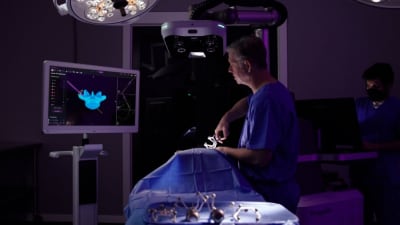
Proprio, a Seattle-based surgical technology company, achieved a significant milestone this year when its flagship surgical navigation platform, Paradigm™ obtained FDA 510(k) clearance.
Briefs: Design
According to the World Health Organization, strokes are the leading cause of disability and the second-leading cause of death worldwide. One-fourth of people over 25 can expect to experience one during their lifetime.
Briefs: IoMT
As the industry continues to implement new supply-chain solutions like RFID for improved visibility, patients can look forward to a future where timely access to critical drugs and medical devices is assured, and the quality of care is greatly enhanced.
R&D: Sensors/Data Acquisition
A research team has designed a fall-risk assessment system that enables doctors to create personalized risk-management strategies for patients based on their individual movement patterns at home.
R&D: Medical
AI glasses with a silent-speech recognition interface use acoustic-sensing and artificial intelligence to continuously recognize up to 31 unvocalized commands, based on lip and mouth movements.
R&D: Materials
Researchers have designed wood-derived electronic-skin substrates for electrophysiological monitoring that are functional, sustainable, and comfortable.
R&D: Wearables
Researchers have designed a thin, digital display that can bend in half or stretch to more than twice its original length while still emitting a fluorescent pattern.
R&D: Medical
An ingestible x-ray dosimeter detects radiation dose in real time. Researchers found that they could provide approximately five times more accurate monitoring of the dose delivered than current standard methods.























 INSIDER: Medical
 INSIDER: Sensors/Data Acquisition
 Features: Electronics & Computers
 Podcasts: Design
 INSIDER: Wearables
 Podcasts: Medical

 Podcasts: Medical
 On-Demand Webinars: Manufacturing & Prototyping
 Podcasts: AR/AI
 Podcasts: Materials