The first practical fuel cells were developed for Johnson Space Center in preparation for NASA’s Apollo missions because batteries would have weighed too much. The group that produced these and subsequent NASA fuel cells is now called HyAxiom Inc. and sells commercial fuel cells to power buildings and even utilities, still producing them at the same facility in South Windsor, Connecticut.
NASA’s James Webb Space Telescope pushed optical modeling capabilities, driving advances in software used to design medical and augmented reality devices.
A highly emissive coating that NASA invented to protect the heat shield on a planned spaceplane in the 1990s was licensed and turned into the Emisshield product line. Now it’s been incorporated into textiles by Clean Textile Technology LLC of North Naples, Florida, under the brand name Trizar and improves temperature regulation in various outdoor gear and other apparel.
In this compendium of recent articles from the editors of Automotive Engineering and Battery & Electrification Technology, learn about the latest advances in EV motors and batteries, e-powertrain design and...
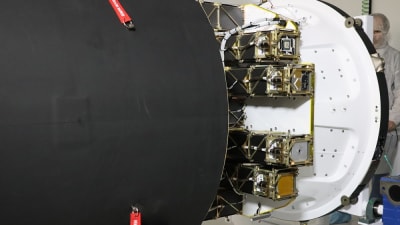
To fit tiny satellites into tinier spaces on launch vehicles, Goddard Space Flight Center developed a new equipment-deployment system that’s more reliable than previous solutions. Thermal Management Technologies LLC of Logan, Utah, later licensed this technology for use on commercial satellites.
When Johnson Space Center needed an Ethernet switch on the Orion capsule to manage data the spacecraft beams back to Earth, DornerWorks Ltd. of Grand Rapids, Michigan, was subcontracted to construct a spaceworthy piece of hardware. The company now licenses this switching technology to other firms for applications such as self-driving cars.
NASA is making progress in solving some of the most daunting challenges of future space exploration – how to survive the extreme cold of the lunar night, generate oxygen for Mars colonies, and create artificial...
As NASA has continued to place more eyes in the sky and has made the resulting data troves freely available, a number of companies have sprung up to turn that information into tools for farming.
One device enabling this satellite-to-satellite communication, the EyeStar radio developed by NearSpace Launch Inc., used NASA’s CubeSat Launch Initiative (CSLI) to prove a small instrument could deliver big results.
Multimodal assessment allows healthcare professionals to assess multiple domains of functioning, providing a comprehensive evaluation of the disease's impact on an individual.
This article delves into how the combined power of AI, wearables, and sensor data is redefining our understanding and management of mental health, paving the way for a more proactive, inclusive, and effective approach to mental well-being.
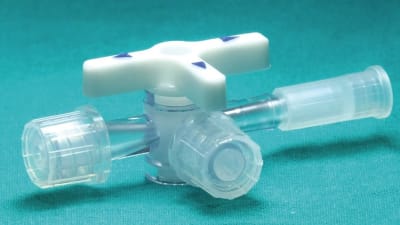
ISO 80369 Part 7, the long-awaited replacement to ISO 594, introduced a number of changes to the standard governing dimensions and performance requirements of Luer connectors.
Analytics firm GlobalData has weighed in on the U.S. FDA's proposal to reclassify laboratory-developed tests (LDTs) as medical devices. FDA historically exercised enforcement discretion over LDTs, meaning that it did not actively regulate them like it does for other medical devices, so this is a significant regulatory change.
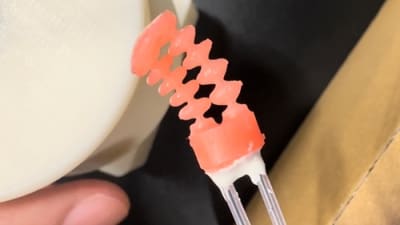
Researchers have laid the groundwork for a soft robotic tool and control system that could grant surgeons an unprecedented degree of maneuverability within the brain.
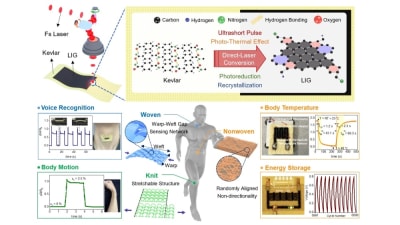
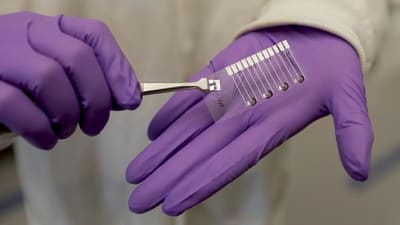
Instead of using toxic chemicals or optical masks for patterning, a research team used laser direct patterning technology to form laser-induced graphene (LIG) on e-textiles and successfully manufactured graphene-based e-textiles.
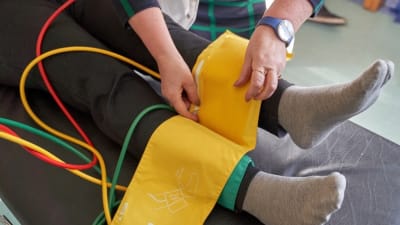
Researchers have invented sensor-based noninvasive medical devices to make the monitoring and treatment of certain physiological and psychological conditions timelier and more precise.
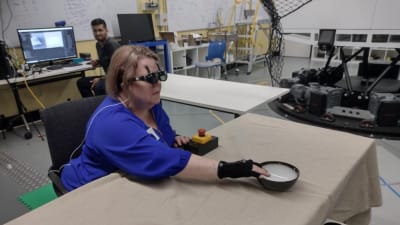
A cutting-edge technology known as acoustic touch helps people see using sound. The technology has the potential to transform the lives of those who are blind or have low vision.
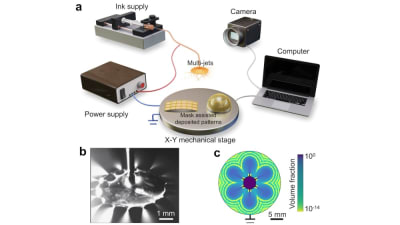
A microprinter can print piezoelectric films 100 times faster for the production of MEMS for sensors, wearable, or implantable medical devices, offering the possibility to lower the mass production costs.
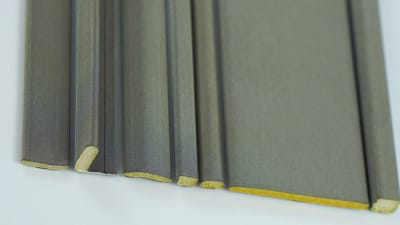
The article explores the role of high-attenuation shielding in ensuring EMC in medical devices, highlighting Tech Etch's 2400 and 2500 series fabric over foam as examples to effectively block EMI in sensitive medical electronics.
By choosing specialty thermoplastics, device manufacturers can help reduce the environmental impact of their products while gaining plastic's well-known benefits of expanded design freedom and streamlined, high-volume production of parts compared to metal alternatives.
A research team has developed a new approach that integrates a minimally invasive, painless microneedle platform capable of absorbing the cell-surrounding, biomarker-containing fluid from deeper layers of the skin with an ultra-sensitive, single-molecule detection method (Simoa) that detects often rare, yet relevant biomarkers with higher sensitivity than conventional methods.
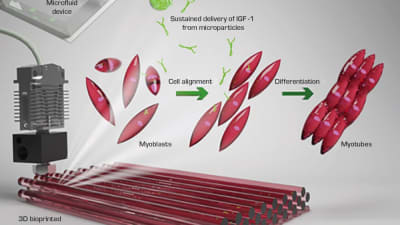
An advancement in 3D bioprinting of native-like skeletal muscle tissues has been made by scientists at the Terasaki Institute for Biomedical Innovation (TIBI).
Researchers at the EPFL have achieved a breakthrough in the treatment of tracheomalacia, a condition characterized by weak tracheal cartilage and muscles that normally keep the airway open for proper breathing.
The scientists set out in detail the process of developing the neuroprosthetic that has allowed a first patient with Parkinson's to be treated, enabling him to walk comfortably, confidently and without falling.
See the new products and services, including an ultrathin cable module for single-use endoscopes from Omnivision, CUI Inc's dc-dc converter, Vision Engineering's stereo microscopes, Henkel's expanded portfolio for wearables, SupplyOne's packaging solutions, and more.
See the product focus this month, which is on motors and motion control, including Bison's enhanced washdown gearmotor line, Nippon Pulse's direct-drive AC servo motors, Portescap's brushless DC motors, and a new line of servomotors from Siemens.
See the videos of the month, including one on a pair of earbuds that can be turned into a tool to record the electrical activity of the brain as well as levels of lactate in the body, one on a non-invasive cancer treatment that uses ultrasound to break up tumors in the body, and more.
FAULHABER MICROMO brings together the highest quality motion technologies and value-added services, together with global engineering, sourcing, and manufacturing, to deliver top quality micro motion solutions. With 34 years’ experience, John Chandler injects a key engineering perspective into all new projects and enjoys working closely with OEM customers to bring exciting new technologies to market.
Inside Story: Trends in Packaging and Sterilization
Eurofins Medical Device Testing (MDT) provides a full scope of testing services. In this interview, Eurofins’ experts, Sunny Modi, PhD, Director of Package Testing; and Elizabeth Sydnor, Director of Microbiology; answer common questions on medical device packaging and sterilization.
















 INSIDER: Medical
 Features: Medical
 Features: Materials
 From the Editor: Medical
 INSIDER: Medical
 Features: AR/AI

 Podcasts: Medical
 Podcasts: Medical
 Podcasts: Design
 On-Demand Webinars: Manufacturing & Prototyping
 Podcasts: AR/AI
 Podcasts: Green Design & Manufacturing
