NASA Spinoff: Physical Sciences
While trips to the Moon only needed a few days’ worth of meals, a mission to Mars would require years of food supplies that need to be perfectly preserved and ready to eat whenever it’s mealtime for astronauts.
NASA Spinoff: Design
Mark Aramli founded BedJet of Newport, Rhode Island, in 2013. After an unsuccessful appearance on the TV show “Shark Tank” and several successful crowdfunding campaigns in 2015, the company started shipping finished models soon after.
NASA Spinoff: Imaging
NASA’s Goddard Space Flight Center in Greenbelt, Maryland, reached out to the private sector for the right technology to make precision mirror measurements. Soon, a company called 4D Vision was contracted to work on optical testing equipment for Webb.
NASA Spinoff: Design
Fresh-Aire UV of Jupiter, Florida, developed a line of air purifiers that break down organic contaminants with a process called photocatalytic oxidation (PCO). The company gets its nanoparticulate titania suspension, one of the key ingredients for PCO, from a company that developed it under the researcher who invented PCO with NASA funding in the 1990s.
NASA Spinoff: Manned Systems
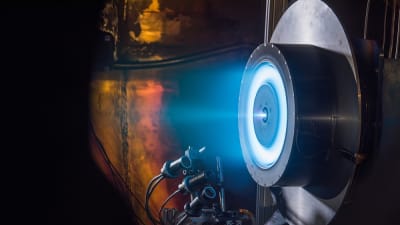
While necessary to ensuring satellites stay up for years, most thrusters use chemical propellants, which are heavy and require a lot of storage space. But a company from the Upper Peninsula of Michigan seeks to solve this problem with the help of a technology that NASA has been honing.
NASA Spinoff: Energy
Turbopump machinery is essential for rocket liftoff. Yet few industries employ the precision NASA requires for rockets, so the agency collaborated with private businesses to improve hardware fabrication and system testing through design and analysis. One of these companies, Concepts NREC LLC, is applying those aerospace resources to terrestrial uses through consulting services and software.
NASA Spinoff: Green Design & Manufacturing
When developing a new coating to protect buildings from heat buildup, Superior Products InternationaI II Inc. of Shawnee, KS, reached out to the experts at Marshall Space Flight Center’s materials lab for assistance in finding a ceramic compound that could be incorporated into a heat-resistant spray insulation.
NASA Spinoff: Power
A liquid with magnetic properties developed by NASA in the 1960s was the basis for ferrofluids now sold by MAGRON, a company in Ansan, South Korea, whose customers use them in semiconductor manufacturing, fishing rods, and other consumer products.
NASA Spinoff: Imaging
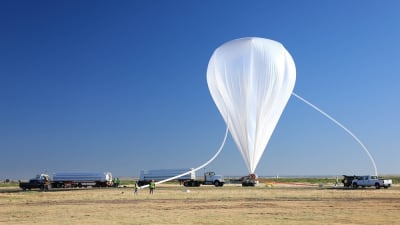
The stratosphere begins five to nine miles up from Earth’s surface. That’s where a camera mounted on a zero-pressure balloon takes panoramic pictures of areas as wide as a satellite’s field of view but at a higher resolution.
NASA Spinoff: Manned Systems
Synthetic DNA used to diagnose diseases such as COVID, hepatitis, and cancer was developed by Firebird Diagnostics LLC of Alachua, Florida, with research funded in part by the NASA Astrobiology Program. The technology could also help find life on other planets or moons by identifying DNA characteristics that might be Earth-specific and looking beyond them.
NASA Spinoff: Design
In the 1980s, Johnson Space Center explored using phase-change materials use in spacesuits. Funding via a Small Business Innovation Research contract resulted in a commercial textile product called Outlast. Global Web Horizons LLC of Arvada, Colorado, doing business as Slumber Cloud, now incorporates this material into various kinds of bedding and loungewear.
NASA Spinoff: RF & Microwave Electronics
To provide weather information to underserved farming communities in India, ilika Geospatial LLC of Edison, New Jersey, developed a weather app that uses data from the Aqua and Terra satellites operated by Goddard Space Flight Center to provide an accurate forecast in the Indian subcontinent, and the company also uses this satellite data in observations for its wider geospatial intelligence business.
NASA Spinoff: Packaging & Sterilization
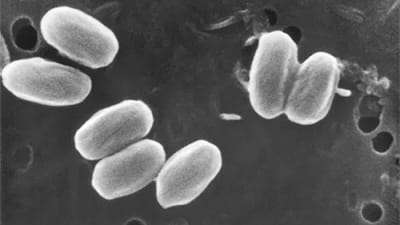
After surviving the cosmic radiation and extreme temperatures of 18 months in space, an organism first identified by NASA decades ago is now improving sunscreens and anti-aging products.
NASA Spinoff: Materials
American Innotek Inc. took a polymer utilized in undergarments developed at Johnson Space Center to manage human waste on spacewalks and incorporated it into a bag for use on the go. Sold under the brand Cleanwaste, these products allow campers and hikers to use the restroom anywhere, preventing pollution in campgrounds and national parks.
NASA Spinoff: Design
Putting the “fun” into functional campers is what Taxa Outdoors Inc. of Houston does using the know-how of a former NASA employee. Design principles developed at Johnson Space Center for living quarters in space helped the company design five trailers that maximize space to include everything a camper could need.
NASA Spinoff: Design
The Argos satellite technology operated by National Center for Space Studies in Ramonville Saint-Agne, France, serves as a wildlife tracking resource. Once an international partnership in conjunction with NASA, the now-privately held GPS service tracks location and sensor data for tagged birds and sea turtles, oceangoing cargo ships, extreme-sporting boats, and more.
NASA Spinoff: Manned Systems
Dr. Alice Agogino realized the spherical robots she was designing to comb planetary and lunar surfaces could also help first responders assess disaster scenes on Earth. She cofounded Berkeley, California-based Squishy Robotics Inc. to sell terrestrial versions the technology she was working on with Ames Research Center roboticists.
NASA Spinoff: Photonics/Optics
A ruggedized video camera designed to withstand the shock, vibration, and extreme temperatures of space is now ready for extreme conditions on Earth.
NASA Spinoff: Design
Additive manufacturing is allowing NASA to deliver payload services and launch services at a better price point.
NASA Spinoff: Sensors/Data Acquisition
Traffic-Aware Strategic Aircrew Requests (TASAR), developed by NASA, is a piece of software pilots and ground operations teams can use to find better routes in transit.
NASA Spinoff: Lighting Technology
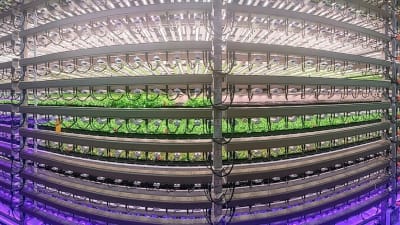
As human populations grow, the resources needed to provide food are diminishing. Hotter and more extensive wildfires scorching arable land, increased costal and river flooding, and groundwater contamination by chemical fertilizers and pesticides all limit what traditional farms can produce.
NASA Spinoff: Energy
By combining historical and current data from multiple NASA and European satellites, MD-based terraPulse applies AI to create meaningful maps enabling data-driven ecological decisions.
NASA Spinoff: Manufacturing & Prototyping
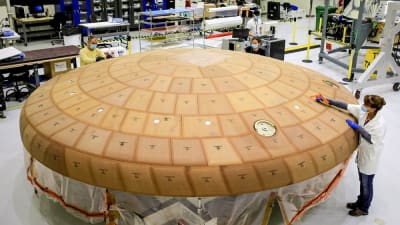
Aerospace Corporation spent two years working under funding from Langley Research Center to develop an ultrasonic scanner capable of detecting subsurface defects in the Orion spacecraft’s heat shield. ABS Group of Companies Inc., based in Spring, Texas, then adopted the technology for use in inspecting yacht hulls and other maritime structures made of composite materials.
NASA Spinoff: Photonics/Optics
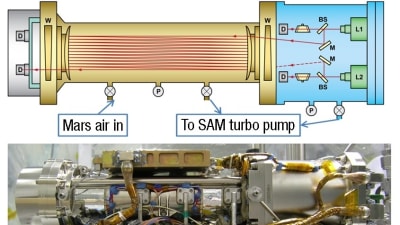
Technical assistance and STTR funding from the Jet Propulsion Laboratory helped Optoknowledge Systems Inc. (OKSI) develop a compact spectrometer for sensing trace gases and isotopes, even underwater, known as the capillary absorption spectrometer. Now OKSI’s affiliate company, Guiding Photonics of Torrance, California, offers the device for use by the oil and gas industry, environmental conservationists, and others.
NASA Spinoff: Design
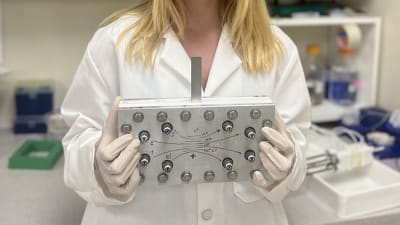
SBIR funding for InnovaPrep LLC of Drexel, Missouri, led to a bioconcentration system for testing air and water quality on the space station and improved the company’s commercial technology. The funding and requirements from the Jet Propulsion Laboratory spurred better manufacturing, performance, reliability, and shelf life for kits that test for pathogens and other contaminants.
NASA Spinoff: Manufacturing & Prototyping
SBIR funding from Langley Research Center let a team from Aeroprobe Corporation try out additive friction stir deposition, a new method for 3D printing with metal. The work demonstrated the concept, proved some of its advantages, and started honing the technology. In 2018, MELD Manufacturing Corporation of Christiansburg, Virginia, spun off from Aeroprobe to start selling its line of printers.
NASA Spinoff: Design
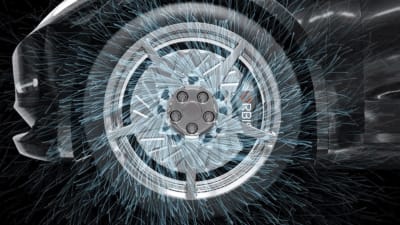
NASA’s invention inspired an innovative design for a better automobile disc brake that’s much lighter and drastically improves the braking performance.
NASA Spinoff: Medical
A research consortium backed by Johnson Space Center funded the development of a wearable device that could monitor the vital signs and activities of astronauts in space or participants in ground-based NASA studies. The EmbracePlus from Cambridge, Massachusetts-based Empatica Inc. can also monitor outpatients and the subjects of clinical trials and academic studies.
NASA Spinoff: Medical
Research into growing crystals for electronics at NASA’s short-lived Electronics Research Center led to an agency patent for repairing teeth by growing crystals of hydroxyapatite, the substance that gives teeth and bones their hardness. Sangi Co. Ltd. of Tokyo acquired the patent and developed the first hydroxyapatite-based remineralizing toothpastes in the 1980s. Hundreds of other companies across Asia and Europe have since followed suit.

















 INSIDER: Medical
 Features: Medical
 Features: Materials
 From the Editor: Medical
 INSIDER: Medical
 Features: AR/AI

 Podcasts: Medical
 Podcasts: Medical
 Podcasts: Design
 On-Demand Webinars: Manufacturing & Prototyping
 Podcasts: AR/AI
 Podcasts: Green Design & Manufacturing
