Articles: Aerospace
Just one year after signing a ground-breaking trilateral agreement, the Deep Space Advanced Radar Capability partnership is completing facilities construction at the first of three sites that will host a global network of advanced ground-based sensors. Read on to learn more.
Articles: Physical Sciences
Physicists at MIT and Harvard University have now directly measured superfluid stiffness for the first time in “magic-angle” graphene — materials that are made from two or more atomically thin sheets of graphene twisted with respect to each other at just the right angle to enable a host of exceptional properties, including unconventional superconductivity. Read on to learn more.
Articles: Information Technology
Most A&D companies are not seeing the ROI they expect from their digital transformation journeys. This does not mean digital transformation is not working, it just means it is not mature. Read on to learn what this means.
Articles: Power
This article describes the technologies enabling the evolution of intelligent munitions and focuses on the importance of stable power supplies. Read on to learn more.
Articles: Materials
Before threading holes, drilling is a necessary and critical step. Drilling challenging aerospace materials demands an application-specific solution. Stainless, titanium, and nickel- based alloys are highly heat resistant so heat generated during the drilling process is pushed into the cutter. Read on to learn more.
Features: Medical
GE Healthcare has undergone a marked transformation in recent years, positioning itself further as a leader in medical technology imaging. This article explores the company’s innovation strategies, margin improvements, and market insights while also addressing key challenges over the past year and looking at future opportunities for the company.
Videos of the Month: Wearables
See the videos of the month, including one on monitoring brain blood flow with a wearable ultrasound patch; one on the Air Curtain, an invisible mask to kill viruses and block nearly all aerosols; one on helping amputees walk normally; and one on building a bionic eye using ‘bioinspiration.'
From the Editor: Medical
Becton Dickinson’s (BD) decision to separate its biosciences and diagnostic solutions businesses is sending ripples through the in-vitro diagnostic (IVD) sector. BD says the separation was the result of a comprehensive business portfolio evaluation launched in early 2024. Read on to learn more.
Global Innovations: Medical
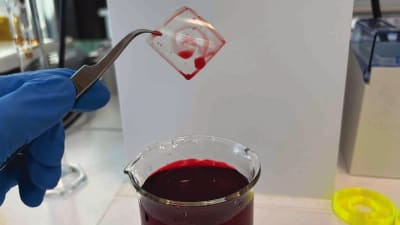
Zwitterions sound likes a distant cousin of Twitter (X), but in fact they are a common macromolecule found in human cells. Scientists at the University of Sydney are also now using zwitterions to create materials that could stop blood clots from forming in medical devices and implants. Read on to learn more.
Products: Manufacturing & Prototyping
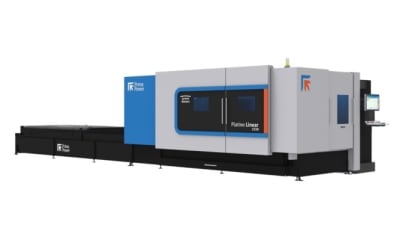
See where the product focus is this month: laser marking and machining.
Products: Electronics & Computers
See the new products and services, including precision metering pumps from Circor International; a high-performance gantry robot with an integrated slip roller conveyor system from Dispense Works; XP Power's range of compact, low-profile AC-DC power supplies with flexible cooling options; Festo's updated mass flow controller; and much more.
Mission Accomplished: Medical
Technologies from NASA, federal labs, and universities have found commercial applications in the medical industry. Read on, as this article highlights some of those spin-off innovations.
Applications: Materials
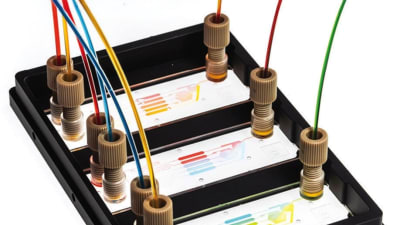
The field of microfluidics is a key technology for the medicine of the future. Having already revolutionized the world of laboratory medicine by enabling samples to be analyzed much faster, it also plays a major role in the development of new drugs. Read on to learn about Parallel Fluidics, which specializes in rapid manufacturing of microfluidics prototypes for the life sciences sector.
Briefs: Manufacturing & Prototyping
Georgia Tech researchers have created a 3D-printed heart valve made of bioresorbable materials and designed to fit an individual patient’s unique anatomy. Once implanted, the valves will be absorbed by the body and replaced by new tissue that will perform the function that the device once served. Read on to learn more.
Briefs: Medical
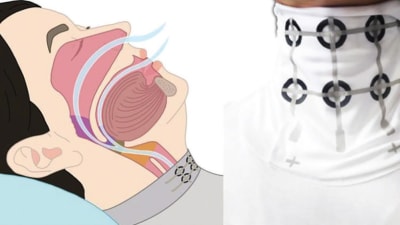
Researchers have developed comfortable, washable smart pajamas that can monitor sleep disorders such as sleep apnea at home, without the need for sticky patches, cumbersome equipment or a visit to a specialist sleep clinic. Read on to learn more.
Briefs: Robotics, Automation & Control
A team recently published papers in Nature Biomedical Engineering and Science documenting major progress on direct, carefully timed electrical stimulation of the brain that can recreate tactile feedback to give nuanced feeling to prosthetic hands. Read on to learn more.
Briefs: Communications
Advances in artificial intelligence, machine learning, and sensor fusion drive robotics functionality across many applications, including healthcare. Read on to learn what this means.
Briefs: Manufacturing & Prototyping
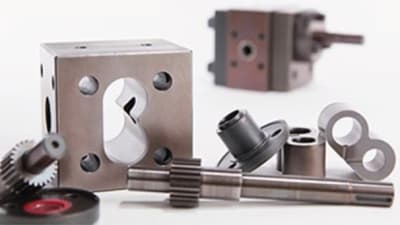
Medical equipment designers rely on rupture disk devices for pressure relief and pressure release of gases and liquids for essential diagnostic, life safety, and analytical instrumentation. Read on to learn more about them.
R&D: Materials
Researchers have combined miniaturized hardware and intelligent algorithms to create a cost-effective, compact powerful tool capable of solving real-world problems in areas like healthcare. Read on to learn more.
R&D: Manufacturing & Prototyping
Researchers have significantly improved a new joining technology, interlocking metasurfaces, designed to increase the strength and stability of a structure in comparison to traditional techniques like bolts and adhesives, using shape memory alloys. Read on to learn more.
R&D: Medical
Research engineers are developing smart implants that can both monitor and promote healing in fractured bones. Read on to learn more.
R&D: Robotics, Automation & Control
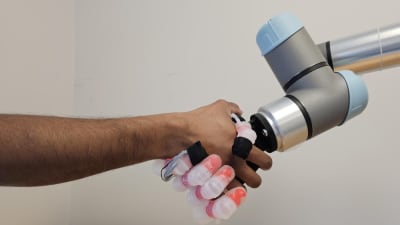
Engineers have developed a pioneering prosthetic hand that can grip plush toys, water bottles, and other everyday objects like a human, carefully conforming and adjusting its grasp to avoid damaging or mishandling whatever it holds. Read on to learn more.
R&D: Medical
Researchers are leveraging informatics approaches to tackle persistent challenges in data management and sharing, enabling real-world healthcare applications to enhance data security and accessibility. Read on to learn more.
R&D: Medical
Researchers have developed a pacifier designed to monitor a baby’s electrolyte levels in real time, potentially eliminating the need for repeated invasive blood draws. The team constructed a tiny tunnel, or microfluidic channel, into the body of the pacifier. Read on to learn more.
Features: Imaging
Researchers at the F-OCT Group have developed an imaging technique that can monitor and measure small, mobile cilia structures in human airways. This SEIM system, supported by negative-stiffness vibration isolation, has been validated as a means of finding CBF in human upper airway mucosa. Read on to learn more.
Articles: Materials
See the products of tomorrow, including a practical way to make hydrocarbons powered solely by the sun; an air traffic control system for drones that can effectively and accurately track anything in an identified low-altitude airspace; and a robotic system whose primary structural platform, or “orb,” can be injected into a pipe network and perform reconnaissance of piping infrastructure and other interior volumes.
Products: Electronics & Computers
See what's new on the market, including Endress+Hauser's FMR63B 80 GHz radar level sensor; the TP-108 Series, the smallest of all test points from Components Corporation; Sumida America's family of Resin-Shielded Surface-Mount Power Inductors; Coilcraft's XGL3020 series of ultra-low loss power inductors; Yokogawa Electric Corporation's OpreX™ Intelligent Manufacturing Hub; and much more.
Briefs: Mechanical & Fluid Systems
Researchers at Stanford University have introduced a more efficient processing technique that can print up to 1 million highly detailed and customizable microscale particles a day. Read on to learn more about it.
Briefs: Materials
An innovator at NASA Langley Research Center has developed a novel method for making thin, lightweight radiation shielding that can be sprayed or melted onto common textiles used in clothing such as cotton, nylon, polyester, Nomex, and Kevlar. Read on to learn more about it.
















 INSIDER: Medical
 Features: Medical
 Features: Materials
 From the Editor: Medical
 INSIDER: Medical
 Features: AR/AI

 Podcasts: Medical
 Podcasts: Medical
 Podcasts: Design
 On-Demand Webinars: Manufacturing & Prototyping
 Podcasts: AR/AI
 Podcasts: Green Design & Manufacturing
