Features: Tubing & Extrusion
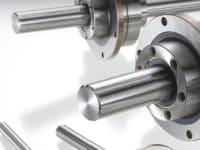
In minimally invasive surgery, the best patient outcome begins with navigating the vasculature safely and smoothly. For catheters utilizing a metal shaft construction, good design begins with a high-performing hypotube.
Products: Electronics & Computers
The new products and services this month include an electronic rotary latch, an ultra black laser marking series, a hybrid hexapod, and more.
Products: Medical
This month's product of the month is a scalable workstation from Advantech: The Valor Mini Workstation.
Technology Leaders: Motion Control
How can we fully integrate robots into our daily lives in the near future? This challenge is currently being addressed by French startup Enchanted Tools.
Technology Leaders: Medical
Linear actuators — in particular, electromechanical linear actuators — have become integral components of modern medical devices because of their high precision, accuracy, and ability to deliver repeatable motion control.
Products: Electronics & Computers
This month, the product focus is on product connectors/wires/cables.
R&D: Medical
A team of engineers has designed a new class of tiny, self-propelled robots that can zip through liquid at incredible speeds — and may one day even deliver prescription drugs to hard-to-reach...
R&D: Sensors/Data Acquisition
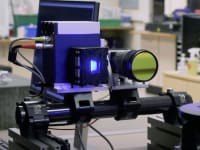
A research team has developed a 3D imaging sensor that has an extremely high angular resolution, which is the capacity of an optical instrument to distinguish points of an object separated by a...
R&D: Electronics & Computers
Scientists have developed electrode arrays that can be funneled through a small hole in the skull and deployed over a relatively large surface over the brain’s cortex. The technology...
R&D: Sensors/Data Acquisition
There is a high risk of cancer recurrence if even a small number of cancerous cells are left behind after surgical resection. To prevent this, researchers have developed fluorescence-guided surgery...
R&D: Sensors/Data Acquisition
Researchers have reported a sustainable, insoluble, and chiral photonic cellulose nanocrystal patch for calcium ion (Ca2+) sensing in sweat.
R&D: Medical
Engineers have unveiled what they call an intervertebral disc-on-a-chip, a world-first precision engineered toolbox for research into lower back pain, the leading cause of disability worldwide.
From the Editor: Medical
Medical device company Mighty Oak Medical recently announced a technical partnership with HP for 3D printed healthcare applications to improve pedicle screw placement in spinal procedures.
Features: Mechanical & Fluid Systems
Heart disease is the leading cause of death in the United States, accounting for approximately 20 percent of the nation’s deaths. Amid this global health crisis, emergent technology is helping healthcare professionals detect cardiovascular disease.
Features: Medical
Inadequate real-time tissue assessment of biopsies from different cell types forces proceduralists to choose between intraprocedural partial tissue adequacy assessment, rapid on-site evaluation (ROSE), or sending tissue samples for full pathology review.
Features: Manufacturing & Prototyping
The challenge for pharma is how to extend the commercial life of mature products while keeping maintenance costs low and ensuring they adhere to everchanging regulations across the globe — all while juggling the innovation for new products.
Features: Manufacturing & Prototyping
OEMs in the medical device market are taking a close look at all their suppliers and making changes. Demand for more affordable and accessible medical devices is forcing OEMs to control costs by consolidating supply chains and outsourcing more tasks.
Products: Materials
See the product of the month, a film-coating technology for elastomeric closures for injectable drugs.
Products: Test & Measurement
See the new products and services, including servo motor drives, leak testing equipment, rupture disk product selection, an automated regrinding system, and more.
Products: Tubing & Extrusion
This month, the product focus is on tubing, including multi-lumen tubing, a rubber/silicone extrusion head, filmcast tubing, and micro extrusions.
R&D: Wearables
A new technology that uses bioprinted patches to repair damaged heart tissue has been proven to be safe and cost-effective for patients.
R&D: Medical
Researchers have successfully created omnidirectionally stretchable pressure sensors inspired by crocodile skin. They drew inspiration from the unique sensory organ of crocodile skin and developed pressure sensors with microdomes and wrinkled surfaces.
R&D: Electronics & Computers
An electrochemical sensor detects Parkinson’s disease at different stages. The device was fabricated using an ordinary 3D printer and proved capable of early diagnosis, also serving as a model for the identification of other diseases.
R&D: Nanotechnology
Scientists have developed a nanobiosensor based on gold nanowires. Originally only intended for the detection of COVID-19-associated antigens and antibodies, the biosensor is also transferable to other biomarkers.
R&D: Nanotechnology
Corneal grafts may be more successful by using nanoparticles to encapsulate the medication. The novel approach could also significantly improve patient compliance.
R&D: Medical
A wearable electrical stimulation and vibration therapy system might be just what the doctor ordered for people experiencing foot pain and balance loss due to diabetic neuropathy.
Global Innovations: Sensors/Data Acquisition
Researchers from Japan have developed a novel, wireless, parity-time symmetry-based bioresonator that can detect minute concentrations of tear glucose and blood lactate.
From the Editor: AR/AI
While the ethics of AI is making headlines, it's becoming an integral part of all aspects of daily life, including in healthcare and medical technology. And the FDA has even created regulatory pathways to incorporate AI into medical devices.
Features: Sensors/Data Acquisition
COVID-19 accelerated demand for biosensor devices for both consumer and medical use, driving innovation and creating a lucrative market that is projected to grow from $28.5 billion in 2022 to $58 billion by 2032.

















 INSIDER: Sensors/Data Acquisition
 News: Robotics, Automation & Control
 Briefs: Materials
 Podcasts: Medical
 Briefs: Medical
 Podcasts: Medical

 Podcasts: Medical
 Podcasts: Design
 Podcasts: Medical
 On-Demand Webinars: Manufacturing & Prototyping