
Inside this issue
Overview
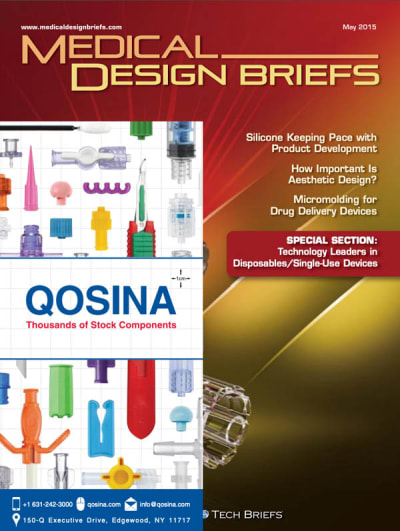
The May 2015 issue of Medical Design Briefs presents a comprehensive exploration of current trends and innovations in the medical device industry. This edition is particularly focused on advancements in materials, design aesthetics, and manufacturing technologies that are shaping the future of medical devices.
Key Highlights:
-
Silicone in Product Development: The issue opens with an in-depth discussion on the role of silicone in medical device manufacturing. Silicone is praised for its versatility, biocompatibility, and durability, making it an ideal material for various applications, including implants, catheters, and other medical devices. The article emphasizes how silicone is keeping pace with product development, adapting to new technologies and regulatory requirements. Manufacturers are increasingly leveraging silicone's properties to enhance device performance and patient safety.
-
The Importance of Aesthetic Design: Another significant topic covered is the importance of aesthetic design in medical devices. The article argues that while functionality and safety are paramount, the visual appeal of medical devices can significantly impact user experience and patient compliance. Designers are encouraged to consider aesthetics as a critical component of the design process, as a well-designed device can foster trust and comfort among users. The integration of user-centered design principles is highlighted as a way to improve both the usability and marketability of medical devices.
Micromolding for Drug Delivery Devices: The issue also features a special focus on micromolding technologies, particularly in the context of drug delivery devices. Micromolding allows for the production of highly precise and intricate components that are essential for modern drug delivery systems. The article discusses the advantages of micromolding, including reduced material waste, enhanced design flexibility, and the ability to create complex geometries that improve device functionality. This technology is becoming increasingly important as the demand for smaller, more efficient drug delivery systems grows.
-
Technology Leaders in Disposables/Single-Use Devices: A special section of the magazine is dedicated to highlighting technology leaders in the field of disposables and single-use devices. This segment showcases companies that are at the forefront of innovation, developing new materials and manufacturing processes that enhance the safety and effectiveness of single-use medical products. The focus is on how these companies are addressing challenges such as infection control, cost efficiency, and environmental sustainability in their product designs.
-
Navigating the Magazine: The magazine provides a user-friendly navigation guide, allowing readers to easily access different sections and articles. Features such as zooming in and out, and quick links to the table of contents and cover, enhance the reading experience. This digital format is designed to facilitate easy access to valuable information for professionals in the medical design field.
Conclusion:
The May 2015 issue of Medical Design Briefs serves as a vital resource for professionals in the medical device industry, offering insights into the latest trends and technologies. With a focus on materials like silicone, the significance of aesthetic design, advancements in micromolding, and the innovations from leaders in disposables, this issue encapsulates the dynamic nature of medical device development. As the industry continues to evolve, staying informed about these trends is crucial for designers, manufacturers, and healthcare professionals alike.
This edition not only highlights the technical aspects of medical device design but also emphasizes the importance of user experience and compliance, making it a well-rounded resource for anyone involved in the medical design sector.
Features
-
R & D
Researchers 'Draw' Sensors to Measure Glucose
Magnetic Devices Aid Laparoscopic Surgery
PolySTAT Polymer Strengthens Blood Clots
‘Smart Bandage’ Detects Bedsores
-
Global Innovations
Preventing Pressure Sores in Wheelchair Users with ‘Smart’ Textiles
-
From the Editor
-
Applications
-
Technology Leaders
Iron Man Special Effects Team and Progressive Device Designers: Superheroes with a Connection
ISO 80369 Standards for Small Bore Connectors Move Closer to Implementation
-
Mission Accomplished
Tech Briefs
-
Blending High-End Imaging Techniques
Focusing on Glaucoma Solutions
Cancer Detection Device Receives SXSW Award
FDA Adopts Three Nanotechnology Standards
Products
-
ZMS100 100W Medical Power Supplies
Low Profile EMI/RFI Shielding Gasket Profiles
LMWS Laser Marking Workstation
1-1 Torque Extruded Assemblies
Network-Based Backup Solution for CNC Files
World’s Smallest MEMS-Based Magnetic Reed Sensor
Miniature Solenoid Actuated Poppet Valve