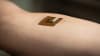

A new tool developed by nanoengineers at the University of California, San Diego, allows users, including physicians and patients, to easily build their own sensors.
The team developed bio-inks that react with several chemicals, such as glucose. After filling off-the-shelf ballpoint pens with the inks, the researchers were able to draw sensors to measure glucose directly on the skin. The sensors also measured pollution on leaves.
The simple sensors could soon be drawn directly on smartphones for personalized and inexpensive health monitoring.
Joseph Wang, the chairman of the Department of NanoEngineering at the University of California, San Diego, and his team used biocompatible polyethylene glycol, which is used in several drug delivery applications, as a binder. Graphite powder made the inks conductive to electric current.
To adhere the ink to surfaces, the researchers added chitosan, an antibacterial agent used in bandages to reduce bleeding. Xylitol, a sugar substitute, also stabilizes enzymes to ensure that the do-it-yourself sensors detect specific chemicals.
Researchers estimate that one pen contains enough ink to draw the equivalent of 500 high-fidelity glucose sensor strips. Nanoengineers also demonstrated that the sensors could be drawn directly on the skin and that they could communicate with a Bluetooth-enabled electronic device to gather data.