
Inside this issue
Overview
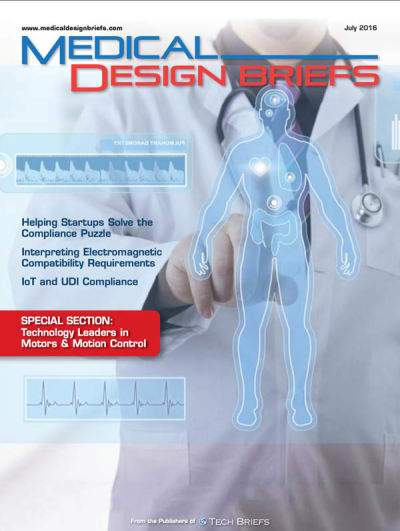
The July 2016 issue of Medical Design Briefs offers a comprehensive exploration of current trends and challenges in the medical device industry, particularly focusing on technology leaders in motors and motion control. This edition is designed to provide insights and solutions for engineers, designers, and manufacturers involved in the development of medical devices.
Key Features and Articles
-
Solving the Compliance Puzzle for Medical Devices: This feature addresses the complexities of regulatory compliance in the medical device sector. It emphasizes the importance of understanding and navigating the various regulations that govern medical devices, including the FDA's requirements. The article provides practical strategies for manufacturers to ensure their products meet compliance standards, thereby reducing the risk of costly delays and penalties.
-
Technology Leaders in Motors & Motion Control: This special section highlights advancements in motors and motion control technologies that are crucial for the development of medical devices. It discusses how these technologies enhance the functionality and reliability of devices, improving patient outcomes. The section includes insights from industry leaders on the latest innovations and trends in motor technology, including miniaturization and energy efficiency.
-
Interpreting Electromagnetic Compatibility (EMC) Requirements: EMC is a critical aspect of medical device design, ensuring that devices operate correctly in the presence of electromagnetic interference. This article breaks down the EMC requirements that manufacturers must adhere to, providing guidance on testing and validation processes. It emphasizes the need for early consideration of EMC in the design phase to avoid costly redesigns later.
IoT and UDI Compliance: The integration of the Internet of Things (IoT) in medical devices presents both opportunities and challenges. This article explores how IoT can enhance device functionality and patient monitoring but also highlights the compliance issues that arise with connected devices. It discusses the Unique Device Identification (UDI) system and its role in tracking and monitoring devices throughout their lifecycle, ensuring safety and efficacy.
-
User Experience in Medical Device Design: A focus on user experience (UX) is essential for the success of medical devices. This article discusses the importance of designing devices that are intuitive and easy to use for both healthcare professionals and patients. It provides insights into user-centered design principles and the role of feedback in the design process, emphasizing that a positive user experience can lead to better patient outcomes and increased adoption of new technologies.
-
Case Studies and Success Stories: The issue includes several case studies showcasing successful implementations of advanced technologies in medical devices. These stories illustrate how companies have overcome challenges related to compliance, design, and technology integration, providing valuable lessons for others in the industry.
Industry Insights
Throughout the issue, there are contributions from various industry experts, providing a well-rounded perspective on the current state of medical device technology. The insights shared by these leaders highlight the importance of collaboration between engineers, regulatory experts, and designers to create innovative solutions that meet the needs of the healthcare market.
Conclusion
The July 2016 issue of Medical Design Briefs serves as a vital resource for professionals in the medical device industry. By addressing key challenges such as compliance, technology integration, and user experience, this edition equips readers with the knowledge and tools necessary to navigate the evolving landscape of medical technology. The focus on motors and motion control technologies underscores the critical role these components play in the development of effective and reliable medical devices.
Overall, this issue not only informs but also inspires innovation, encouraging professionals to push the boundaries of what is possible in medical device design and development. Whether you are an engineer, designer, or manufacturer, the insights and strategies presented in this issue will be invaluable as you work to create the next generation of medical devices that improve patient care and outcomes.
Features
-
Articles
New Medical Device EMC Requirements
Transdermal Drug Delivery Poised for Growth Thanks to Microneedle Technology
-
R & D
Engineers Fabricate Flexible Silicon Transistor
Liquid-Metal Particles Support Heat-Free Soldering
Five-Fingered Robot Gets a Grip
Dissolvable Electronics Hold Promise for Brain Monitoring
-
Global Innovations
-
From the Editor
-
Applications
Advancing Ablation Technology Using Simulation Science
A Guide to Thermoforming Heavy-Gage, Complex Parts: From Material Selection to Custom Tooling
-
Technology Leaders
Tech Briefs
-
Soft Tissue Robotic Surgery Outperforms Standard Surgery
Developing Mini Artificial Lungs
Creating Super Stretchy Artificial Muscles