
Inside this issue
Overview
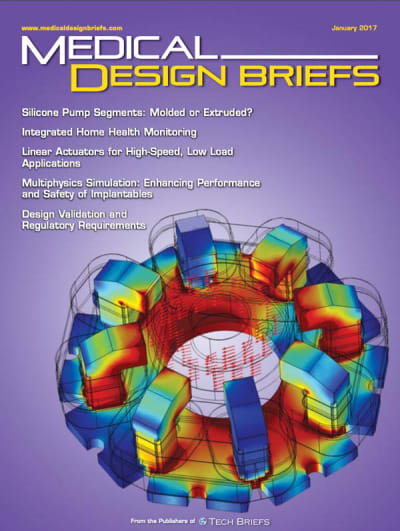
The January 2017 issue of Medical Design Briefs presents a comprehensive overview of advancements and considerations in the medical device industry. This edition features a variety of articles that delve into innovative technologies, design methodologies, and regulatory challenges faced by medical device manufacturers. Below is a summary of the key topics covered in this issue.
Colorful Imaging in Ultrasound
One of the standout articles discusses a groundbreaking approach developed by researchers at the University of Rochester, which enhances ultrasound imaging by incorporating new color identifications. This innovation allows for the isolation of fine details that are typically indistinguishable in traditional grayscale images. By adding color to ultrasound images, clinicians can gain better insights into the structures being examined, potentially improving diagnostic accuracy and patient outcomes.
Silicone Pump Segments: Molded vs. Extruded
Another significant topic explored in this issue is the manufacturing processes of silicone pump segments. The article compares molded and extruded silicone segments, discussing the advantages and disadvantages of each method. Molded segments offer precision and can be tailored for specific applications, while extruded segments may provide cost benefits and faster production times. The choice between these methods can impact the performance and reliability of medical devices, making it a critical consideration for manufacturers.
Integrated Home Health Monitoring
The issue also highlights the growing trend of integrated home health monitoring systems. As healthcare shifts towards more patient-centered approaches, the demand for devices that allow for continuous monitoring of health metrics at home is increasing. The article discusses various technologies that enable remote patient monitoring, including wearable devices and mobile health applications. These innovations not only empower patients to take charge of their health but also facilitate timely interventions by healthcare providers.
Linear Actuators for High-Speed, Low Load Applications
In the realm of medical device design, the use of linear actuators is explored, particularly for high-speed, low-load applications. The article outlines the importance of selecting the right actuator for specific medical applications, emphasizing factors such as speed, precision, and load capacity. It also discusses the advancements in actuator technology that enhance performance and reliability, which are crucial for devices that require rapid and accurate movements.
Multiphysics Simulation in Implantables
The issue features an in-depth discussion on multiphysics simulation and its role in enhancing the performance and safety of implantable devices. This technology allows engineers to simulate various physical phenomena, such as fluid dynamics, thermal effects, and mechanical stresses, in a single model. By utilizing multiphysics simulation, designers can predict how devices will behave in real-world conditions, leading to improved designs and reduced risk of failure.
Design Validation and Regulatory Requirements
Finally, the magazine addresses the critical topic of design validation and regulatory requirements in the medical device industry. As regulatory bodies impose stringent guidelines to ensure the safety and efficacy of medical devices, manufacturers must navigate complex validation processes. The article provides insights into best practices for design validation, including the importance of thorough testing and documentation. It emphasizes that a robust validation process not only meets regulatory standards but also enhances product quality and patient safety.
Conclusion
The January 2017 issue of Medical Design Briefs serves as a valuable resource for professionals in the medical device industry. With its focus on innovative technologies, manufacturing processes, and regulatory challenges, this edition equips readers with the knowledge needed to navigate the evolving landscape of medical device design and development. As the industry continues to advance, staying informed about these topics is essential for ensuring the successful creation of safe and effective medical devices.
Features
-
Articles
Silicone Pump Segments for Medication and Feeding Pumps
Building an Integrated Home Health Monitoring System
Linear Actuators for High-Speed, Low-Load Applications
Enhancing Performance and Safety of Medical Implantable Devices with Multiphysics Simulation
-
R & D
Contact Lens Monitors, Controls Glucose Levels
Colorful Imaging Will Help Distinguish Fine Details in Ultrasounds
Yale Startup 'Advances' Guidewire Placement
Clustering Analysis Improves Tracking of Physical Activity
Researchers Create Customized Proteins from 'Bacterial Builders'
-
Technology Leaders
Tech Briefs
-
Biomedical Skin-Like Bandage Is Stretchy, Durable, and Long Lasting
Glass Fibers with Potential Far Beyond Transmitting Light
Fluorescent Sensor Provides Low-Cost Diagnosis of Cystic Fibrosis
Energy-Efficient Biomedical Sensor Hub for Wearable Health Applications
Creating a Slippery Slope on the Surface of Medical Implants