
Inside this issue
Overview
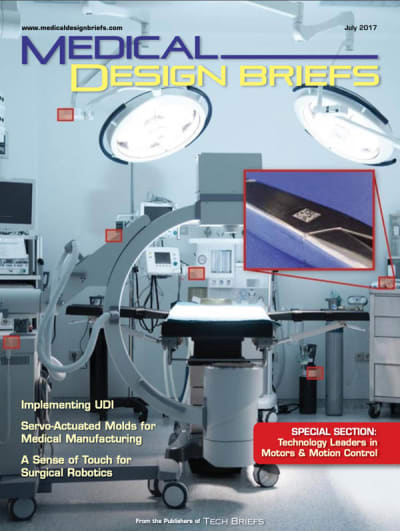
The July 2017 issue of Medical Design Briefs presents a comprehensive exploration of advancements in medical technology and manufacturing, focusing on innovative solutions that enhance device functionality, reliability, and user experience. This issue is particularly relevant for professionals in the medical device industry, including engineers, designers, and healthcare providers.
Key Features and Articles
-
Implementing Unique Device Identification (UDI): The issue opens with a discussion on the importance of UDI in the medical device sector. UDI is a system that assigns a unique identifier to medical devices, which enhances traceability and safety. The article outlines the regulatory requirements and the benefits of UDI, such as improved patient safety, streamlined recalls, and better inventory management. It emphasizes the need for manufacturers to adapt to these regulations to ensure compliance and enhance their marketability.
-
Servo-Actuated Molds for Medical Manufacturing: Another significant feature discusses the advantages of servo-actuated molds in the manufacturing of medical devices. These molds offer precision and flexibility, allowing for the production of complex geometries that are often required in modern medical devices. The article highlights how servo-actuation can improve cycle times and reduce waste, ultimately leading to more economical production processes. This technology is particularly beneficial for creating components that require high levels of accuracy and repeatability.
-
A Sense of Touch for Surgical Robotics: The issue also delves into the integration of tactile force sensors in robotic surgical systems. These sensors provide surgeons with a sense of touch, which is crucial for performing delicate procedures. The article discusses how this technology enhances the surgeon's ability to gauge pressure and manipulate tissues, leading to improved outcomes and reduced complications. The advancements in haptic feedback systems are showcased as a game-changer in robotic surgery, making procedures safer and more efficient.
Tactile Force Sensors: Expanding on the theme of sensory technology, the magazine features an in-depth look at tactile force sensors and their applications in robotic surgical systems. These sensors mimic the human sense of touch, allowing for more intuitive control during surgeries. The article explains the technical aspects of these sensors, including their design and integration into robotic systems, and discusses the potential for improved surgical precision and patient safety.
-
Disposables: Lipid-Resistant Components: The issue also addresses the growing need for disposable medical devices that are lipid-resistant. As the healthcare industry increasingly relies on single-use devices to prevent cross-contamination, the demand for materials that can withstand exposure to lipids is critical. The article outlines the challenges and solutions in developing lipid-resistant components, ensuring safety and reliability in medical applications.
Special Section: Technology Leaders in Motors & Motion Control
A special section of the magazine is dedicated to technology leaders in motors and motion control, highlighting companies that are at the forefront of innovation in this field. This section provides insights into the latest advancements in motor technology, including developments in servo motors, stepper motors, and motion control systems. The featured companies share their expertise and showcase how their products are enhancing the performance of medical devices.
Advertisers and Industry Insights
The magazine also includes an advertisers index, featuring key players in the medical device industry. This section serves as a resource for readers looking to connect with manufacturers and suppliers of medical components and technologies. The advertisers range from companies specializing in materials to those providing advanced manufacturing solutions, reflecting the diverse landscape of the medical device sector.
Conclusion
Overall, the July 2017 issue of Medical Design Briefs serves as a valuable resource for professionals in the medical device industry. It covers a wide array of topics, from regulatory compliance and manufacturing innovations to cutting-edge technologies that enhance surgical procedures. The insights provided in this issue not only inform readers about current trends and challenges but also inspire them to explore new solutions that can improve patient care and device performance. As the medical field continues to evolve, staying informed about these advancements is crucial for success in the industry.
Features
-
Articles
Advantages of Servo-Actuated Molds for Manufacturing Medical Devices
Powerful Processors, Touch Panels Drive Advances in X-Ray Imaging
-
R & D
Graphene-Based Sensor Could Improve Treatment of Asthma
Pad Combines Pressure and Gel to Heal Scars
Waterproof Wheelchair Runs on Compressed Air
Cutting Down on Cancer Surgeries
Steady-State Lasing Could Lead to More Accurate Medical Testing
-
Global Innovations
Thin-Silicon Implantable Chip Gives Patients More Control over Haptic Prosthetics
-
From the Editor
-
Technology Leaders
Piezoelectric Motors Enable MRI-Guided Prostate Ablation
Tech Briefs
-
A Noninvasive Method for Deep Brain Stimulation
Miniature PET Brain Scanner Allows Patients to Stand and Move
Disposable, Point-of-Care Sensor Provides Rapid Diagnosis
New 3D Printing Method Promises New Era for Medical Implants
New Method Manufactures Heart Valves in Minutes
Low-Cost, Noninvasive Test Can Evaluate Muscle Health
Supercapacitor Could Make Implantables Battery-Free, Longer Lasting