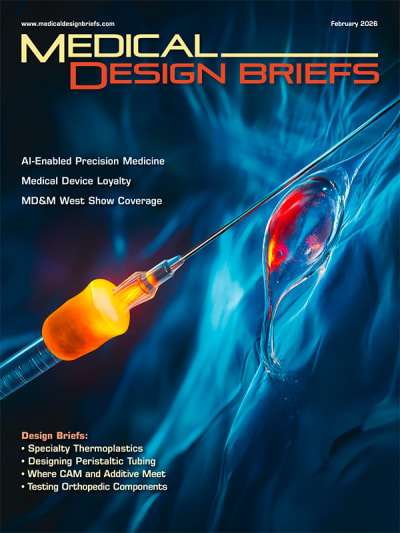

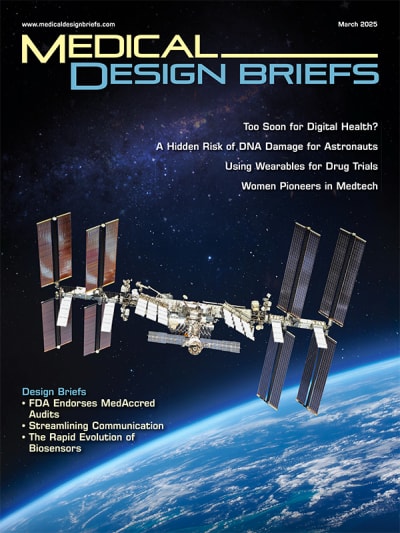
Inside this issue
Overview
The March 2025 issue of Medical Design Briefs presents a comprehensive overview of the latest advancements and challenges in the medical technology (medtech) field. This edition highlights several key themes, including the implications of space travel on health, the transformative role of wearable technology in mental health treatment, and the importance of effective communication in medtech manufacturing.
Key Highlights:
-
Space Travel and Health Risks: As space agencies, including NASA, prepare for longer missions to the Moon, Mars, and beyond, understanding the health risks associated with space travel becomes increasingly critical. A significant focus of this issue is the discovery of elevated carbon dioxide (CO₂) levels aboard the International Space Station (ISS) and their link to oxidative stress. This finding underscores the need for advanced computational tools to assess and mitigate health risks for astronauts, emphasizing the importance of addressing CO₂-driven oxidative stress in both space and terrestrial medicine.
-
Wearable Technology in Mental Health: The issue features an article on how wearable technology is revolutionizing psychiatric care. These devices are being utilized to monitor mental health conditions, providing real-time data that can enhance treatment outcomes. The integration of wearables into mental health treatment represents a significant shift towards personalized care, allowing for more responsive and effective interventions.
-
Women Pioneers in Medtech: The magazine pays tribute to women innovators who have made substantial contributions to healthcare. This section highlights their achievements and the impact of their work on the medtech landscape, inspiring future generations of female leaders in the industry.
Streamlining Medtech Manufacturing: Effective communication is identified as a crucial factor in medtech manufacturing. An article discusses the challenges faced in this highly regulated industry and offers strategies for improving communication among teams. Clear communication is linked to enhanced product quality, employee satisfaction, regulatory compliance, and ultimately, patient safety.
-
FDA Approvals and Regulatory Updates: The issue includes updates on regulatory developments, such as the FDA's approval of the final report on MedAccred’s Sterilization Audit and Accreditation Program. This program aims to enhance the quality and safety of sterilization processes in the medtech industry, ensuring that products meet stringent safety standards.
-
Innovations in Biosensors: The rapid evolution of biosensors is another focal point, with advancements enabling more accurate monitoring of fitness, health, and wellness. These technologies are becoming increasingly sophisticated, allowing for early diagnosis and continuous health monitoring, which can significantly improve patient outcomes.
-
Technological Advancements: The magazine features several innovative technologies, including:
- Soft, Bioelectronic Sensors: These implants are designed to monitor brain activity, offering new avenues for understanding neurological conditions.
- Multifunctional Biomedical Robots: These robots are being developed for interventional diagnosis and treatment, showcasing the integration of robotics in healthcare.
- Bioprinting Methods: New techniques for replicating heart tissues are being explored, which could revolutionize regenerative medicine.
- Smart Textiles: Innovations in textiles that can sense light, pressure, smell, and even taste are highlighted, indicating a future where clothing can monitor health metrics.
-
Global Innovations and New Products: The issue also features a roundup of global innovations and new products in the medtech space, showcasing the ongoing advancements that are shaping the future of healthcare. This includes low-cost laparoscopes designed for use in low- and middle-income countries, emphasizing the importance of accessibility in medical technology.
Conclusion:
The March 2025 issue of Medical Design Briefs encapsulates the dynamic nature of the medtech industry, highlighting the intersection of technology, health, and innovation. From addressing the unique challenges of space travel to the transformative potential of wearable technology in mental health, this edition provides valuable insights into the future of healthcare. The emphasis on effective communication, regulatory compliance, and the contributions of women in the field further enriches the discourse, making it a must-read for professionals and enthusiasts alike. As the industry continues to evolve, the articles in this issue serve as a reminder of the critical role that innovation and collaboration play in advancing medical technology and improving patient care.
Features
-
Articles
4 Elevated CO2 Levels on the ISS: Unmasking a Hidden Risk of DNA Damage for Astronauts
7 Is Digital Health Evolving Too Quickly?
9 Reimagining Psychiatric Care: How Wearable Technology Is Transforming Mental Health Treatment
11 Women Pioneers in Medtech: Innovators Who Have Transformed Healthcare
-
R & D
13 Device Generates Electricity from Air
13 Wearable Device Combines Multiple Sensors
13 Wearable Ultrasound Tech for Muscle Monitoring
-
Global Innovations
34 Biomimetic Speaking Valve Increases Safety of Tracheostomized Patients
-
From the Editor
-
Videos of the Month
Tech Briefs
-
15 Streamlining Medtech Manufacturing with Effective Communication
16 FDA Approves Final MDIC Report on MedAccred’s Sterilization Audit and Accreditation Program
18 Proof of Life: The Rapid Evolution of Biosensors for Fitness, Health, and Wellness
20 Soft, Bioelectronic Sensor Implant Monitors Brain
21 Multifunctional Biomedical Robot for Interventional Diagnosis and Treatment
22 Bioprinting Method Replicates Heart Tissues
23 Diagnostic Kit Provides Early Diagnosis of Bladder Cancer
25 Smart Textile Senses Light, Pressure, Smell, and Even Taste
26 Laser-Made, Ultra-Thin Material Enables Precise, Self-Powered Tracking of Healing Wounds
27 Low-Cost Laparoscope Designed for Low- and Middle-Income Countries