Despite the potential advantages to be derived from employing autonomous systems, evidence-based assurance of dependability is a key to obtaining users’ trust in these systems.
With the rise of additive manufacturing for metallic materials, concerted efforts are underway to integrate the technology into present and future aerospace systems to enhance performance capability, reduce cost, and minimize production lead-times.
Despite the existence of standards, the issue persists where, in general, equipment is unavailable to measure maximum bending strains at elevated test temperatures.
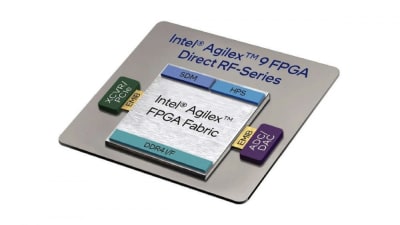
The U.S. Department of Defense has celebrated a milestone achievement for the SHIP program with the delivery of the first SHIP prototype devices from Intel and Qorvo to BAE Systems.
The Air Force Research Laboratory Space Vehicles Directorate selected Viasat to provide on-orbit space relay connectivity for its ARBALEST program, which aims to support a future space-based demonstration of operational capabilities for the Department of Defense.
The new palletized laser weapon was the first 10-kilowatt laser built to U.S. military specifications in a stand-alone configuration that can be moved and mounted anywhere it’s needed.
Ursa Major has signed a new contract to advance U.S. hypersonic defense programs and space launch capabilities. Under the contract, Ursa Major will build and test a prototype of its new Draper engine and further develop its 200,000-pound thrust Arroway engine for space launch.
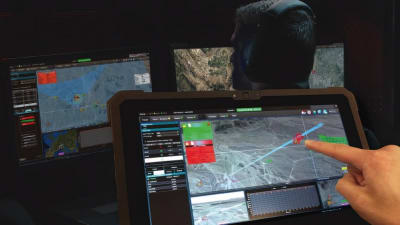
The system can be deployed in several theaters of operation simultaneously to provide C2 for short range air defense, C-UAS and counter-rocket, artillery and mortar missions.
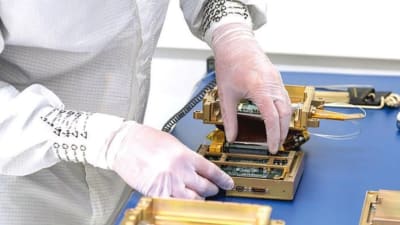
Utah State University’s Space Dynamics Laboratory is building two key flight camera systems for a NASA spacecraft that will explore the layer of the atmosphere where Earth meets space.
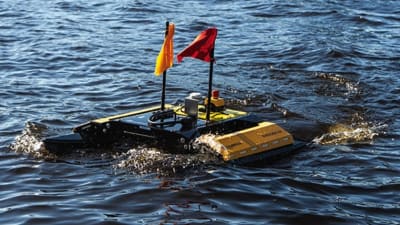
Aurora Flight Sciences is developing and testing machine learning-based introspection technologies aimed to enable physical systems, in this case ships, to adapt their control laws as they encounter uncertainties or unexpected events.
After decades of tantalizing breakthroughs in battery technology, the last decade witnessed the emergence of energy storage as a challenger to fossil fuels for powering vehicles.
New 3D printing technique is a game-changer for medical device testing…automated 3D scanning speeds part inspection…how to eliminate PCB static in medical electronics. Read about these and...
The race to develop low-cost and effective sensors for automated driving requires all-day effort. Getting sensors to accurately identify the world around them is easiest on a clear, sunny day, but that solves just part of the problem.
Honda North America has long had a presence in racing and motorsports at every level in the United States. The company has continually supported programs aimed at the highest levels of open...
A recent report reveals that the growth in prevalence of chronic diseases and rise in patient preference for advanced drug-delivery systems are driving the global smart drug-delivery systems market.
Normally, automakers launch models one at a time. It generally ensures media, dealer and fan focus. Introducing more than one comes with the risk of one model getting more attention. That’s what...
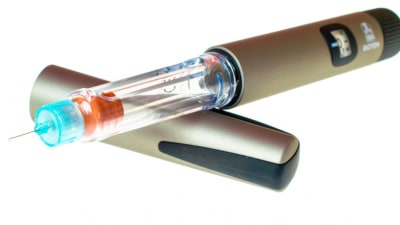
SAE Media Group’s inaugural Wearable Injectors and Connected Devices USA Conference takes place in Boston, September 13–14, 2023. SAE spoke with conference speaker Alexandra Benbadis about her insights on this vital market.
With all the benefits implantable systems offer therapy developers, clinicians, and patients, it is easy to see why market projections for this segment are on the rise.
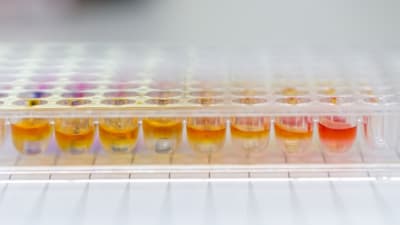
For researchers and manufacturers interested in reducing the costs of coated well plates while improving research quality and diagnostic test resolution, outsourcing to a qualified contract services provider could be an optimal solution.
Toyota will invest nearly $50 million for a new automotive battery lab at its R&D headquarters in York Township, Michigan. The lab is expected to be operational in 2025, the same year...
The animal kingdom has fascinated man from the beginning of time. From the most minute organisms to undersea and land creatures that have perfectly evolved to adapt to their environments, we have looked...
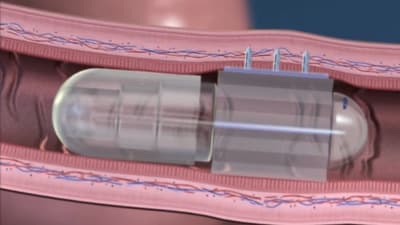
A proven and effective medication for osteoporosis, which is currently only available as an injection, can be administered orally using a novel “robotic pill,” according to a...
Mazda, the automaker with the longest and richest history of using the Wankel rotary engine announced on June 22, 2023 that it resumed mass production of rotary engines for a new variant of...
Inspired by sutures developed thousands of years ago, engineers have designed “smart” sutures that can not only hold tissue in place, but also detect inflammation and release drugs.
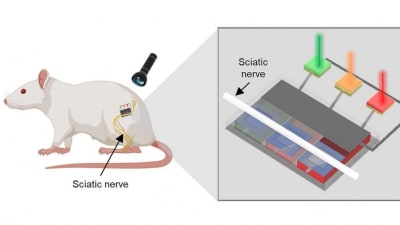
A team of scientists has developed novel technology with the potential to change the future of drug delivery. The device developed represents the first implantable drug-delivery system that is triggered by external light sources of different wavelengths, and not by electronics.
Improving extruded components requires careful attention to a number of factors, including dimensional tolerance, material selection, and processing. Trelleborg’s Dan Sanchez provides detailed insights into each of these considerations to help you advance your device innovations while reducing costs and speeding time to market.
Inside Story: Trends in Packaging and Sterilization
Eurofins Medical Device Testing (MDT) provides a full scope of testing services. In this interview, Eurofins’ experts, Sunny Modi, PhD, Director of Package Testing; and Elizabeth Sydnor, Director of Microbiology; answer common questions on medical device packaging and sterilization.













 INSIDER: Medical
 Features: Medical
 Features: Materials
 From the Editor: Medical
 INSIDER: Medical
 Features: AR/AI

 Podcasts: Medical
 Podcasts: Medical
 Podcasts: Design
 On-Demand Webinars: Manufacturing & Prototyping
 Podcasts: AR/AI
 Podcasts: Green Design & Manufacturing
