Briefs: Manufacturing & Prototyping
In 2015, the Food and Drug Administration approved the first 3D-printed drug, Spritam (levetiracetam), for epilepsy. Several other manufacturers and drug companies are develop.ing their own ones. But the widespread adoption of 3D drug printing will require stringent quality control measures to ensure that people get the right medication and dosage. Read on to learn more about the subject.
Products: Medical
See which products and services the video spotlight is on, including Dotmatics, an integrated scientific informatics platform that supports research and development activities; an autoinjector testing system featuring precise measurement and control capabilities; BD’s Physiojet disposable autoinjector; testing software that takes over the test sequence with determination of the results; Stevanto Group’s technology centers; and more.
Videos of the Month: Medical
See the videos of the month, including one on drug-loaded 3D-printed films that could change cancer treatments forever; one on CELMoDs, which are designed to attack cancer in a novel way, by binding to a regulatory protein called cereblon, which then triggers the degradation of key cancer-driving proteins; one on the bridge recombinase mechanism, a precise and powerful tool to recombine and rearrange DNA in a programmable way; and one on immune cells called regulatory T-cells.
News: Green Design & Manufacturing
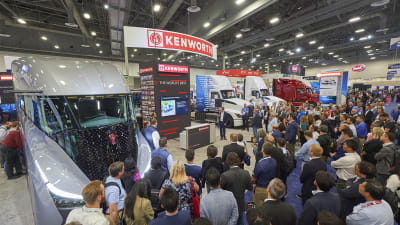
The Kenworth booth at the 2024 Advanced Clean Transportation (ACT) Expo in Las Vegas garnered much interest thanks to the reveal of its futuristic-looking SuperTruck 2. Developed over a six-year...
Editorial: Manned Systems
Manufacturers at the forefront of sustainability efforts and intent on electrifying commercial trucks and off-highway machines still see the necessity to include internal combustion engines in their future...
Articles: Transportation
Rearward-facing front seats have generally been limited to concept cars that explore a far-away world in which SAE Level 5 autonomous driving has been perfected....
Technical Innovation: Materials
Electric trucks and off-highway vehicles weigh about 30% more than their gasoline- and diesel-powered counterparts. That’s a challenge for OEMs who want to reduce vehicle weight to increase...
Technical Innovation: Transportation
Usage of cloud technology is essential for after-sales tester providers. It eases the rollout of new tester content — for example, diagnostic data of new vehicle types, updated repair...
Articles: Manufacturing & Prototyping
Accelera by Cummins, Daimler Truck, and Paccar collaborate to establish a 21-GWh dedicated factory for lithium iron phosphate battery cell manufacturing in the U.S. Read on to learn what that means for you.
Articles: Power
With fast charging becoming more common, precise and reliable temperature sensing across the charging chain will remain critical even as battery technologies evolve. Read on to learn why.
Briefs: Physical Sciences
A research team from Pohang University has successfully enhanced the performance and durability of all-solid-state batteries. This breakthrough was made possible through the implementation of a novel approach known as bottom electrodeposition. Read on to learn more.
Briefs: Energy
Examining lithium metal batteries using nuclear magnetic resonance spectroscopy may help in the design of new electrolytes and anode surfaces for high-performance batteries. Read on to learn more.
Briefs: Energy
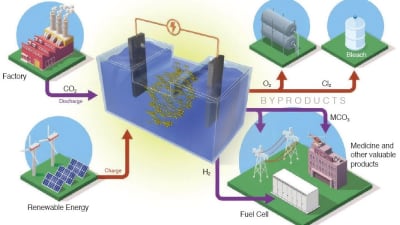
A new battery formulation captures carbon dioxide from industrial emissions and converts it into a solid form that has the potential to be used in other products. Read on to learn more.
Briefs: Manufacturing & Prototyping
A new synthesis process for solid electrolytes marks a crucial stride toward the commercialization of all-solid-state batteries free from the risks of explosion and fire. Read on to learn more.
Briefs: Energy
A research team has developed a high-energy, high-power hybrid sodium-ion battery capable of rapid charging. The innovative hybrid energy storage system integrates anode materials typically used in batteries with cathodes suitable for supercapacitors. Read on to learn more.
Products: Manufacturing & Prototyping
See the new products, including Asahi Kasei Microdevices Corporation's CZ39 series of coreless current sensors, Bourns, Inc.'s latest miniature resettable thermal cutoff device series, Orion S.A.'s range of high-performance conductive additives that improve Li-ion battery performance, and Littelfuse, Inc.'s newest member of its eFuse Protection IC lineup, the LS0502SCD33S.
Articles: Power
Recycling EV batteries has been a goal of the auto industry for many years, but the infrastructure to make that a widespread reality is still in the early stages. As the amount of used lithium-ion (Li-ion) battery cells coming from EVs increases, the industry is getting ready to turn them into fresh packs. Read on to learn more.
Articles: Materials
A 100 percent solid-state, high-performance polymer electrolyte addresses issues with liquid electrolytes for safer battery cell designs. Read this article to learn more.
Application Briefs: Manufacturing & Prototyping
The integration of the plasma-cutting cobot at Tank Technologies stands as a compelling example of how automation can drive efficiency, accuracy, and employee satisfaction in manufacturing. By embracing this technology, Tank Technologies has significantly improved the productivity and safety of their plasma cutting applications.
Application Briefs: Robotics, Automation & Control
Learn about the Force Control Model LC, a form of closed loop positioning control. It reads the machine position on each stop and adjusts, in real time, where to signal the stop for the next part/cycle. Read on.
Briefs: Electronics & Computers
Researchers from Tsinghua University worked to break through the difficulties of robotic recognition of various common, yet complex, items. Read on to learn more.
Briefs: Physical Sciences
Researchers from NC State University have demonstrated mini soft hydraulic actuators that can be used to control the deformation and motion of soft robots that are less than a millimeter thick. The researchers also demonstrated that this technique works with shape memory materials.
Briefs: Medical
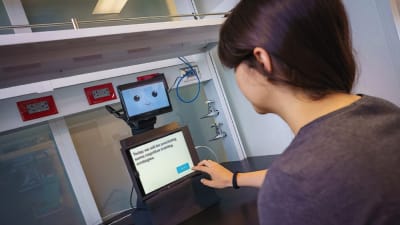
Engineers at the University of California San Diego in collaboration with clinicians, people with MCI, and their care partners have developed CARMEN, short for Cognitively Assistive Robot for Motivation and Neurorehabilitation — a small, tabletop robot designed to help people with mild cognitive impairment (MCI) learn skills to improve memory, attention, and executive functioning at home.
Briefs: Robotics, Automation & Control
Researchers have found a way to bind engineered skin tissue to the complex forms of humanoid robots. This brings with it potential benefits to robotic platforms such as increased mobility, self-healing abilities, embedded sensing capabilities and an increasingly lifelike appearance.
Products: Motion Control
See the product showcase, which includes Bodine type 42R hypoid gearmotors; the Pyramid Connectable (“PC”) Twisted Belt; the IMI Norgren VR Valve Manifold; CENTRUM CSF40, a stainless steel encoder scale disc; KHK USA's gear for motion design; ABB Robotics' OmniCore, an intelligent automation platform that is faster, more precise, and more sustainable; and much more.
Articles: Software
Precision motion control solutions supply an even higher level of motor control, often synchronized over several axes of motion or motors. But when are they the right choice? Read this story to find out.
Articles: Mechanical & Fluid Systems
In the ever-evolving robotics landscape, achieving precise and seamless motion is paramount. While articulating joints enable a robot’s range of motion, bearings serve as the backbone, ensuring smooth and accurate movement. Particularly in humanoid robots where precision is non-negotiable, the selection of bearings becomes a critical engineering decision. Design engineers must consider the diverse range of robotic bearings, how backlash affects precision, and when to use seals to protect bearings from harsh environments.
Articles: Imaging
Event-based vision is well on its way to establishing itself as a paradigm that will create a new standard in many markets requiring efficiency in how machines can see. Over the past several years, it has successfully evolved to meet a wider range of uses. And by continuing to adapt and address the requirements of many applications, we will see more event-based cameras all around us.
Articles: AR/AI
Companies worldwide are faced with a shortage of skilled labor as experienced workers retire and not enough new talent enters the workforce to compensate. To address this, companies must find a way to capture knowledge from experienced workers and make it both accessible and enticing to new hires. Generative AI can help address this by transforming the way humans and machines interact and collaborate using solutions such as Siemens Industrial Copilot.






















 INSIDER: Medical
 Features: Medical
 Features: Materials
 From the Editor: Medical
 INSIDER: Medical
 Features: AR/AI

 Podcasts: Medical
 Podcasts: Medical
 Podcasts: Design
 On-Demand Webinars: Manufacturing & Prototyping
 Podcasts: AR/AI
 Podcasts: Green Design & Manufacturing
