Articles: Physical Sciences
Every time a soldier pulls the trigger on a 7.62 rifle or pulls the wire of a 155 Howitzer, a complex chain reaction ensues over the next millisecond that we refer to as the ignition event. Read on to gain a new look at ignition.
Products: Electronics & Computers
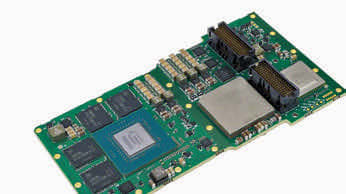
See the new products, including EIZO Rugged Solutions' Condor™ NVA2102xX; Sealevel Systems' new family of computers, the Flexio Fanless Industrial Embedded Computers; Teledyne FLIR Defense's UltraFORCE® 380-HDc imaging system; the S-335 fast steering mirror from Physik Instrumente; Pixus Technologies' 3U and 6U handle/panel sets for OpenVPX and other architecture boards; and more.
Application Briefs: Manned Systems
The M88A3 Heavy Equipment Recovery Combat Utility Lift Evacuation System is currently undergoing reliability and maintainability testing at Yuma Proving Ground, which is at the forefront of the U.S. Army’s transformation efforts, particularly in the realm of mobility and combat vehicle testing. Read on to learn more.
Application Briefs: Electronics & Computers
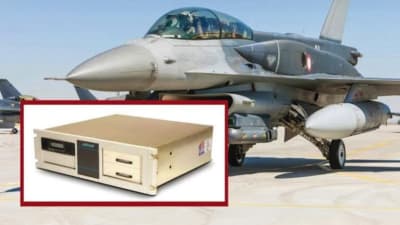
Arraid LLC is supplying the U.S. Air Force with 45 replacement data storage drives for automatic test equipment stations designed to support F-16 fighter jets operated by the Air National Guard and allied foreign militaries. Read on to learn more about it.
Briefs: AR/AI
Killian Sheriff and Yifan Cao, MIT graduate students, are using machine learning to quantify, atom-by-atom, the complex chemical arrangements that make up the concept of short-range order. Read on to learn more.
Briefs: Energy
Finding the next groundbreaking polymer is always a challenge, but now Georgia Tech researchers are using AI to shape and transform the future of the field. Rampi Ramprasad’s group develops and adapts AI algorithms to accelerate materials discovery. Read on to learn more.
Articles: RF & Microwave Electronics
Delivered by Team Hersa, the Radio Frequency Directed Energy Weapon can detect, track and engage a range of threats across land, air and sea. The system uses radio waves to disrupt or damage critical electronic components inside enemy platforms, such as drones, causing them to stop in their tracks or fall out of the sky. Read on to learn more.
Articles: RF & Microwave Electronics
Phased array radar technology has been gaining popularity since its initial introduction in the 1960s and is now being used in a variety of applications, from military and defense to civilian sectors and even space exploration. Read on to learn more about this cutting-edge technology.
Articles: Unmanned Systems
Heather Cummings, a 27-year old senior flight controls and autonomy engineer at Sikorsky, is the winner of the Aerospace/Defense category for SAE Media Group’s inaugural Women in Engineering: Rising Star Awards program.
Articles: Aerospace
Aerospace engine components like discs, blisks and rings are engineered to perform in extreme operating environments. They need to withstand intense heat and stress and be as lightweight as possible to meet exacting specifications. Read on to learn more about these components.
Articles: Aerospace
Advanced air mobility is a new class of vertical takeoff and landing aircraft larger than most cars yet much smaller than traditional commercial aircraft. It is optimal for short-distance flights within cities and suburbs. Read on to learn more about it and its benefits.
Articles: Electronics & Computers
This article explores the rise of electrification in military applications, the enabling role of high-reliability power supplies and converters, and how capacitors are meeting the rigorous requirements of modern electrified land systems. Read on to learn more.
Products: Medical
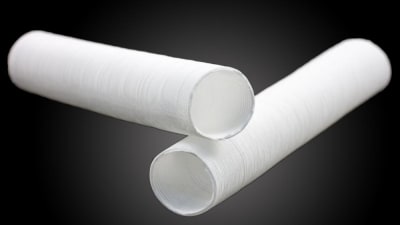
See the product of the month, Bally Ribbon Mills' product line of medical textiles and fabrics ideal for use in cardiovascular, orthopedic, and dental prosthetic applications. Read on to learn more about it.
Products: Software
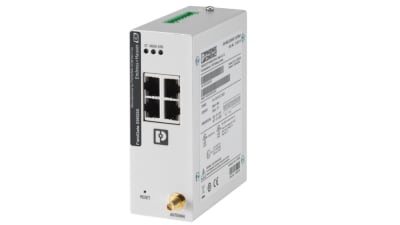
See the product of the month, Endress+Hauser's FieldGate SWG50, a new WirelessHART gateway primed for secure communication from your field devices. Read on to learn more.
Articles: Materials
See the products of tomorrow, including a new technology developed by KAUST that can help researchers consistently extract liters of water out of thin air each day without needing regular manual maintenance; a motion sensor so precise it could minimize the nation’s reliance on global positioning satellites; and an inexpensive bandage that uses an electric field to promote healing in chronic wounds.
Products: Software
See what's new on the market, including the posirot® PRAS20 angle sensor from ASM; PCIe Designer from Keysight Technologies; a new testing procedure from Würth Elektronik; Advanced Energy's new hardware accessory for its high-power supplies, PowerPro Dongle; and Eggtronic's family of EPIC mixed-signal power conversion controller ICs.
Briefs: Medical
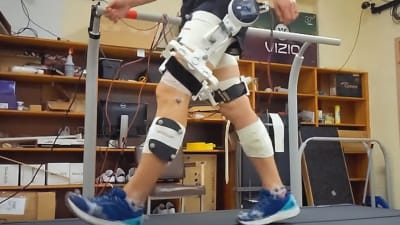
New research from the University of Massachusetts Amherst pushes forward the bounds of stroke recovery with a unique robotic hip exoskeleton, designed as a training tool to improve walking function. This invites the possibility of new therapies that are more accessible and easier to translate from practice to daily life. Read on to learn more.
Briefs: Sensors/Data Acquisition
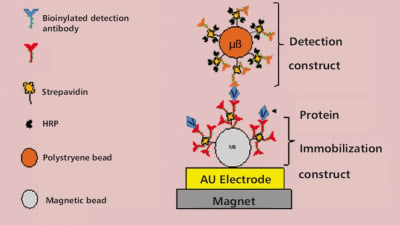
Researchers at NASA Ames Research Center developed an electrochemical, bead-based biological sensor based on Enzyme-Linked Immunosorbent Assay (ELISA) combining a magnetic concentration of signaling molecules and electrochemical amplification using wafer-scale fabrication of microelectrode arrays. Read on to learn more.
Briefs: Medical
University of Waterloo Chemical Engineering Researcher Dr. Elisabeth Prince teamed up with researchers from the University of Toronto and Duke University to design the synthetic material made using cellulose nanocrystals, which are derived from wood pulp. The material is engineered to replicate the fibrous nanostructures and properties of human tissues. Read on to learn more.
Briefs: Test & Measurement
A new coronavirus test can get accurate results from a saliva sample in less than 30 minutes. Many of the components of the handheld device used in this technology can be 3D printed, and the test can detect as little as one viral particle per 1-μL drop of fluid. Read on to learn more.
Briefs: Test & Measurement
Measuring fluid mass in microgravity, where fluid behavior is dominated by fluid properties, is a challenging problem. To address this problem, engineers at NASA are developing a capacitance-based, mass-fraction gauge for vessels containing two-phase fluids. Read on to learn more.
Briefs: Power
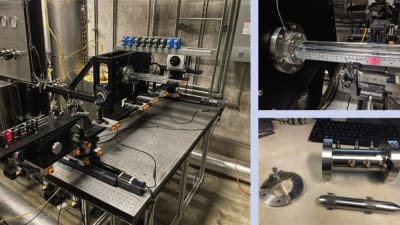
Engineers at NASAs Stennis Space Center have developed the HYdrocarbon Propellants Enabling Reproduction of Flows in Rocket Engines (HYPERFIRE), a sub-scale, non-reacting flow test system. HYPERFIRE uses heated ethane to enable physical simulation of rocket engines powered by a broad range of propellants in an inexpensive, accurate, and simple fashion. Read on to learn more.
Briefs: Medical
McGill University researchers have made a breakthrough in diagnostic technology, inventing a ‘lab on a chip’ that can be 3D-printed in just 30 minutes. The chip has the potential to make on-the-spot testing widely accessible. Read on to learn more.
Briefs: Photonics/Optics
In a newly published paper in the journal Science, researcher Qiushi Guo demonstrated a novel approach for creating high-performance, ultrafast lasers on nanophotonic chips. His work centers on miniaturizing mode-lock lasers. Read on to learn more.
Briefs: Imaging
Southwest Research Institute has developed off-road autonomous driving tools with a focus on stealth for the military and agility for space and agriculture clients. The vision-based system pairs stereo cameras with novel algorithms, eliminating the need for LiDAR and active sensors. Read on to learn more.
Briefs: Robotics, Automation & Control
For the first time, researchers at The University of Texas at Austin’s Applied Research Laboratories and NASA’s Goddard Space Flight Center have formed a radio interferometer between a GPS antenna and receiver and a large radio telescope. Read on to learn more about the new technique.
Briefs: Materials
Now, a team from the Max Planck Institute for Polymer Research has developed a new material concept that could allow efficient blue OLEDs with a strongly simplified structure. Read on to learn more.
Briefs: Electronics & Computers
A research team has created an innovative microelectronic device that can potentially function as a sustainable, high-performance “bit-switch.” This paves the way for future computing technologies to process data much faster while using significantly less energy. Read on to learn more.
Briefs: Sensors/Data Acquisition
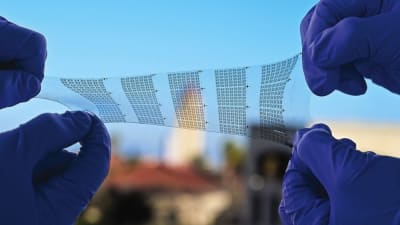
Researchers at Stanford have been working on skin-like, stretchable electronic devices for over a decade. Recently, they presented a new design and fabrication process for skin-like integrated circuits that are five times smaller and operate at one thousand times higher speeds than earlier versions. Read on to learn more about it.






















 INSIDER: Medical
 Features: Medical
 Features: Materials
 From the Editor: Medical
 INSIDER: Medical
 Features: AR/AI

 Podcasts: Medical
 Podcasts: Medical
 Podcasts: Design
 On-Demand Webinars: Manufacturing & Prototyping
 Podcasts: AR/AI
 Podcasts: Green Design & Manufacturing
