
Inside this issue
Overview
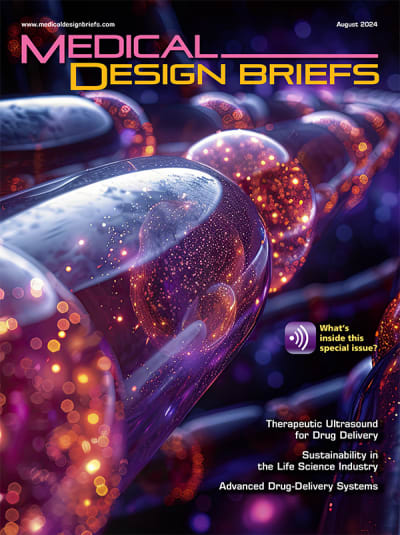
This special issue of Medical Design Briefs for August 2024 focuses on several key themes in the life sciences, particularly emphasizing advancements in drug delivery systems, sustainability, and innovative technologies that are shaping the future of healthcare.
Therapeutic Ultrasound for Drug Delivery
One of the central topics is Therapeutic Ultrasound, which is gaining traction as a non-invasive method for drug delivery. This technology utilizes piezo transducers to enable contactless drug delivery, allowing for precise targeting of medications to specific areas within the body. The use of ultrasound can enhance the permeability of cell membranes, facilitating the entry of therapeutic agents into cells without the need for invasive procedures. This method not only improves the efficacy of treatments but also minimizes side effects associated with traditional delivery methods.
The issue highlights the potential of ultrasound to trigger the release of "nanodroplets," which can encapsulate drugs and deliver them directly to the target site. This innovative approach could revolutionize how medications are administered, particularly for conditions that require localized treatment.
Advanced Drug-Delivery Systems
In addition to therapeutic ultrasound, the magazine explores Advanced Drug-Delivery Systems that are transforming patient care. These systems are designed to improve the bioavailability and effectiveness of drugs while reducing the frequency of administration. The issue discusses various technologies, including smart delivery systems that respond to physiological changes in the body, ensuring that medications are released at the right time and in the right dosage.
The advancements in drug delivery are particularly significant for biologics, where the shift from intravenous (IV) to subcutaneous administration is highlighted. This transition not only enhances patient comfort and adherence to therapy but also reduces the risk of adverse events associated with IV infusions. The ability for patients to self-administer medications at home represents a major improvement in quality of life.
Sustainability in the Life Science Industry
Another critical theme in this issue is Sustainability in the Life Science Industry. As the demand for environmentally friendly practices grows, the industry is increasingly focused on reducing waste and improving the sustainability of manufacturing processes. The magazine discusses various strategies that companies are adopting to minimize their environmental impact, including the use of biodegradable materials and energy-efficient manufacturing techniques.
The role of sensors in promoting sustainability is also examined. Sensors can monitor and optimize production processes, leading to reduced energy consumption and waste generation. This integration of technology not only supports sustainability goals but also enhances operational efficiency.
Intelligent Testing Capabilities
The issue features an article on Enabling CDMO Success Through Intelligent Testing Capabilities. Contract Development and Manufacturing Organizations (CDMOs) are under pressure to deliver high-quality products efficiently. The implementation of intelligent testing capabilities allows these organizations to streamline their processes, ensuring that products meet regulatory standards while reducing time to market. This advancement is crucial in a competitive landscape where speed and quality are paramount.
The Role of Sensors
The magazine also delves into the Role of Sensors in the Big Picture of Sustainability. Sensors are becoming increasingly vital in monitoring environmental conditions and ensuring compliance with sustainability standards. They provide real-time data that can be used to make informed decisions about resource allocation and waste management, ultimately contributing to a more sustainable operation.
Future Innovations
Looking ahead, the issue speculates on future innovations in drug delivery, including the potential for personalized medications produced via 3D printing. This technology could allow for the customization of drug formulations based on individual patient needs, enhancing treatment efficacy and minimizing side effects.
Conclusion
In summary, this issue of Medical Design Briefs presents a comprehensive overview of the latest advancements in drug delivery systems, the importance of sustainability in the life sciences, and the innovative technologies that are shaping the future of healthcare. The focus on therapeutic ultrasound and advanced drug delivery methods highlights the industry's commitment to improving patient outcomes while addressing environmental concerns. As the life sciences continue to evolve, the integration of smart technologies and sustainable practices will play a crucial role in driving progress and enhancing the quality of care.
Features
-
Articles
Enabling CDMO Success Through Intelligent Testing Capabilities
Therapeutic Ultrasound: Contactless Drug Delivery and Treatment Enabled by Piezo Transducers
Packaging and Processing: Life Sciences Industry Strives to Become More Sustainable
-
Videos of the Month
Tech Briefs
-
The Role of Sensors in the Big Picture of Sustainability
Sensor Packaging: Critical MEMS Considerations
Ultrasound Beam Triggers ‘Nanodroplets’ to Deliver Drugs
Soft Implantable Polymer Balloon Enables Controlled and Targeted Drug Delivery