
Inside this issue
Overview
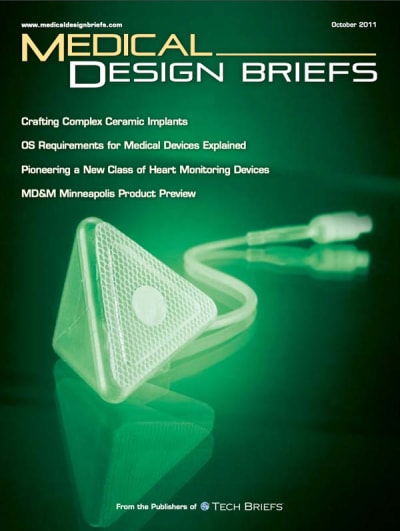
The October 2011 issue of Medical Design Briefs presents a comprehensive overview of advancements and innovations in the medical technology sector, highlighting the intersection of engineering, design, and healthcare. This edition features a variety of articles that delve into cutting-edge technologies, regulatory considerations, and emerging trends that are shaping the future of medical devices.
One of the key themes of this issue is the application of technologies developed by NASA, federal laboratories, and universities in the medical field. These spin-off innovations demonstrate how research and development in aerospace and other scientific domains can lead to significant improvements in healthcare. The magazine emphasizes the importance of collaboration between different sectors to foster innovation that can enhance patient care and treatment outcomes.
A notable article discusses the crafting of complex ceramic implants, which are becoming increasingly important in orthopedic and dental applications. The use of advanced materials and manufacturing techniques allows for the creation of implants that are not only biocompatible but also capable of integrating with human tissue more effectively. This development is crucial for improving the longevity and success rates of implants, ultimately benefiting patients who require surgical interventions.
Another significant topic covered in this issue is the exploration of heart monitoring devices. The article highlights pioneering technologies that enable continuous monitoring of cardiac health, which is essential for early detection of potential issues and timely intervention. These devices leverage advancements in sensor technology and data analytics to provide real-time insights into a patient's heart health, thereby improving management of cardiovascular diseases.
The issue also addresses the regulatory landscape for medical devices, providing insights into the requirements that manufacturers must navigate to bring their products to market. Understanding these regulations is vital for ensuring compliance and safety, as well as for expediting the approval process. The magazine offers guidance on best practices for meeting these standards, which is particularly important for startups and smaller companies looking to innovate in the medical device space.
In addition to these technical discussions, the magazine features articles on design considerations for medical devices. It emphasizes the importance of user-centered design, which takes into account the needs and experiences of both healthcare providers and patients. By focusing on usability and accessibility, designers can create devices that are not only effective but also easy to use, thereby enhancing the overall healthcare experience.
The issue also includes a product preview for the upcoming MD&M Minneapolis event, showcasing the latest innovations and technologies that will be featured at the conference. This preview serves as a valuable resource for industry professionals looking to stay informed about the latest trends and developments in medical design and manufacturing.
Throughout the magazine, there is a strong emphasis on the future of healthcare delivery in the United States. The editorial discusses the anticipated changes in how healthcare will be provided, driven by technological advancements and evolving patient needs. This forward-looking perspective encourages readers to consider how they can contribute to shaping the future of medical technology and improving patient outcomes.
Overall, the October 2011 issue of Medical Design Briefs serves as a vital resource for professionals in the medical device industry, offering insights into the latest innovations, regulatory challenges, and design considerations. It highlights the importance of collaboration across sectors and the need for a user-centered approach in developing medical technologies. As the healthcare landscape continues to evolve, this issue provides a roadmap for navigating the complexities of medical design and manufacturing, ultimately aiming to enhance the quality of care for patients.
Features
-
Applications
Static Analysis Helps FDA Investigate Infusion Pump Defects
Reverse-Engineering Addresses Performance Failures in Laser Flow Cytometers
-
Mission Accomplished
Tech Briefs
-
Benefits of a Fully Digital Comparator for Inspection of Orthopedic Implants
Tryptophan Fluorescence of Ocular Lens Protein for Early Diagnosis of Cataracts