
Inside this issue
Overview
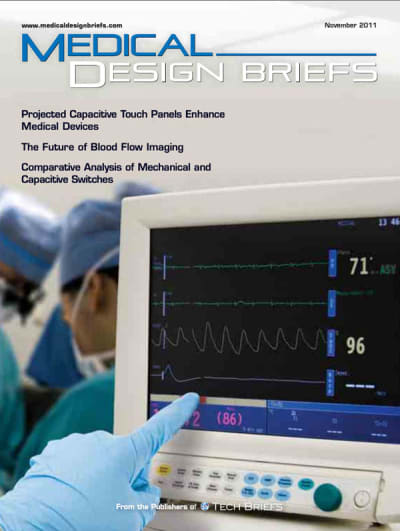
The November 2011 issue of Medical Design Briefs presents a comprehensive exploration of advancements in medical technology, focusing on innovative solutions that enhance medical devices and improve patient care. This edition features a variety of articles that delve into specific technologies, their applications, and the implications for the medical field.
One of the highlighted topics is Projected Capacitive Touch Panels, which are increasingly being integrated into medical devices. These touch panels offer a user-friendly interface that enhances the interaction between healthcare professionals and medical equipment. The article discusses the advantages of these panels, such as their durability, responsiveness, and ability to function in sterile environments. The technology allows for multi-touch capabilities, which can improve workflow efficiency in clinical settings.
Another significant feature in this issue is the Future of Blood Flow Imaging. This article examines the latest techniques and technologies used to visualize blood flow, which is crucial for diagnosing and treating various cardiovascular conditions. The advancements in imaging technologies, such as Doppler ultrasound and magnetic resonance imaging (MRI), are discussed, highlighting their roles in providing real-time data that can lead to better patient outcomes. The article emphasizes the importance of accurate blood flow imaging in understanding cardiovascular health and guiding treatment decisions.
The issue also includes a Comparative Analysis of Mechanical and Capacitive Switches. This analysis is particularly relevant for designers and engineers working on medical devices that require reliable and intuitive user interfaces. The article compares the two types of switches in terms of performance, durability, and user experience. Mechanical switches are known for their tactile feedback and reliability, while capacitive switches offer a sleek design and ease of cleaning, making them suitable for medical environments. The discussion helps readers understand the trade-offs involved in selecting the right switch for specific applications.
In addition to these feature articles, the magazine provides insights into the design and development of medical-grade foot controls. These controls are essential for various medical devices, allowing healthcare professionals to operate equipment hands-free, which is particularly beneficial in sterile environments. The article outlines the international standards that must be met for these devices, ensuring safety and efficacy in their use.
The issue also includes a section on expandable teaching content that supports remote learning and monitoring. This is particularly relevant in the context of medical training, where the ability to assess user progress through low-level metrics can enhance educational outcomes. The integration of rich media and learning management systems into medical education is discussed, showcasing how technology can improve training for healthcare professionals.
Throughout the magazine, there are advertisements and reader service information for various companies in the medical technology sector, including Portescap, Proto Labs, and Toshiba Imaging Systems. These advertisements provide readers with resources for further exploration of products and services that can aid in the development of medical devices.
The editorial team, led by Publisher Joseph T. Pramberger and Editorial Director Linda L. Bell, ensures that the content is relevant and informative for professionals in the medical design field. The magazine serves as a valuable resource for engineers, designers, and healthcare professionals looking to stay updated on the latest trends and technologies in medical device design.
In summary, the November 2011 issue of Medical Design Briefs is a rich resource that covers a range of topics pertinent to the medical technology industry. From the integration of advanced touch panels in medical devices to the future of blood flow imaging and the analysis of switch technologies, this issue provides insights that can help professionals make informed decisions in their work. The focus on educational advancements and compliance with international standards further underscores the magazine's commitment to promoting excellence in medical device design and development.
Features
-
Articles
Blood Flow Imaging: The Move From Qualitative to Quantitative Measurement
The Power of Touch: How Projected Capacitive Touch Panels Enhance Medical Devices
Comparative Analysis of Switch Technologies for Medical Equipment
-
Mission Accomplished
Technique Developed for Space Research Helps Drive Early Detection of Cataracts on Earth
Open Surgical Simulation Platform Trains Trauma Surgeons and Surgical Residents
Tech Briefs
-
Wireless Foot Switch Design Considerations