
Inside this issue
Overview
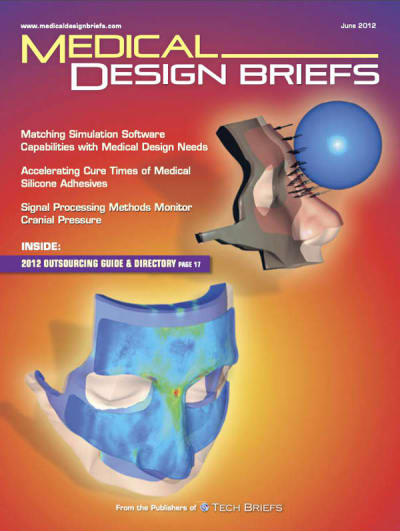
The June 2012 issue of Medical Design Briefs offers a comprehensive look at the latest advancements and trends in medical technology, focusing on innovative solutions and practical applications in the field. This edition is particularly valuable for professionals involved in medical design, engineering, and manufacturing, providing insights that can enhance product development and improve patient care.
Key Articles and Features
-
Matching Simulation Software Capabilities with Medical Design Needs: This article discusses the importance of simulation software in the medical design process. It highlights how these tools can streamline product development by allowing designers to model and test their ideas in a virtual environment before physical prototypes are created. The article emphasizes the need for designers to select software that aligns with their specific project requirements, ensuring that the simulation accurately reflects real-world conditions. This approach not only saves time and resources but also enhances the overall quality of the final product.
-
Accelerating Cure Times of Medical Silicone Adhesives: The issue features a detailed exploration of advancements in medical silicone adhesives, particularly focusing on methods to accelerate cure times. This is crucial in medical applications where quick bonding is necessary for device assembly or surgical procedures. The article reviews various formulations and curing techniques that can significantly reduce the time required for adhesives to reach their optimal strength. By improving cure times, manufacturers can increase efficiency in production and enhance the reliability of medical devices.
-
Signal Processing Methods Monitor Cranial Pressure: Another significant topic covered is the use of signal processing methods to monitor cranial pressure. This article delves into the technological advancements that allow for real-time monitoring of intracranial pressure, which is vital for patients with head injuries or neurological conditions. The discussion includes the integration of sensors and data analysis techniques that provide healthcare professionals with critical information to make timely decisions regarding patient care. The ability to monitor cranial pressure non-invasively represents a significant leap forward in patient management.
2012 Outsourcing Guide & Directory
A highlight of this issue is the 2012 Outsourcing Guide & Directory, which serves as a valuable resource for medical design professionals looking to partner with external suppliers and manufacturers. This directory includes a comprehensive list of companies specializing in various aspects of medical device production, from materials suppliers to contract manufacturers. It provides contact information and service descriptions, making it easier for designers to find the right partners to meet their specific needs.
Industry Insights and Trends
Throughout the magazine, there are various insights into current trends shaping the medical design landscape. The issue discusses the increasing importance of regulatory compliance and quality assurance in the development of medical devices. As the industry faces stricter regulations, designers must stay informed about the latest standards and best practices to ensure their products meet safety and efficacy requirements.
Additionally, the magazine touches on the growing trend of incorporating user-centered design principles into medical device development. By focusing on the end-user experience, designers can create products that are not only functional but also intuitive and easy to use. This approach is particularly important in the medical field, where usability can directly impact patient outcomes.
Publisher and Editorial Team
The June 2012 issue is published by Tech Briefs Media Group, an SAE International Company, with contributions from a dedicated editorial team. The publication aims to provide high-quality content that informs and inspires professionals in the medical design sector. The editorial team, led by Editor Emily Chang, ensures that each issue is filled with relevant articles, case studies, and industry news that reflect the latest developments in medical technology.
Conclusion
In summary, the June 2012 issue of Medical Design Briefs is a rich resource for professionals in the medical design field. With its focus on simulation software, advancements in adhesive technology, and innovative monitoring methods, the magazine provides valuable insights that can enhance product development and improve patient care. The inclusion of the 2012 Outsourcing Guide & Directory further supports professionals in finding the right partners for their projects. As the medical design landscape continues to evolve, staying informed through publications like this is essential for success in the industry.
Features
-
Articles
Matching Simulation Software Capabilities with Medical Design Needs
Accelerating Cure Times of Medical Silicone Adhesives With Infrared Radiation
-
Global Innovations
-
Mission Accomplished
Tech Briefs
-
Bioabsorbable Material Textile for Improving In Vivo Device Design
Rotary Sensing Technologies for Medical and Robotic Shaft Angle Sensing Applications
Functional Electrical Stimulation Technique May Improve Neural Implants