
Inside this issue
Overview
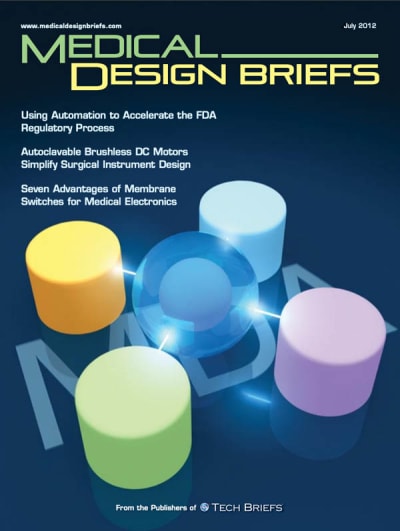
The July 2012 issue of Medical Design Briefs offers a comprehensive look at various innovations and advancements in the medical design field. This edition is particularly focused on enhancing efficiency, safety, and usability in medical devices and systems. Below is a summary of the key articles and topics covered in this issue.
1. Using Automation to Accelerate the FDA Regulatory Process
One of the standout articles discusses the role of automation in expediting the FDA regulatory process. The article highlights how automated systems can streamline documentation, improve data accuracy, and reduce the time required for regulatory submissions. By integrating automation into the regulatory workflow, medical device manufacturers can enhance compliance and speed up the time-to-market for new products. This is particularly crucial in a fast-paced industry where innovation is key to meeting patient needs.
2. Autoclavable Brushless DC Motors
Another significant feature focuses on the use of autoclavable brushless DC motors in surgical instruments. These motors are designed to withstand the high temperatures and pressures of autoclaving, making them ideal for use in sterile environments. The article outlines the advantages of brushless motors, including their reliability, efficiency, and reduced maintenance needs. This technology is essential for ensuring that surgical instruments operate effectively while maintaining the highest standards of hygiene and safety.
3. Seven Advantages of Membrane Switches for Medical Electronics
The issue also delves into the benefits of membrane switches in medical electronics. Membrane switches are increasingly being used in medical devices due to their durability, ease of cleaning, and design flexibility. The article enumerates seven key advantages, such as their resistance to moisture and contaminants, which is vital in medical settings. Additionally, membrane switches can be customized to meet specific user interface requirements, enhancing the overall user experience.
4. User Experience in Medical-Grade Foot Controls
A feature article discusses the design considerations for medical-grade foot controls, emphasizing the importance of user experience. The article outlines how ergonomic design, intuitive controls, and feedback mechanisms can significantly improve the usability of foot-operated devices. By focusing on the end-user, manufacturers can create products that not only meet functional requirements but also enhance the comfort and efficiency of healthcare professionals during procedures.
5. Innovations in Medical Device Design
The magazine also showcases various innovations in medical device design, highlighting new technologies and materials that are shaping the future of healthcare. This includes advancements in biocompatible materials, which are crucial for implants and devices that interact with the human body. The exploration of new manufacturing techniques, such as 3D printing, is also discussed, illustrating how these methods can lead to more personalized and effective medical solutions.
6. Regulatory Insights and Best Practices
In addition to product innovations, the issue provides insights into regulatory best practices for medical device manufacturers. It emphasizes the importance of staying informed about changing regulations and guidelines, which can impact product development and market entry. The article offers practical tips for navigating the regulatory landscape, ensuring that companies can maintain compliance while fostering innovation.
7. Case Studies and Real-World Applications
The issue features several case studies that illustrate the successful implementation of new technologies in real-world medical settings. These case studies provide valuable lessons and insights into the challenges and successes faced by manufacturers and healthcare providers. They serve as a source of inspiration for other companies looking to innovate and improve their product offerings.
Conclusion
The July 2012 issue of Medical Design Briefs is a valuable resource for professionals in the medical design and manufacturing industry. It covers a wide range of topics, from regulatory processes and technological advancements to user experience and design considerations. By focusing on innovation and best practices, this issue aims to equip readers with the knowledge and tools necessary to navigate the complexities of the medical device landscape successfully. As the industry continues to evolve, staying informed about these developments is crucial for maintaining a competitive edge and ultimately improving patient care.
This issue not only highlights the importance of technology in medical design but also emphasizes the need for collaboration between manufacturers, healthcare providers, and regulatory bodies to ensure that innovations meet the highest standards of safety and efficacy.
Features
-
Articles
Seven Advantages of Membrane Switches for Medical Electronics
The Automation of FDA Medical Device Design Controls
How Autoclavable Brushless DC Motors Can Simplify Surgical Instrument Design
-
Global Innovations
-
Mission Accomplished
ER Doc, Sandia Engineer Join Forces to Develop Better Trauma Shears
New Early Warning System for Seizures Could Lead to Fewer False Alarms
Tech Briefs
-
Cloud-Based Product Lifecycle Management for the Medical Industry
High-Accuracy Closed Loop Force Feedback