
Inside this issue
Overview
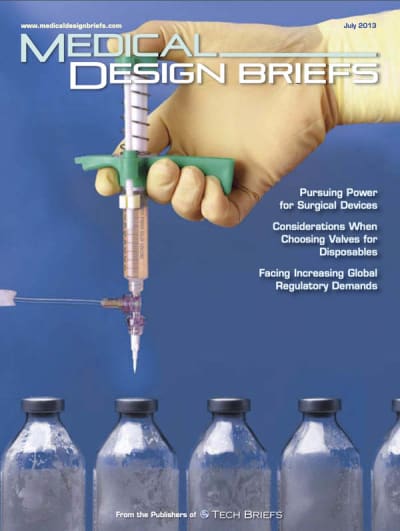
The July 2013 issue of Medical Design Briefs offers a comprehensive exploration of various aspects of medical device design, particularly focusing on surgical devices and the challenges faced by manufacturers in a rapidly evolving regulatory landscape. This issue is designed to provide insights and guidance for professionals in the medical device industry, including engineers, designers, and regulatory specialists.
Key Topics Covered:
-
Pursuing Power for Surgical Devices: The issue delves into the importance of power management in surgical devices. It discusses how advancements in battery technology and power efficiency can enhance the performance of surgical instruments. The article emphasizes the need for devices to be lightweight, portable, and capable of delivering consistent power during procedures. It also highlights the role of rechargeable batteries and energy harvesting technologies in extending the operational life of surgical devices.
-
Considerations When Choosing Valves for Disposables: Another significant topic is the selection of valves for disposable medical devices. The article outlines the critical factors that manufacturers must consider, such as material compatibility, flow characteristics, and the impact of sterilization processes on valve performance. It provides insights into the various types of valves available and their applications in disposable devices, emphasizing the importance of reliability and safety in design.
-
Facing Increasing Global Regulatory Demands: The issue addresses the growing complexity of global regulatory requirements for medical devices. It discusses the challenges that manufacturers face in ensuring compliance with different standards across various markets. The article provides strategies for navigating these regulatory landscapes, including the importance of thorough documentation, risk management, and the need for ongoing communication with regulatory bodies. It also highlights the significance of understanding the specific requirements of regions such as the European Union and the United States.
User-Centric Design: A recurring theme throughout the issue is the importance of user-centric design in medical devices. The articles stress that understanding the end-user—whether it be healthcare professionals or patients—is crucial for creating effective and safe devices. The issue discusses methodologies for gathering user feedback during the design process and the benefits of iterative design approaches that incorporate user input.
-
Innovations in Materials: The magazine also explores innovations in materials used for medical devices. It discusses the development of biocompatible materials that can enhance device performance while minimizing adverse reactions in patients. The articles highlight the importance of selecting the right materials for specific applications, considering factors such as durability, flexibility, and ease of sterilization.
-
Emerging Technologies: The issue features insights into emerging technologies that are shaping the future of medical device design. Topics include the integration of smart technologies, such as sensors and connectivity features, that enable real-time monitoring and data collection. The potential of these technologies to improve patient outcomes and streamline workflows in healthcare settings is emphasized.
-
Case Studies and Expert Opinions: Throughout the issue, readers will find case studies and expert opinions that provide real-world examples of successful medical device designs. These insights offer valuable lessons on best practices and innovative approaches to overcoming common challenges in the industry.
Conclusion:
The July 2013 issue of Medical Design Briefs serves as a vital resource for professionals in the medical device field. By addressing critical topics such as power management, valve selection, regulatory compliance, user-centric design, material innovations, and emerging technologies, the magazine equips readers with the knowledge and tools necessary to navigate the complexities of medical device design and manufacturing. The emphasis on collaboration, user feedback, and adherence to regulatory standards underscores the commitment to safety and efficacy in medical device development.
This issue not only highlights current trends and challenges but also inspires innovation and forward-thinking in the design of medical devices, ultimately aiming to improve patient care and outcomes in the healthcare industry.
Features
-
R & D
Robotics Gain Insight from Seahorse Design
Creating 3D Shapes Using Hand Gestures
Space Stethoscope Makes Sound Signals Clearer
Revolutionary Spray-On Optical Lens Created
Celtic Knot Designs Inspire Polymer Breakthrough
-
Global Innovations
-
From the Editor
-
Applications
Valve Selection for Disposable Devices: Beyond the Specifications
Injection Molding Principles for Bioabsorbable Polymer Materials
-
Mission Accomplished
Tech Briefs
-
Addressing Compliance Mandates with Product Lifecycle Management
Improving Single-Patient-Use Model with Disposable Blood Pressure Cuff
Products
-
Product of the Month: BL600 Bluetooth Modules For Devices
3D Image Manipulation Capability For Equipment
N2 and N2-5XA CNC Horizontal Machining Centers
New Bobbin Design For Braiding
MediSpec Micro Extrusion Primary Wires
Force Sensing Linear Potentiometer
STM24 Motor + Drive With Ethernet
Mercury-Free Nickel Zinc Batteries
Blackfly PoE GigE Vision Cameras
STH and STQ Duplex Metering Pumps
4kW High Voltage Power Supply Family
EP13 Plus DC/DC Transformer Platform
VibChecker Vibration Monitor Meter
High-Purity Medical Elastomers
Micro-Dimensionair II Portable Air Gage
Suture Anchor and Rotator Cuff Repair System