
Inside this issue
Overview
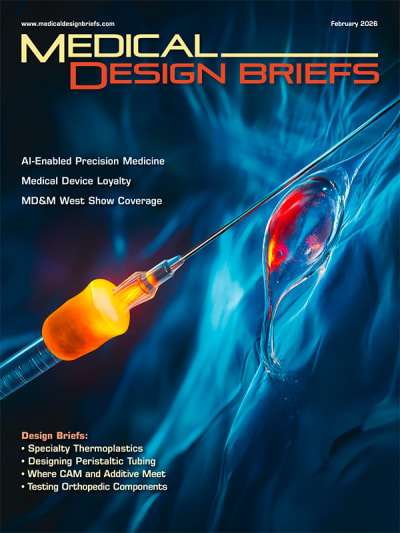
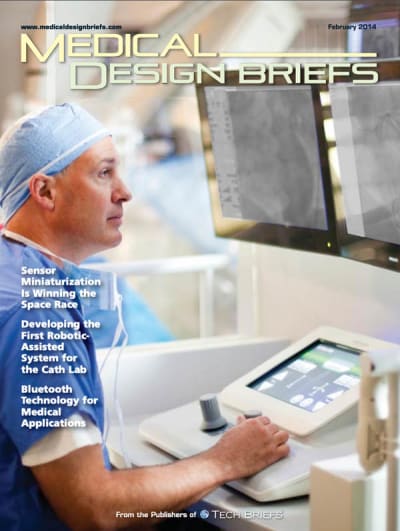
The February 2014 issue of Medical Design Briefs presents a comprehensive exploration of innovative technologies and design advancements in the medical field. This edition highlights several key topics that reflect the ongoing evolution of medical devices and systems, emphasizing the importance of safety, usability, and technological integration.
Key Highlights:
-
Sensor Miniaturization: The issue opens with a focus on sensor miniaturization, which is becoming increasingly critical in the development of medical devices. Smaller sensors allow for more compact and portable devices, enhancing patient comfort and usability. The article discusses various applications of miniaturized sensors, including their role in wearable health monitoring devices that can track vital signs and other health metrics in real-time. This advancement not only improves patient care but also facilitates remote monitoring, which is essential in today’s healthcare landscape.
-
Robotic-Assisted Systems for the Cath Lab: Another significant feature of this issue is the development of robotic-assisted systems specifically designed for catheterization labs (cath labs). These systems aim to enhance precision and control during procedures, reducing the risk of complications and improving patient outcomes. The article delves into the technology behind these robotic systems, discussing how they integrate with existing medical equipment and the potential benefits they offer to both healthcare providers and patients. The use of robotics in cath labs represents a significant shift towards automation in medical procedures, promising to streamline workflows and enhance procedural accuracy.
Bluetooth Technology in Medical Applications: The integration of Bluetooth technology into medical devices is another focal point of this issue. Bluetooth enables wireless communication between devices, allowing for seamless data transfer and connectivity. This technology is particularly beneficial in the development of mobile health applications, where patients can easily share their health data with healthcare providers. The article explores various Bluetooth-enabled devices, such as glucose monitors and heart rate sensors, highlighting their impact on patient engagement and self-management of health conditions. The convenience of wireless technology is transforming how patients interact with their healthcare, making it easier to monitor and manage chronic conditions.
-
Design Considerations for Medical Devices: The magazine also addresses the critical design considerations that must be taken into account when developing medical devices. Safety, usability, and compliance with regulatory standards are paramount. The issue emphasizes the importance of user-centered design, which involves understanding the needs and preferences of both healthcare providers and patients. By prioritizing usability, designers can create devices that are not only effective but also intuitive and easy to use, ultimately leading to better patient outcomes.
-
Case Studies and Real-World Applications: Throughout the issue, several case studies are presented, showcasing real-world applications of the technologies discussed. These case studies provide insights into how innovative designs and technologies are being implemented in clinical settings, demonstrating their effectiveness and the challenges faced during development and deployment. The inclusion of these examples helps to contextualize the advancements in medical design, illustrating their practical implications in improving healthcare delivery.
-
Future Trends in Medical Design: The issue concludes with a forward-looking perspective on future trends in medical design. It discusses the potential for further advancements in sensor technology, robotics, and wireless communication, as well as the growing importance of data analytics in healthcare. As the industry continues to evolve, the integration of artificial intelligence and machine learning into medical devices is anticipated to play a significant role in enhancing diagnostic capabilities and personalizing patient care.
Conclusion:
The February 2014 issue of Medical Design Briefs serves as a valuable resource for professionals in the medical design field, offering insights into the latest technologies and design strategies that are shaping the future of healthcare. By focusing on sensor miniaturization, robotic-assisted systems, Bluetooth technology, and user-centered design, this edition highlights the critical advancements that are improving patient care and transforming medical practices. As the industry continues to innovate, the importance of collaboration between engineers, designers, and healthcare providers will be essential in driving the next wave of medical device development. This issue not only informs but also inspires readers to consider the possibilities that lie ahead in the realm of medical design.
Features
-
Articles
Developing and Commercializing the First Robotic-Assisted System for the Catheterization Lab
Top Challenges for Today's Medical Device Designers: Winning the Space Race
‘Intelligent’ Fluid Couplings Communicate Critical Device and Process Data
-
R & D
Tongue Stud Used to Control Wheelchair
X-Ray Technology for Soft Tissues
Continuous Patient Monitoring with “Diagnostic Skin”
Transistor for High-Performance Devices at Low Voltage
Mighty Morphing Composite Material
-
From the Editor
-
Mission Accomplished