
Inside this issue
Overview
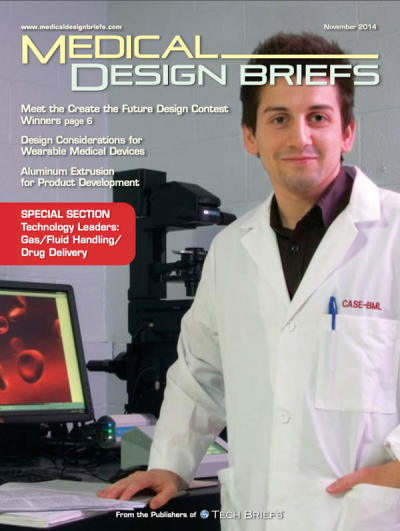
The November 2014 issue of Medical Design Briefs presents a comprehensive exploration of innovative design and technology in the medical field. This edition features a variety of articles that highlight advancements in medical device design, manufacturing processes, and industry trends, making it a valuable resource for professionals in the medical design and engineering sectors.
1. Create the Future Design Contest Winners: One of the standout features of this issue is the announcement of the winners of the Create the Future Design Contest. This annual competition encourages engineers and designers to submit their innovative ideas for new products that can improve quality of life. The winning designs showcase creativity and practicality, addressing real-world challenges in healthcare and medical technology.
2. Design Considerations for Wearable Medical Devices: The issue delves into the growing trend of wearable medical devices, which are becoming increasingly popular for monitoring health and wellness. The article discusses key design considerations, such as user comfort, battery life, data accuracy, and connectivity. It emphasizes the importance of user-centered design to ensure that these devices are not only functional but also appealing to consumers. The integration of sensors and the need for robust data security are also highlighted as critical factors in the development of wearable technology.
3. Aluminum Extrusion for Product Development: Another significant topic covered is the use of aluminum extrusion in product development. This manufacturing process is praised for its versatility, lightweight properties, and strength, making it an ideal choice for various medical applications. The article outlines the benefits of aluminum extrusion, including cost-effectiveness and the ability to create complex shapes that meet specific design requirements. It also discusses how this process can streamline production and reduce time to market for new medical devices.
4. Technology Leaders: Gas/Fluid Handling/Drug Delivery: The issue features a special section dedicated to technology leaders in gas and fluid handling, as well as drug delivery systems. This section provides insights into the latest advancements in these critical areas of medical technology. It discusses innovations in delivery mechanisms, such as pumps and valves, that enhance the efficiency and reliability of drug delivery systems. The importance of precision and control in these technologies is emphasized, as they play a crucial role in patient safety and treatment efficacy.
5. Industry Insights and Trends: Throughout the magazine, various articles provide insights into current industry trends, including regulatory challenges, market demands, and emerging technologies. The issue addresses the impact of regulatory changes on product development timelines and the importance of compliance in ensuring patient safety. Additionally, it explores the growing demand for personalized medicine and how this trend is influencing the design of medical devices.
6. Case Studies and Applications: The magazine includes several case studies that illustrate successful applications of innovative designs in real-world scenarios. These case studies highlight the collaboration between engineers, designers, and healthcare professionals to create solutions that meet specific patient needs. They serve as inspiration for readers looking to implement similar strategies in their own projects.
7. Expert Opinions and Interviews: Interviews with industry experts provide valuable perspectives on the future of medical design and technology. These discussions cover topics such as the role of artificial intelligence in healthcare, the importance of interdisciplinary collaboration, and the challenges of integrating new technologies into existing healthcare systems. The insights shared by these experts offer a glimpse into the evolving landscape of medical technology and the opportunities that lie ahead.
8. Resources and Tools: The issue also features a variety of resources and tools for medical designers and engineers. This includes information on upcoming conferences, workshops, and webinars that focus on medical design and technology. Additionally, readers are provided with links to online resources and databases that can aid in their research and development efforts.
In conclusion, the November 2014 issue of Medical Design Briefs serves as a vital resource for professionals in the medical design and engineering fields. With its focus on innovation, user-centered design, and the latest industry trends, this edition provides a wealth of information that can inspire and inform the next generation of medical devices. Whether through the recognition of outstanding design achievements, the exploration of new manufacturing techniques, or the discussion of emerging technologies, this issue encapsulates the dynamic nature of the medical design landscape.
Features
-
Articles
Regenerating the Future of Biomaterials in Orthopedics
Building a Healthier Future, Layer by Layer
Today’s Wearable Medical Devices: A Few Key Design Considerations
Choosing MEMS Pressure Sensors for Medical Device Applications
-
R & D
Detecting Newborn Jaundice with a Smartphone
Advancing Medical Imaging with Ultra-Thin Detector
New Semiconductor Material Beats Graphene
-
From the Editor
-
Technology Leaders
Technologies and Trends in Precision Fluid Dispensing for Medical Product Manufacturing
Key Instrumentation Considerations in Medical Gas Delivery Systems
-
Mission Accomplished
Tech Briefs
-
Why Using the Right Rubber Compound Is Important for Medical Seals
Wrist-Mounted Robot Adds Extra Fingers
Revitalizing Product Development with Aluminum Extrusions
Biospleen Device Can Transform Sepsis Treatment