
Inside this issue
Overview
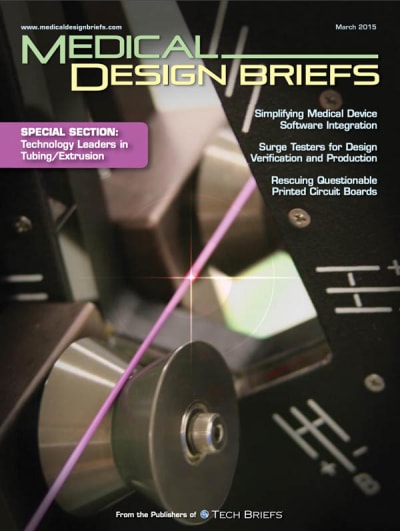
The March 2015 issue of Medical Design Briefs offers a comprehensive look at the latest advancements and challenges in the medical device industry, focusing on software integration, design verification, and innovative technologies in tubing and extrusion. This edition serves as a valuable resource for professionals in the field, providing insights into improving product development and ensuring compliance with industry standards.
Key Highlights:
-
Simplifying Medical Device Software Integration: The issue opens with an exploration of the complexities involved in integrating software into medical devices. As the industry moves towards more sophisticated technologies, the need for seamless software integration becomes paramount. The article discusses best practices for ensuring that software components work harmoniously with hardware, emphasizing the importance of thorough testing and validation processes. It also highlights the role of regulatory compliance in software development, ensuring that devices meet safety and efficacy standards.
-
Surge Testers for Design Verification and Production: Another significant feature of this issue is the focus on surge testers, which are critical for verifying the design and production of medical devices. The article outlines how surge testing can help identify potential failures in devices before they reach the market. It discusses various testing methodologies and the importance of simulating real-world conditions to ensure device reliability. The piece also emphasizes the need for manufacturers to adopt rigorous testing protocols to enhance product safety and performance.
-
Rescuing Questionable Printed Circuit Boards: The issue addresses the challenges associated with printed circuit boards (PCBs) in medical devices. It discusses common issues that can arise during the manufacturing process, such as defects and failures, and presents strategies for rescuing questionable PCBs. The article provides insights into repair techniques and the importance of quality control measures to prevent defects from occurring in the first place. This section is particularly relevant for manufacturers looking to reduce waste and improve the longevity of their products.
Special Section: Technology Leaders in Tubing/Extrusion: A special section of the magazine is dedicated to technology leaders in tubing and extrusion, highlighting innovations that are shaping the future of medical devices. This segment features interviews with industry experts who share their insights on the latest trends and technologies in tubing materials and manufacturing processes. The discussion includes advancements in biocompatible materials, which are crucial for ensuring patient safety and device efficacy. The section also covers the importance of customization in tubing solutions to meet the specific needs of various medical applications.
-
Industry Trends and Future Directions: Throughout the issue, there is a strong emphasis on the evolving landscape of the medical device industry. The articles collectively highlight the increasing importance of collaboration between manufacturers, software developers, and regulatory bodies to drive innovation. The issue also touches on the growing trend of incorporating advanced technologies, such as artificial intelligence and machine learning, into medical devices to enhance functionality and user experience.
-
Resources and Further Information: The magazine provides several resources for readers seeking additional information. Each article includes links to free information and further reading, allowing professionals to delve deeper into specific topics of interest. This feature is particularly beneficial for those looking to stay updated on the latest developments and best practices in the industry.
Conclusion:
The March 2015 issue of Medical Design Briefs serves as an essential guide for professionals in the medical device sector. By addressing critical topics such as software integration, design verification, and innovative tubing technologies, the magazine equips readers with the knowledge and tools necessary to navigate the complexities of the industry. As the medical device landscape continues to evolve, staying informed about these advancements is crucial for ensuring the development of safe, effective, and innovative products that meet the needs of healthcare providers and patients alike.
This issue not only highlights current challenges but also offers a glimpse into the future of medical device technology, making it a must-read for anyone involved in the design and manufacturing of medical devices.
Features
-
Articles
A Recipe for Electroforming Success: Making Ultra-Precise, Ultra-Small 3D Structures
DOEs Rescue Questionable Medical Electronics PCBs
Using Surge Testers for Design Verification and Production Testing
How to Simplify Medical Device Software Integration and Certification
-
R & D
Diagnostics-in-a-Suitcase Rapidly Detects Ebola
Researchers Develop Self-Folding Origami Structures
Tattoo-Like Sensor Detects Glucose Levels
Nanoscale Surface Repels Bacteria
-
Global Innovations
-
From the Editor
-
Technology Leaders
Creating a Technically Advanced Medical Tube: An Independent Extruder’s Perspective
-
Mission Accomplished