
Inside this issue
Supplements
Overview
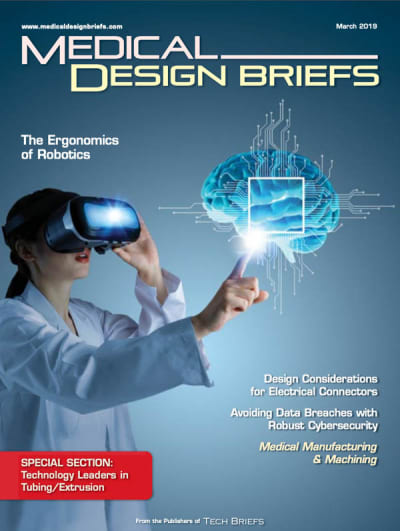
The March 2019 issue of Medical Design Briefs presents a comprehensive overview of the latest advancements and innovations in the medical design and manufacturing sectors. This edition is particularly notable for its focus on revolutionary materials and technologies that are shaping the future of medical devices and engineering.
Editorial Highlights: The issue opens with an editorial that celebrates the winners of the "Products of the Month" contest, where readers voted for the most significant new technologies introduced in 2018. The winners are recognized for their groundbreaking materials that promise to enhance the design engineering community.
Special Sections: One of the key features of this issue is a special section dedicated to "Technology Leaders in Tubing/Extrusion." This section explores the latest developments in tubing and extrusion technologies, which are critical for various medical applications, including drug delivery systems and fluid management. The advancements in materials and manufacturing processes are highlighted, showcasing how they contribute to improved performance and safety in medical devices.
Another significant topic covered is "The Ergonomics of Robotics." As robotics play an increasingly vital role in medical procedures and manufacturing, understanding ergonomic design becomes essential. This section discusses how ergonomic considerations can enhance the usability and effectiveness of robotic systems in healthcare settings, ultimately leading to better patient outcomes and operator comfort.
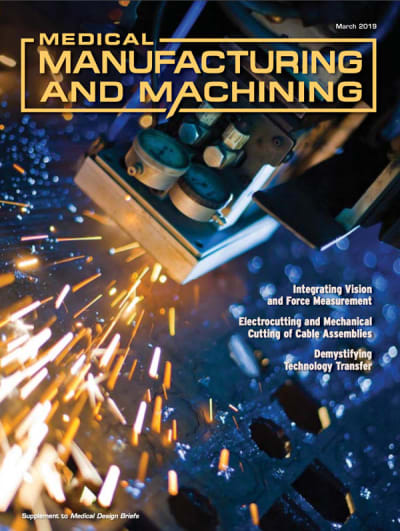
Technical Insights: The magazine delves into various technical articles that provide insights into specific technologies and methodologies. One article focuses on integrating vision and force measurement in medical devices, emphasizing the importance of precision and accuracy in surgical instruments and robotic systems. This integration allows for enhanced feedback and control, which is crucial in delicate medical procedures.
Additionally, the issue features a discussion on electrocutting and mechanical cutting of cable assemblies. This topic is particularly relevant for manufacturers of medical devices that require precise and reliable cable management solutions. The article outlines the benefits of these cutting techniques, including improved efficiency and reduced risk of damage to sensitive components.
Cybersecurity Considerations: In light of the increasing prevalence of data breaches in the healthcare sector, the issue addresses the importance of robust cybersecurity measures. An article dedicated to "Avoiding Data Breaches with Robust Cybersecurity" provides practical tips and strategies for medical device manufacturers to protect sensitive patient data and ensure compliance with regulatory standards. This is a critical concern as the industry moves towards more connected and digital solutions.
Advertiser Index: The magazine also includes an advertiser index, showcasing various companies and their contributions to the medical design and manufacturing fields. Notable advertisers include AirBorn, Inc., B. Braun Medical Inc., and Eurofins Medical Device Testing, among others. Each company is highlighted with a brief description and contact information, providing readers with resources for further exploration of products and services.
Subscription Information: For those interested in subscribing, the magazine outlines subscription rates for both U.S. and international readers. It provides details on how to obtain single copies and digital versions, ensuring accessibility for a wide audience.
Conclusion: Overall, the March 2019 issue of Medical Design Briefs serves as a valuable resource for professionals in the medical design and manufacturing sectors. With its focus on innovative technologies, ergonomic design, and cybersecurity, the issue addresses critical topics that are shaping the future of medical devices. Readers are encouraged to engage with the content, explore the featured technologies, and consider the implications of these advancements in their own work.
This edition not only highlights the achievements of the past year but also sets the stage for future developments in the medical engineering landscape, making it a must-read for industry professionals seeking to stay informed and competitive.
Features
-
Articles
10 The Ergonomics of Robotics: Part 2
16 Electrical Connectors: Design Considerations for Medical Devices
35 Proactive Cybersecurity Saves Healthcare Organizations from Data Breaches
-
R & D
38 Positive Results for Artificial Pancreas and Smartphone App
-
Global Innovations
50 Ultrasoft Sensor Monitors Heart Cells with Minimal Disruption
-
Technology Leaders
20 High-Consistency Rubber Provides Versatility for Medical Device Manufacturing
Tech Briefs
-
39 Finger Support Could Help Regain Motor Function
40 Artificial Skin Could Give Superhuman Perception
42 Wireless Sensor Monitors Blood Flow after Surgery
43 Smart Knee Implants Could Reduce Number of Knee Replacement Surgeries
44 3D Nanoprinting Strategy Opens Door to Revolution in Medicine, Robotics
45 3D Printed Implant Promotes Nerve Cell Growth to Treat Spinal Cord Injury
Products
-
Briefs
Process Developed to 3D Print Piezoelectric Materials
Low-Cost Sensors Have High Impact on Productivity
Research Explores Internal Flow Behavior in Additive Manufacturing, Welding of Metals