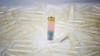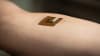


Engineers have created the first ingestible bioprinter that can be guided to disease sites to print tissue within the body. Called MEDS (Magnetic Endoluminal Deposition System), the technology opens the door to a new modality of non-invasive medical intervention.
MEDS is designed like a ballpoint pen with a spring tip that releases ink — except here, the device is much smaller, and the ‘ink’ is a living bio-gel. About the size of a pill, MEDS contains a tiny chamber of bio-ink and a spring-plunger mechanism that pushes the material out. With no on-board electronics, the release is switched on by an external near-infrared laser beam that safely penetrates the body’s tissues. As the bio-ink emerges, the capsule is steered with precision by an external magnet mounted on a robotic arm, much like guiding a joystick.
In their experiments, the team used their bioprinter to repair artificial ulcers of various sizes on simulated gastric tissue, and even to seal a simulated hemorrhage. In in-vivo experiments performed at an accredited animal research facility in the United States, the researchers also successfully used their device to deposit bio-ink in the gastric tracts of rabbits. In these experiments, the team tracked the capsule’s movements using x-ray fluoroscopy, demonstrating the potential of the device — which can be retrieved orally using magnet guidance — for minimally invasive repair.
The researchers emphasize that in addition to protecting ulcers from gastric juices, the bio-ink itself can be combined with medicine or cells to further boost tissue repair.
The results support the foundational role of MEDS in future bioprinting applications. Next, the team plans to extend its capabilities into blood vessels and the tissues of the abdominal wall.