
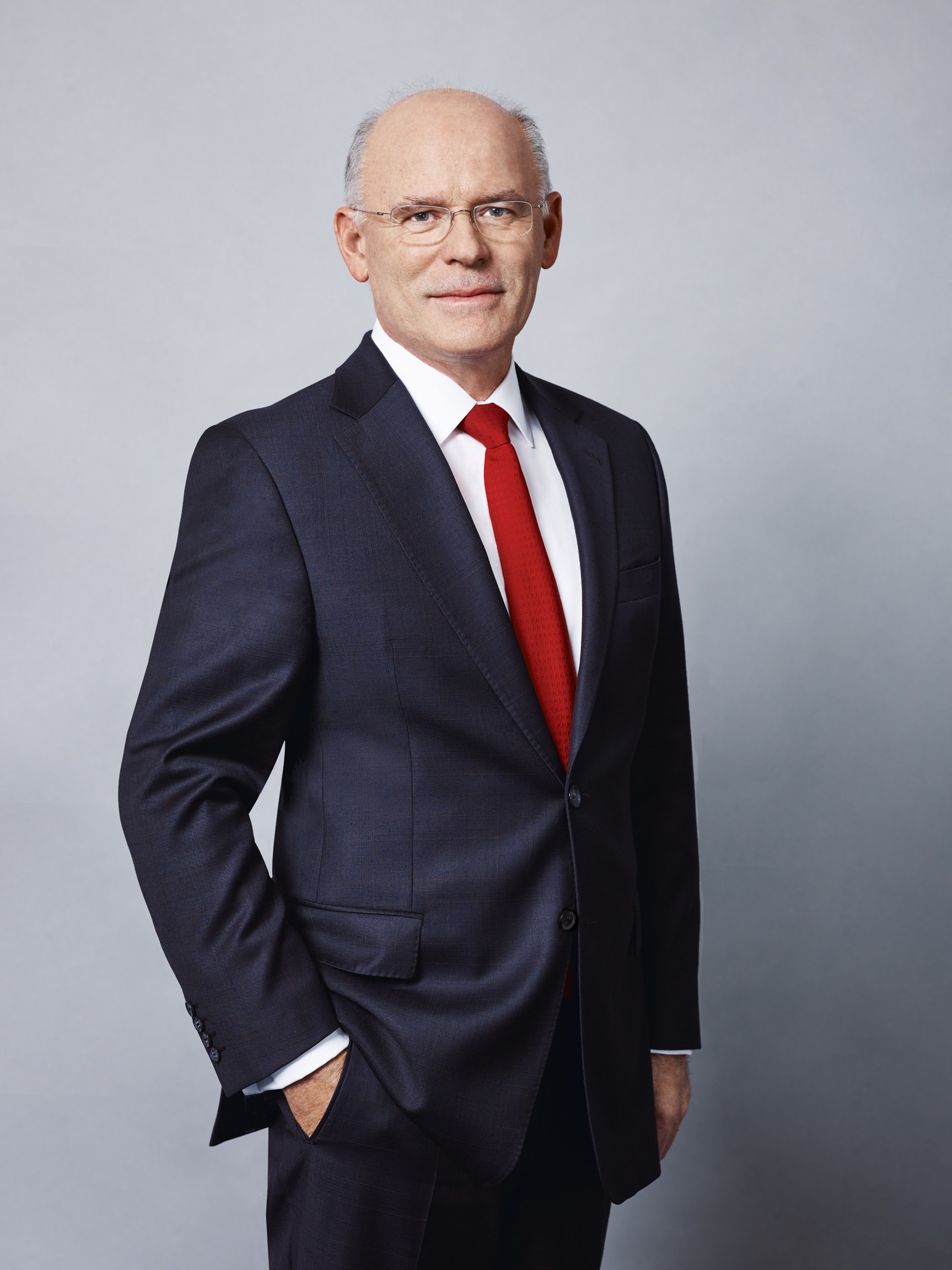
“Free trade is being abandoned, which is very worrying, said Rudolf Staudigl, CEO of silicone giant Wacker Chemical . Staudigl made the assertion at the silicone giant’s recent annual press conference. “Free trade is crucial for the world economy,” he said and noted that “protectionist” positions by some countries — including the United States — will be a barrier to free trade and could affect the market in the coming year, even though economic experts indicate that the world economy is on track for moderate growth. However, Staudigl said he expects Wacker to increase sales in 2017, despite expectations of higher raw-material prices, worldwide political and social upheaval, and uncertain market conditions.
During the first two months of 2017, Wacker’s business showed positive growth in all areas. Staudigl said Wacker expects to generate sales of some €1.4 billion (~$1.5 billion) in the first quarter of 2017. In addition to volume growth, the company is achieving better prices than a year earlier, and it expects sales to increase by a mid-single-digit percentage. He also said that the company plans to expand "faster than the average rate in the chemical industry" by developing innovative products and increasing specialty products in its portfolio.
“Wacker is in very good shape,” said Staudigl. “We expect volumes to rise at every division. In the industry sectors relevant to our business, the trend will be broadly positive in 2017. That is why we are confident of increasing sales by a slightly higher percentage than last year.” However, he said that rising raw-material could impact earnings. “ Sales are projected to continue rising at all three of its chemical divisions. At Wacker Silicones and Wacker Polymers, sales are expected to grow by a mid-single-digit percentage. At Wacker Biosolutions, the sales forecast is for a low-single-digit percentage increase, driven chiefly by products for the pharmaceutical and agrochemical industries.
In 2016, the company completed construction of its new polysilicon site in Charleston, TN, investing about €100 million (~$106.4 million) — or about a quarter of total capital spending in 2016. The company also expanded its capacity for manufacturing downstream products, investing €25 million (~$26.6 million) to increase production capacity for cyclodextrins by 30 percent at its site in Eddyville, IA, and to expand production of functional silicone fluids in several stages at its Burghausen, Germany, site. Wacker also began work on new facilities for silicone products at sites in Jincheon, South Korea, and Jandira, Brazil. In Burghausen, it began building a new reactor for polymeric dispersions and initiated expansion of its plant for hydrophobic specialty grades of silica.
In 2016, sales at Wacker Silicones topped the €2 billion (~$2.13 billion) mark for the first time due to a 3 percent increase in volume growth amid somewhat lower prices. Sales at Wacker Polymers grew slightly in 2016, up 1 percent to around €1.20 (~$1.28) due to higher volumes for dispersions and dispersible polymer powders. The sales trend was also positive at Wacker Biosolutions due to higher volumes. The company added 230 new employees, which it attributed to sales growth at its chemical divisions and the startup of the new site in Charleston.