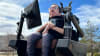

Researchers from Newcastle University, United Kingdom, have developed a bionic hand that senses pressure and temperature, and transmits the information back to the brain.
The electrodes in the bionic limb wrap around the nerve endings in the arm. The "virtual hand" provides information on the sense of the hand’s position and movement, known as "proprioception." The system also translates the signals and stimulates the nervous system to help the user control the hand.
Building this level of feedback into prosthetic devices will enable much higher levels of function for people who have lost their limbs. Bringing together some of the UK’s leading researchers in the field of rehabilitation research, the team will build fingertip sensors to give the prosthesis a realistic sense of touch, including pressure, shear, and temperature.
The device improves upon current plug-and-socket designs, which are less effective when muscle ends are too damaged to be able to use the limb.