
Researchers at Kiel University, Kiel, Germany, have been studying the role of adhesion in nature, which allows insects and lizards to climb walls, plants to twine up structures, and even bacteria cling to surfaces. During evolution, many of these develop mushroom-shaped adhesive structures and organs, but why that shape? The researchers say they have discovered why that specific shape is advantageous.
The answer, they say, lies in homogeneous stress distribution between a surface and the adhesive element. While the roughness of contacting surfaces plays a part, their contact shapes, called contact geometry, determine adhesion strength between them. In nature, mushroom-shaped contact geometry prevails. It has evolved in a range of both terrestrial and aquatic organisms independently at the nano, micro, and macro scale, they explained. However, it remained unclear what the mechanical advantages of the mushroom shape are.
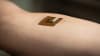
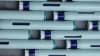
To answer this question, an interdisciplinary research team took a closer look at Gecko®-Tape, an adhesive developed at Kiel University in collaboration with the company Gottlieb Binder GmbH & Co. KG. Its microscopic adhesive elements were inspired by the feet of geckos and leaf beetles. It adheres even to wet and slippery surfaces and can be re-used endlessly and removed without leaving any residues.
The scientists photographed the detachment process at 180,000 frames per second and discovered that the actual moment of detachment, “when a defect in the contact area starts to develop up to its complete separation,” only lasts for a few micro-seconds. The contact rips apart with up to 60 percent of the speed of sound of the material, or 12 meters per second. They said that this can be achieved only if a homogeneous stress distribution exists between the mushroom-shaped adhesive element and the surface. Reaching such high speeds in this short time requires a lot of elastic energy, which can only be stored when stress in contact is homogeneously distributed.
Other adhesive geometries, such as flat punch, create stress concentrations and start to separate at the edges. With the mushroom head, its thin plate prevents the formation of stress peaks and detaches itself from the inside to the outside. A lot of strength is necessary to do this meaning that the adhesion is strong. Their results were recently been published in the journal, Physical Review Letters.
The findings of this study can be used for further development of glue-free adhesive surfaces with enhanced performance. They plan to create photoswitchable adhesive systems that can be turned between an adhesive and non-adhesive state by light of certain wave lengths.