
The JenLas® D2.mini 5/8 W, recently introduced to the U.S. market, offers an output power of up to 8 Watts. Lasers of the JenLas D2 product line work in continuous wave mode, emitting green laser light at 532 nm. The infrared laser light is converted into green laser light by an intracavity frequency doubling crystal. The new laser is a multi-mode system.
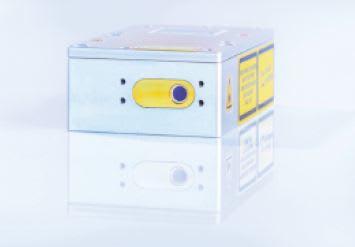
The laser is suitable for OEM integration into laser therapy systems, even ones with small size requirements. The laser can be redesigned to offer an improved beam quality with a typical M² value of less than 5.
Applications
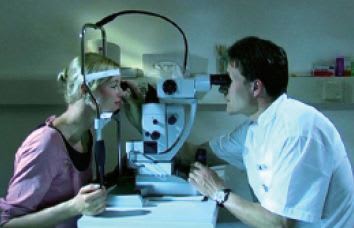
The green laser wavelength (532 nm) offers versatile applications. In the medical field, the most well known application for the green laser light is in ophthalmology, where it is used to “reattach” the retina in the fundus of the eye. However, this laser technology also opens up a wide range of applications such as dermatology, to effectively treat skin changes. Since the wavelength of the green laser is easily absorbed by the melanin that is mainly found in the epidermis of human skin, the laser is also suitable for different dermatological treatments. These applications include agespot and sun-spot removal. It can also be used to remove tattoo ink. A short pulse-width modulation allows vaporization of the ink inside the skin.
The laser beam also reaches the superficial dermis for treatment of dermal vessels and pigmentations. The absorption of laser light by hemoglobin is higher at 532 nm than at the conventional pulsed light wavelength (585 nm), or OPSL (Optically Pumped Semiconductor Laser) wavelength (577 nm).
The laser's pulse characteristics, especially the pulse width, play an important role in many laser applications. To ensure a fine application of the laser treatment to the target tissue, the amount of heat transferred into the surrounding tissue must be minimized. Thus, the preferred pulse width for each application must be less than or equal to the thermal relaxation time of the treated tissue.
Modifying the pulse width can be used to change the effect of the laser radiation on the skin. Since the thermal relaxation of melanin is very short, using a short pulse width setting allows the treatment of epidermal pigmentations, with a negligible effect on the underlying vessels and with little or no additional epidermal cooling requirements. To treat superficial vascular structures containing hemoglobin, the pulse width must be increased and effective cooling of the epidermis must be provided. The technology and power requirements of this laser enable the use of air cooling, which reduces installation and maintenance costs.
After the laser is switched on, its ready-to-proceed time depends on the master device, but can be optimized to less than one minute. The beam quality is not influenced by any negative effects during modulation or continuous wave operation.
The D2.mini is encased in a solid housing. It is subjected to a number of environmental tests before being delivered to the customer, guaranteeing that the laser can operate under a wide range of environmental conditions. Jenoptik’s efficient mass production processes assure low acquisition costs. The company complies with the standards for the manufacturing of ISO 9001:2008.
This technology was done by JENOPTIK Laser GmbH, Jena, Germany. For more information please visit http://info.hotims.com/40433-161 .