Briefs: Electronics & Computers
The biofilm has the potential to revolutionize the world of wearable electronics, powering everything from personal medical sensors to personal electronics.
Briefs: Lighting
The OLEDs are fabricated onto temporary tattoo paper and transferred to a new surface by being pressed onto it and dabbed with water.
Briefs: Manufacturing & Prototyping
The technology allows for higher surface conductivity, improved impedance control, expanded design and application potential, and greater choice of materials for optimized performance.
Briefs: Lighting
But they’re not yet small enough to compete in computing and other applications where electric circuits continue to reign.
Briefs: Sensors/Data Acquisition
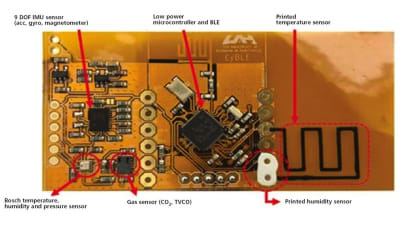
To benchmark performance of printed sensors against the state of the art, NASA has developed a low-power flexible sensor platform.
Briefs: RF & Microwave Electronics
The design produces a compact, efficient, long-lifetime laser transmitter as needed for use in space, while also having potential applications as an airborne or ground-based wind measurement tool.
Briefs: Nanotechnology
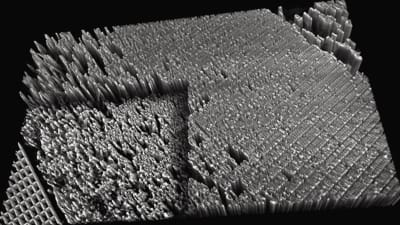
A group of scientists led by the U.S. Department of Energy’s Argonne National Laboratory has created a new method for improving the resolution of hard X-ray nanotomography.
Briefs: RF & Microwave Electronics
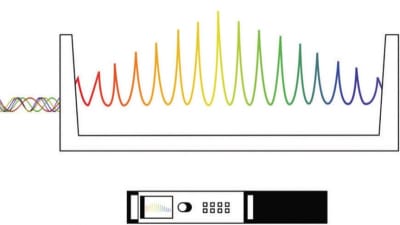
Enter the frequency comb, a Nobel Prize-winning device and the result of decades of research from NIST and others. The comb generates a billion pulses of light per second, which bounce back and forth inside an optical cavity.
Briefs: Imaging
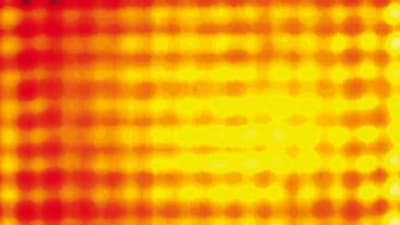
An ultrathin display for holographic images consists of a thin film of titanium filled with tiny holes that precisely correspond with each pixel in a liquid crystal display (LCD) panel.
Briefs: RF & Microwave Electronics
The new NIST instrument captures waves in action by relying on a device known as an optical interferometer.
Briefs: Test & Measurement
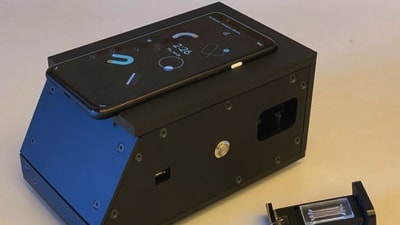
The device could transform public health officials’ ability to quickly detect and respond to the coronavirus — or the next pandemic.
Briefs: Test & Measurement
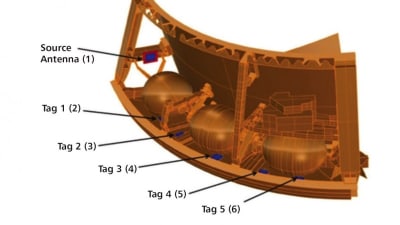
The sensor tags, which are embedded with a processor and memory bank for acquired data, are placed about the vehicle and stream data only when queried by a fixed-location RFID interrogator.
Briefs: Medical
The final product could make temperature measurements that are 10 times more precise than state-of-the-art techniques, acquired in one-tenth the time in a volume 10,000 times smaller.
Briefs: Medical
Unlike other tests, this test gives an estimate of viral load or the number of virus particles in a sample, which can help doctors monitor the progression of a COVID-19 infection and estimate how contagious a patient might be.
Briefs: Materials
The innovation opens the door for faster and more affordable at-home medical testing.
Briefs: Sensors/Data Acquisition
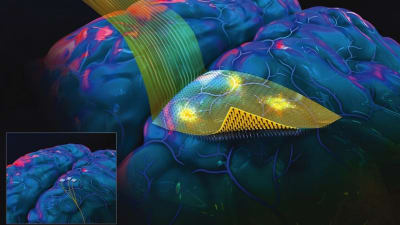
Adding a flexible backing to this kind of brain-computer interface allows the device to more evenly conform to the brain’s complex curved surface and to more uniformly distribute the microneedles that pierce the cortex.
Briefs: Manufacturing & Prototyping
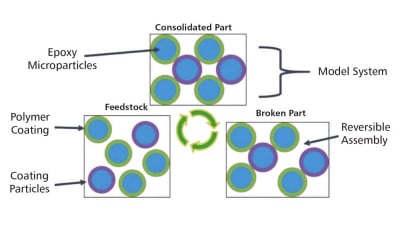
One common limitation of AM has been that produced articles cannot be recycled without substantial energy costs.
Briefs: Green Design & Manufacturing
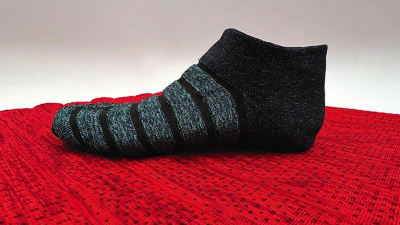
By incorporating a special type of plastic yarn and using heat to slightly melt it — a process called thermoforming — the researchers were able to greatly improve the precision of pressure sensors woven into multilayered knit textiles, which they call 3DKnITS.
Briefs: Design
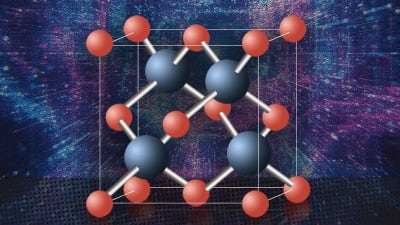
Cubic boron arsenide provides high mobility to both electrons and holes, and it has excellent thermal conductivity. It is, according to the researchers, the best semiconductor material ever found.
Briefs: Imaging
Instead of surgically removing a sample of skin, sending it to a lab, and waiting several days for results, your dermatologist takes pictures of a suspicious-looking lesion and quickly produces a detailed, microscopic image of the skin. This could become routine in clinics.
Briefs: Test & Measurement
Cancer immunotherapy, one of the most important and promising therapies for cancer treatments, is being used by oncologists to treat patients suffering from many different cancers including breast, cervical, colon, stomach, and skin.
Briefs: Medical
Study confirms that hydrogels work in a similar way to how humans detect pressure, paving the way for more ionic devices.
Briefs: Manufacturing & Prototyping
Simulations teach a neural network how to adjust printing parameters to minimize error, and then apply that controller to a real 3D printer. The system printed objects more accurately than all the other 3D-printing controllers they compared it to.
Briefs: Software
The models allow users to optimize X-ray radiography setups, for the detection of crack and crack-like flaws, to penetrate various materials to show internal structures of parts.
Briefs: Medical
The team compared its AI approach, known as virtual native enhancement, with contrast-enhanced CMR scans now used to monitor hypertrophic cardiomyopathy, the most common genetic heart condition.
Briefs: Medical
Researchers developed a novel software algorithm to analyze pulse rate signals and infer the presence of atrial fibrillation on one brand of wearables.
Products: Electronics & Computers
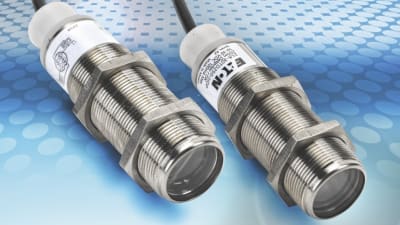
See the new products on the market in October 2022, including harsh duty photoelectric sensors, oil temperature sensors, aquatic pumps, and more.
Facility Focus: Research Lab
The school's research centers have played a major role in development of multiple technologies, including early development of the internet.
Articles: Robotics, Automation & Control
To learn more about each technology, see the contact information provided for that innovation.









 INSIDER: Medical
 Features: Medical
 Features: Materials
 From the Editor: Medical
 INSIDER: Medical
 Features: AR/AI

 Podcasts: Medical
 Podcasts: Medical
 Podcasts: Design
 On-Demand Webinars: Manufacturing & Prototyping
 Podcasts: AR/AI
 Podcasts: Green Design & Manufacturing
