Briefs: Energy
A research group has developed a prototype calcium (Ca) metal rechargeable battery capable of 500 cycles of repeated charge-discharge – the benchmark for practical use.
Briefs: Materials
A team Led by Worcester Polytechnic Institute (WPI) researcher Yan Wang has developed a solvent-free process to manufacture Li-ion battery electrodes that are greener, cheaper, and charge faster than electrodes currently on the market.
Briefs: Energy
In critical applications such as electric vehicles, there is a growing demand for a device that can efficiently produce both high power and high energy over a significant number of cycles.
Briefs: Energy
Two of humanity’s most ubiquitous historical materials, cement, and carbon black may form the basis for a novel, low-cost energy storage system, according to a new study by MIT researchers.
Products: Energy
See the new products, including a battery tester, battery test solution, a battery monitoring system, battery chargers, and more.
Articles: Energy
As the need for sophisticated functionality increases, high-performance computers and zone controllers could be the heart of next-generation vehicle electrical platforms.
Articles: Photonics/Optics
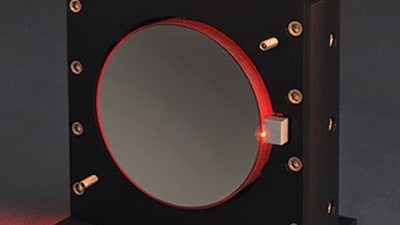
A longstanding partnership between Virginia Polytechnic Institute and State University (Virginia Tech) and Pratt & Whitney has resulted in a new laser-optical technology that aims to revolutionize in-flight thrust measurement.
Application Briefs: Materials
Given its effectiveness pretreating metal surfaces, industrial laser systems are increasingly being used in manufacturing facilities. The systems can be integrated into automated inline processing lines, or technicians can use mobile handheld units.
Application Briefs: Photonics/Optics
The race for very high resolutions places increased demands not only on display manufacturers, but also on the suppliers of light measurement technology.
Briefs: Imaging
A research team has developed a 3D imaging sensor that has an extremely high angular resolution — it can distinguish points of an object separated by an angular distance, of as little as 0.0018°. The sensor operates on a unique angle-to-color conversion principle.
Articles: Electronics & Computers
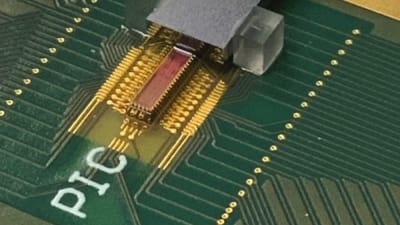
While the promise of smaller, better, faster, lighter devices enabled by integrated photonics technologies is indeed the ultimate goal for AIM Photonics, the actual path to high-volume manufacturing isn’t necessarily a smooth ride for PIC designers, developers, and engineers.
Briefs: Lighting
Engineers have created full-motion video technology that could potentially be used to make cameras that peer through fog, smoke, driving rain, murky water, skin, bone, and other media that reflect scattered light and obscure objects from view.
Briefs: Electronics & Computers
Researchers have demonstrated an energy-efficient method for transferring larger quantities of data over the fiber-optic cables that connect the nodes. This new technology improves on previous attempts to transmit multiple signals simultaneously over the same fiber-optic cables.
Briefs: Semiconductors & ICs
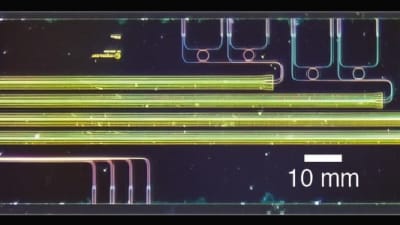
A team of researchers led by electrical engineer Marko Lončar at SEAS has developed a method for building a highly efficient integrated isolator that’s seamlessly incorporated into an optical chip made of lithium niobate.
Briefs: Sensors/Data Acquisition
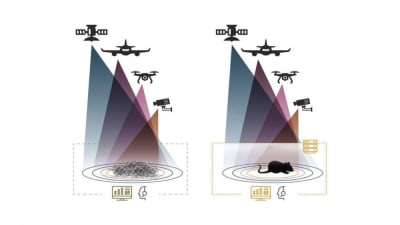
A new patented software system can find the curves of motion in streaming video and images from satellites, drones, and far-range security cameras and turn them into signals to find and track moving objects as small as one pixel.
Products: Photonics/Optics
See the new products, including a handheld NIR spectrometer, a Boson+ thermal camera module, next-generation pump laser diode, and much more.
Articles: Materials
Efficient and complete chamber cleaning processes are critical for the success of CVD/ALD processes.
Videos of the Month: Propulsion
See the videos of the month, including one on Amphenol Sine’s A Series™ family of sealed heavy-duty, multipin plastic and metal connectors; one on RoboSAR – an autonomous search and rescue of victims; and more.
Articles: Robotics, Automation & Control
CenterLine’s successful adoption of the virtual twin showcases the technology’s tremendous potential for the automation industry. As virtual twin technology continues to evolve, it will disrupt industries even further.
Articles: Robotics, Automation & Control
To achieve the numerous benefits of mobile automation, manufacturers must take some key implementation considerations into account and follow essential guidelines. Doing so ensures that they apply the right mobile automation solution.
Briefs: Semiconductors & ICs
MIT researchers have developed a quantum computing architecture that aims to enable extensible, high-fidelity communication between superconducting quantum processors.
Briefs: Electronics & Computers
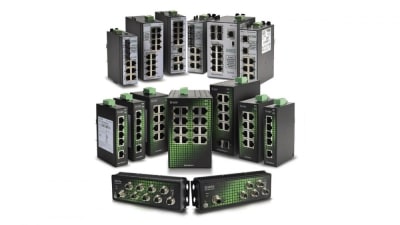
While there may still be times when proprietary or serial communications are useful, the wide availability and low cost of high-performance industrial-specific devices and installation media are making industrial Ethernet the best approach for future-proofing applications and operating most efficiently.
Briefs: Photonics/Optics
Rensselaer Polytechnic Institute’s Moussa N’Gom has devised a method to make communications between satellites and the ground more effective — regardless of the weather.
Briefs: Connectivity
A new paper on wireless connectivity from researchers at the lab of Dinesh Bharadia, an affiliate of the UC San Diego Qualcomm Institute (QI), introduces a new technique for increasing access to the 5G-and-beyond millimeter wave (mmWave) network.
Briefs: RF & Microwave Electronics
NASA's newly developed antenna is lightweight (at or below 2 grams), low volume (at or below 1.2 cm3), and low stowage thickness (approx. 0.7 mm), all while delivering high performance (at or above 10 dBi gain).
Briefs: Design
The next generation of wearable computing technology will be even closer to the wearer than a watch or glasses: It will be affixed to the skin.
Briefs: IoMT
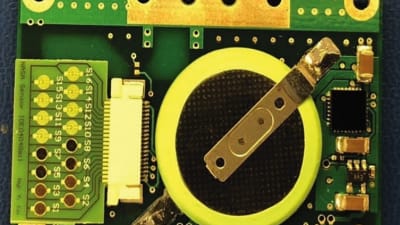
The technology exploits the inherently passive nature of RFID to approximate the services provided by traditional active Internet of Things (IoT) protocols like ZigBee and Bluetooth.
Briefs: RF & Microwave Electronics
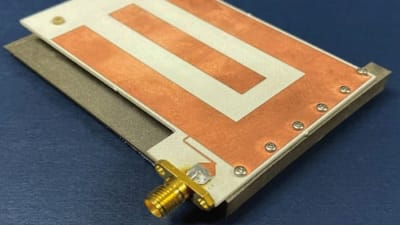
Innovators at NASA Johnson Space Center have developed a quarter-wavelength RFID slot antenna that provides polarization diversity and employs dual resonances, but in a form factor that is much smaller than other RFID antennas that provide similar functionality.
Briefs: Green Design & Manufacturing
To improve efficiency, it is necessary to characterize and reduce flow separation on curved surfaces.




















 INSIDER: Medical
 Features: Medical
 Features: Materials
 From the Editor: Medical
 INSIDER: Medical
 Features: AR/AI

 Podcasts: Medical
 Podcasts: Medical
 Podcasts: Design
 On-Demand Webinars: Manufacturing & Prototyping
 Podcasts: AR/AI
 Podcasts: Green Design & Manufacturing
