Products: Manufacturing & Prototyping
Bosch Sensortec (Kusterdingen, Germany) has announced the BMF055, a compact, programmable 9-axis motion sensor. The new sensor from Bosch Sensortec’s Application-Specific Sensor Node (ASSN) family combines a triaxial 16 bit...
News: Software
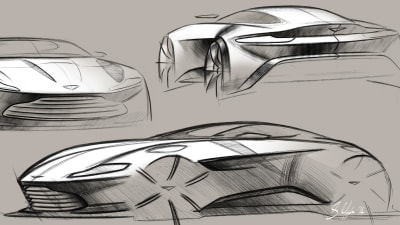
Daniel Craig won’t have to share marquee billing with the Aston Martin DB10, but the usual gadgets and an extended chase scene give the car a major role in Spectre, the latest...
Briefs: Materials
The Orion Crew Module has a pressurized cabin of approximately 20 m3 in volume. There are a number of cold plates within the Crew Module for thermal management. An optical communication type of payload...
Briefs: Materials
Current cryogenic insulation materials suffer from various drawbacks including high cost and weight, lack of structural or load-bearing capability, fabrication complexity, and property anisotropy. A need clearly exists for lightweight thermal insulation that is isotropic and...
Briefs: Materials
A versatile, novel, multifunctional hybrid structural composite of a high-hydrogen epoxy matrix (UN-10) coupled with boron and carbon fibers (IM-7) has been developed. Prototype laminates of 18×18 in. (≈46×46 cm), with the nominal areal density of 0.35 g/cm2, were fabricated in this...
Briefs: Materials
This innovation provides for significantly improved protection from micrometeoroid and orbital debris (MMOD) particles, and reliably determines the location, depth, and extent of MMOD impact damage.
Briefs: Materials
Metering structures of remote sensing instruments often have large openings or access holes. Shear panels that are X-shaped, such as those proposed for the Neutron Star Interior Composition Explorer (NICER), generally consist of C-channels and L-brackets to minimize...
Briefs: Sensors/Data Acquisition
Convective weather systems, i.e., thunderstorms, are the leading cause of flight delay in U.S. airspace. Airline dispatchers must file their flight plans 1 to 2 hours before takeoff, and are often required to...
Briefs: Sensors/Data Acquisition
The Advanced Technology Microwave Sounder (ATMS) Antenna Beam Analysis Software uses a suite of test data to calculate the ATMS instrument beam pointing, and secondarily, the polarization state, in the coordinates of the onboard optical cube. The software uses measurement inputs of RF radiation pattern...
Briefs: Sensors/Data Acquisition
Most instruments under development rely on a traditional computer or laptop, LabVIEW software, and data acquisition (DAQ) components (which interface between the instrument and the...
Briefs: Sensors/Data Acquisition
Government Resource for Algorithm Verification, Independent Test, and Evaluation (GRAVITE) system is a National Oceanic and Atmospheric Administration (NOAA) system, developed and deployed by Joint Polar Satellite System (JPSS) Ground Project to support Calibration and Validation (Cal/Val), Data Quality Monitoring, and Algorithm...
Briefs: Sensors/Data Acquisition
Government Resource for Algorithm Verification, Independent Test, and Evaluation (GRAVITE) system is a National Oceanic and Atmospheric Administration (NOAA) system, developed and deployed by Joint Polar Satellite System (JPSS) Ground Project to support Calibration and Validation (Cal/Val), Data Quality Monitoring, and...
Briefs: Sensors/Data Acquisition
Government Resource for Algorithm Verification, Independent Test, and Evaluation (GRAVITE) system is a National Oceanic and Atmospheric Administration (NOAA) system, developed and deployed by Joint Polar Satellite System (JPSS) Ground Project to support Calibration and Validation (Cal/Val), Data Quality Monitoring, and Algorithm...
Briefs: Sensors/Data Acquisition
Government Resource for Algorithm Verification, Independent Test, and Evaluation (GRAVITE) system is a National Oceanic and Atmospheric Administration (NOAA) system, developed and deployed by Joint Polar Satellite System (JPSS) Ground Project to support Calibration and Validation (Cal/Val), Data Quality Monitoring, and Algorithm...
Briefs: Sensors/Data Acquisition
The Science Processing and Data Management (SPDM) system’s primary functions are to control and monitor science processes and data products for Soil Moisture Active Passive (SMAP) Science Data System (SDS). SPDM adapts the Apache/OODT Framework 0.3 as the basic infrastructure. Although the...
Briefs: Sensors/Data Acquisition
The Hyperlinked Overview of Piloted Evaluations (HOPE) application provides an interface for users to enter data on pilots, metrics, configurations, tasks, and data collection sessions, as well as descriptive information for each item and the experiment as a whole. As this...
Briefs: Sensors/Data Acquisition
Government Resource for Algorithm Verification, Independent Test, and Evaluation (GRAVITE) system is a National Oceanic and Atmospheric Administration (NOAA) system, developed and deployed by Joint Polar Satellite System (JPSS) Ground Project to support Calibration and Validation (Cal/Val), Data Quality Monitoring, and Algorithm...
Briefs: Sensors/Data Acquisition
Government Resource for Algorithm Verification, Independent Test, and Evaluation (GRAVITE) system is a National Oceanic and Atmospheric Ad - ministration (NOAA) system, developed and deployed by Joint Polar Satellite System (JPSS) Ground Project to support Calibration and Validation (Cal/Val), Data Quality Monitoring, and Algorithm...
Briefs: Sensors/Data Acquisition
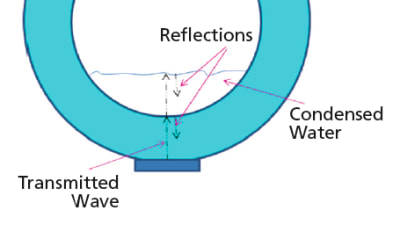
An algorithm for analyzing wave reflections and time-of-flight ultrasonic pulse-echo data has been developed for monitoring the health of steam...
Briefs: Sensors/Data Acquisition
Satellite Situation Update (SSUP) software shows the current locations of a selected set of orbiting spacecraft, along with each satellite’s ground track and/or orbit shape. SSUP is intended as a real-time display, showing multiple spacecraft, that is suitable for a large wall monitor meant to be in public spaces for...
Briefs: Robotics, Automation & Control
Micro aerial vehicles (MAVs) are agile and have unstable flight dynamics. They require a failsafe method to be navigated through areas even without GPS coverage. The approach of this work is to use only the feature matches between two consecutive images, i.e. optical flow...
Briefs: Robotics, Automation & Control
This universal robotically operated leavebehind gripper allows robotic (or extravehicular activity — EVA) attachment capability of any object at eight existing types of attachments at the International Space Station (ISS). It enables expansion of external stowage and payload sites to include...
Briefs: Robotics, Automation & Control
DshellCommon software has been developed for specifying and executing generic multibody system simulations. This innovation helps the user create and execute simulations for mechanisms, vehicles, spacecraft, or other systems by making it easier to write simulation “run scripts” for systems that vary from simple...
Briefs: Robotics, Automation & Control
Huge savings in cost and inspection times (as well as improved safety) could be obtained by performing in-service inspection of tank floors and walls with robotic devices. This would have a reduced environmental impact and meet EPA and state regulations.
Briefs: Robotics, Automation & Control
The Space Exploration and Analysis Simulations (SEAS) project at JPL performs analysis of advanced mission and system concepts on behalf of NASA. One of the concepts being explored involves operation of robotic rovers on the Moon from a remote operator station located either at a...
Briefs: Robotics, Automation & Control
The Exoskeleton (EXO) is a device that falls into a new classification of robotics called wearable robots. On-orbit applications include countermeasures and dynamometry, allowing for continual assessment of a...
Briefs: Aerospace
A new tool calculates vehicle aerodynamic flight parameters from observed flight trajectory. These flight-observed parameters are then compared to the expected aerodynamic parameters for a nominal vehicle flying the same trajectory. The differences in the observed versus expected aerodynamic parameters...
Briefs: Aerospace
This collection of C++ classes allows users to create and simulate aerospace vehicle models that are needed to test prototyped display software. A software model of the Apollo LEM spacecraft was developed on a Windows-based PC, and was used for initial testing and research of cockpit displays. The model was...
Briefs: Aerospace
Autonomous operations of small unmanned aerial vehicles, or UAVs (quadrotors), require safety modules to alert a human operator of a critical system state, or even take over control of the vehicle entirely to initiate a pre-defined safety maneuver during an emergency (e.g. an emergency landing when a radio link is...




 INSIDER: Medical
 Features: Medical
 Features: Materials
 From the Editor: Medical
 INSIDER: Medical
 Features: AR/AI

 Podcasts: Medical
 Podcasts: Medical
 Podcasts: Design
 On-Demand Webinars: Manufacturing & Prototyping
 Podcasts: AR/AI
 Podcasts: Green Design & Manufacturing
