NASA Spinoff: Sensors/Data Acquisition
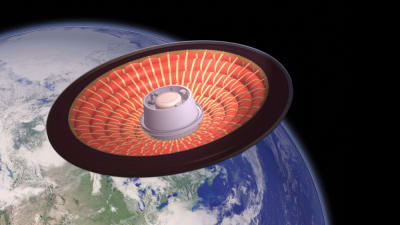
While screaming toward Earth at 17,000 mph, the inflatable heat shield on NASA’s Low-Earth Orbit Flight Test of an Inflatable Decelerator experiment needed to record as much data as possible. Rather than having individual sensors all along its surface, optical fibers were woven through the heat shield, each connected to a device that could take temperature readings from anywhere along the filament. Such high-fidelity fiber-optic sensing technology took NASA years of work, and now a company the agency collaborated with is making it available to industry. Read on to learn more.
NASA Spinoff: Green Design & Manufacturing
Whether protecting crops from diseases and pests or sanitizing contaminated surfaces, the ability to spray protective chemicals over important resources is key to several industries. Electrostatic Spraying Systems Inc. of Watkinsville, Georgia, manufactures electrostatic sprayers and equipment that make this possible. Read on to learn more.
NASA Spinoff: Connectivity
It’s hard enough to go online with a smartphone using one hand when you’re holding a squirming toddler or dragging a suitcase. Try doing it when you can’t see — it can be incredibly difficult. That’s partly because devices and programs used to access the internet are often designed for people without disabilities. Equalize Digital Inc. is working to ensure all users have equal access to the web, and NASA is helping. Read on to learn more.
NASA Spinoff: Information Technology
NASA feedback enables better display systems for aircraft as well as interfaces on the infotainment and instrument cluster displays of many cars.
NASA Spinoff: Software
As of 2024, there are more than 45,000 human-made objects orbiting Earth, and these are just the ones we can track. With so many crowded orbits, and hundreds more satellites being launched every year, close approaches are inevitable. So, the Department of Commerce is building a system to predict close approaches for all operators, the Traffic Coordination System for Space (TraCSS). Read on to learn more.
NASA Spinoff: Green Design & Manufacturing
Researchers at the Beijing Institute of Technology have unveiled an innovative electrothermal microgripper that promises to improve microelectronics, biomedical engineering, and MEMS applications. Read on to learn more about it.
NASA Spinoff: AR/AI
KX Systems, a division of FD Technologies plc., is a technology company that offers database management and analytics software for customers that need to make decisions quickly. While KX started in 1993, the AI-driven part of its business has grown considerably. And the company credits work done with NASA for accelerating some of its capabilities. Read on to learn more.
NASA Spinoff: Information Technology
With help from the Jet Propulsion Laboratory, Dublin-based Ubotica Technologies validated computer equipment designed to process data in orbit, now available for commercial satellites. Read on to learn more about it.
NASA Spinoff: Aerospace
Few things capture a child’s imagination like space exploration. According to a 2018 study by Harris Insights and Analytics, “astronaut” is one of the most popular answers kids give to the enduring question, “What do you want to be when you grow up?” For all those children who could go on to make those dreams a reality, a solid education in science, technology, engineering, and math (STEM) starts early. Now NASA is lending expertise to bolster one company’s lesson plans. Read on to learn more.
NASA Spinoff: Electronics & Computers
At the heart of every satellite is a computer designed to control it and communicate with operators on Earth. Effectively the spacecraft’s nerve center, the command and data handling system is essential to a satellite. But running that system requires a framework to build upon, something NASA provides the public openly. Read on to learn more about the core Flight System.
NASA Spinoff: Energy
With Small Business Innovation Research funding from Glenn Research Center, Parallel Flight Technologies of La Selva Beach, California, was able to test its hybrid propulsion technology, enabling longer-running, remotely piloted aircraft for use in agricultural and rescue applications. Read on to learn more about it.
NASA Spinoff: Manufacturing & Prototyping
A Kennedy Space Center technologist figured out how to infuse plastics with aerogel to make them better insulators. It also made them more fire-resistant, water-repellant, sound-damping, lightweight, and resistant to cryogenic temperatures. Now Okhata of Cheyenne, Wyoming, markets these “aeropolymers” to various industries. Read on to learn more.
NASA Spinoff: Energy
Nickel-hydrogen batteries store renewable energy for power plants, businesses, and homes, thanks to innovations from Fremont, California-based EnerVenue, informed by NASA papers out of Glenn Research Center about the technology’s performance on the Hubble Telescope, International Space Station, and more. Read on to learn more.
NASA Spinoff: Manufacturing & Prototyping
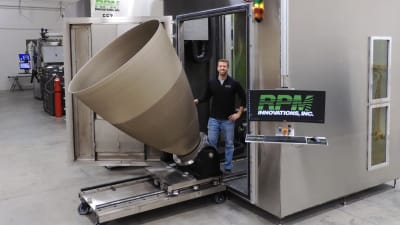
Additive manufacturing, better known as 3D printing, has become an important tool for many industries, and NASA has been central to adapting it for one of the most demanding applications — rocket engines. NASA’s largest effort on this front has been the Rapid Analysis and Manufacturing Propulsion Technology (RAMPT) project, funded by the Game Changing Development program and led by Marshall. Read on to learn more about it.
NASA Spinoff: Materials
For millennia, sheep’s wool has been key to major leaps in technology. From the invention of the spinning wheel to the dawn of computer-controlled looms, refining wool into textiles has led to revolutions in industry. Today, wool itself is leading the charge, with some assistance from NASA. Read on to learn more.
NASA Spinoff: RF & Microwave Electronics
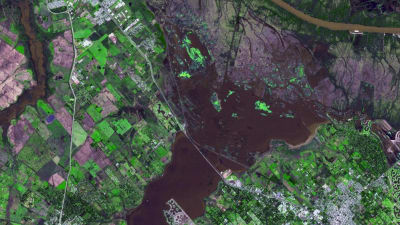
Argentinian company SIMA offers a crop yield forecasting feature for its farming app, developed with help from NASA Harvest, an agricultural consortium led by University of Maryland Researchers using satellite data and expertise from Goddard Space Flight Center. Read on to learn more.
NASA Spinoff: Photonics/Optics
Under SBIR funding from Langley Research Center, Quartus Engineering of San Diego tested the tools it used to analyze optical assemblies for an atmosphere-observing satellite. With better modeling and analysis tools, Quartus and NASA hope to cut time and expense from future optical instrument design. Read on to learn more.
News: Robotics, Automation & Control
Looking for a reliable method of adhesion for its product that lets a phone stick almost anywhere, Flipstik of St. Louis, Missouri, used published research into robotic grippers conducted by the Jet Propulsion Laboratory to improve its gecko-inspired accessory. Read on to learn more.
News: Power
Boise State University in Idaho and Utah State University in Logan are using a NASA grant and data from satellites supported by Goddard Space Flight Center to identify streams that could benefit from restoration efforts by humans and beavers and then track those improvements from space. Read on to learn more.
NASA Spinoff: Manufacturing & Prototyping
The Eyegaze Edge system developed in collaboration with NASA is an eye-tracking technology that makes 'talking' possible for people who can’t. Read on to learn more.
News: Energy
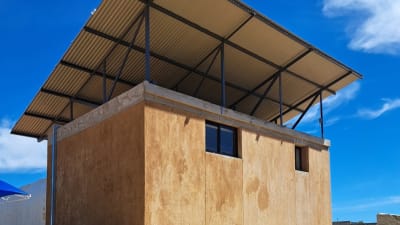
Growing lunar and Martian habitats from mushrooms requires a special process, so Ames Research Center used NASA Innovative Advanced Concepts (NIAC) funding to create and test a growth system. It’s been adapted and used by Mycohab of Windhoek, Namibia, to produce gourmet mushrooms and fungus-based bricks for housing. Read on to learn more.
News: Software
Sagrad of Melbourne, Florida, offers a technology to automatically end the flight of any rocket that experiences difficulty. The technology will soon be required at every federal launchpad. A contract with Kennedy Space Center to build the prototype spawned two smaller, cheaper versions available for commercial use. Read on to learn more.
NASA Spinoff: Transportation
To discover why astronauts returning to Earth frequently experience head and neck injuries, NASA awarded SBIR contracts to miniaturize an acceleration data recorder. It’s now used in safety testing for parachute drops, cars, drones, and more. Read on to learn more.
News: Electronics & Computers
How an engineer who holds dozens of patents for optoelectronics —technology that combines light and electricity — became one of world’s leading figures at the intersection of math and paper folding.
News: Medical
Technologies from NASA, federal labs, and universities have found commercial applications in the medical industry. Read on, as this article highlights some of those spin-off innovations.
News: Energy
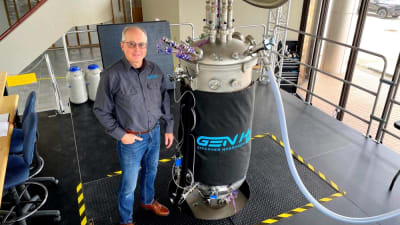
The Cryostat CS900 is poised to enable widespread use of liquid hydrogen as an energy carrier, according to James Fesmire, who invented the technology for his company, Titusville, Florida-based GenH2, building on his career developing cryostats at NASA’s Kennedy Space Center. Read on to learn more.
NASA Spinoff: Manufacturing & Prototyping
The Rotary Cell Culture System invented by researchers at Johnson Space Center lets cells grow faster and healthier than they would in a dish. Brand Labs USA of Fort Lauderdale, Florida, uses secretions from plant stem cells grown in the devices to produce nutrient-rich skin care products. Read on to learn more.
News: Materials
The new possibility of 3D-printed aluminum engine parts will mean significant savings for NASA in terms of time, money, and, most importantly, the weight of future spacecraft. Elementum 3D Inc., a partner on the project, is now bringing the benefits of that technology to its customers.
News: Aerospace
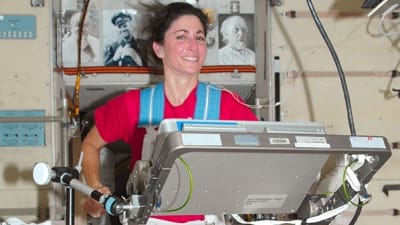
Creators of the original antigravity treadmill for astronauts in space have now developed a new treadmill that uses air pressure to counter gravity, making running possible for people with injuries and other conditions.



















 INSIDER: Medical
 Features: Medical
 Features: Materials
 From the Editor: Medical
 INSIDER: Medical
 Features: AR/AI

 Podcasts: Medical
 Podcasts: Medical
 Podcasts: Design
 On-Demand Webinars: Manufacturing & Prototyping
 Podcasts: AR/AI
 Podcasts: Green Design & Manufacturing
