Researchers are developing soft sensor materials based on ceramics. Such sensors can feel temperature, strain, pressure, or humidity, for instance, which makes them interesting for use in medicine, but also in the field of soft robotics. Read on to learn more.
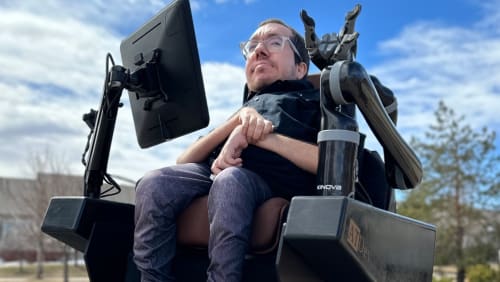
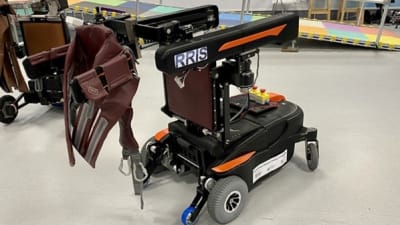
Mohammad Habibur (Habib) Rahman, Director of the BioRobotics Laboratory at the University of Wisconsin-Milwaukee, and his team have been developing a portable, assistive robotic arm that therapists can use to assess and treat patients whether or not they are not in the same location.
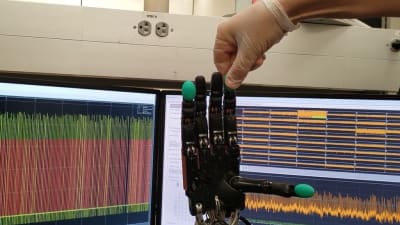
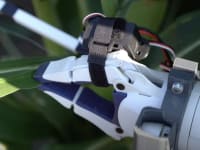
Researchers have developed a novel biohybrid neuroprosthetic research platform comprised of a dexterous artificial hand electrically interfaced with biological neural networks. Read on to learn more.
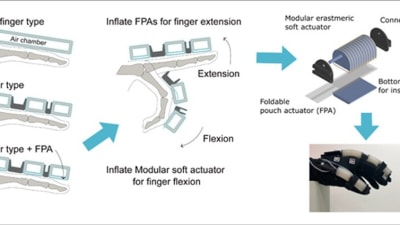
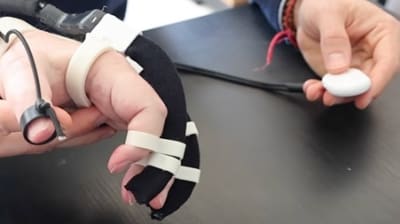
Researchers have succeeded in adding finger straightening or extension to soft rehabilitation gloves through a novel foldable pouch actuator (FPA) without compromising the already existing functionality of finger bending or flexion. Read on to learn more about it.
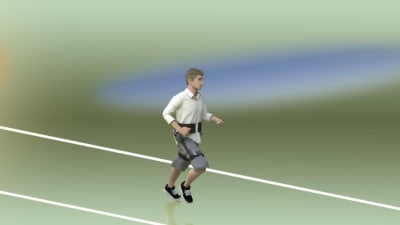
A new method leverages AI and computer simulations to train robotic exoskeletons that can help users save energy while walking, running, and climbing stairs. The novel method rapidly develops exoskeleton controllers to assist locomotion without relying on lengthy human-involved experiments. Read on to learn more.
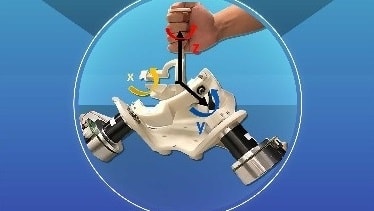
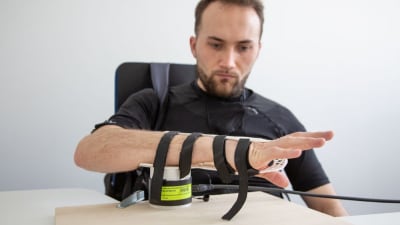
Researchers have developed SPINDLE, a pioneering robotic rehabilitation system. Combining virtual reality (VR) with customized resistance training, SPINDLE offers personalized therapy to enhance strength and dexterity for activities of daily living (ADLs). Read on to learn more about SPINDLE.
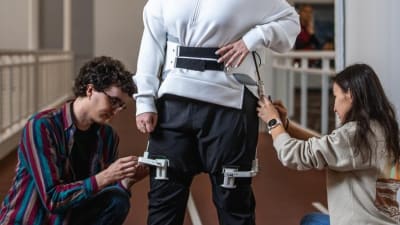
New research pushes forward the bounds of stroke recovery with a unique robotic hip exoskeleton, designed as a training tool to improve walking function. This invites the possibility of new therapies...
Engineers from Korea and the United States have developed a wearable, stretchy patch that could help to bridge the divide between people and machines — and with benefits for the health of humans around the world.
In March of 1973, the Six-Million Dollar Man TV series introduced the world to the possibility of a bionic man. What device made bionics a reality 20 years later?
An assistive planar robot includes a cutting-edge closed-loop feedback system to monitor the muscle and brain activity of the user in order to trigger the execution of reach and grab in an adaptive way.
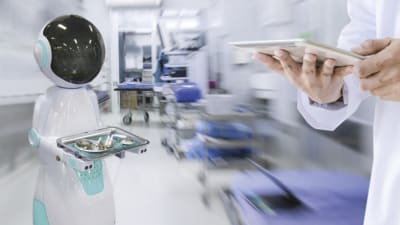
Developing assistive robots is a challenging research area, especially when integrating these systems into human environments such as homes and hospitals. To tackle these challenges, the Human-Machine Interaction & Innovation (HMI2) Lab at Santa Clara University is creating a versatile intelligent robot.
In May 2023, a class of tiny, self-propelled robots were designed in the United States that can slip into a human body and may one day deliver prescribed drugs to hard-to-reach parts of the body. The team of developers at the University of Colorado Boulder aims to make the robot fully biodegradable one day, so that it eventually would dissolve in the body.
The scientists set out in detail the process of developing the neuroprosthetic that has allowed a first patient with Parkinson's to be treated, enabling him to walk comfortably, confidently and without falling.
See the videos of the month, including an unprecedented view of gene regulation, a new composite film that improves the safety of personal protective suits, a new kind of strength-building wearable for those with restricted mobility, and more.
Researchers have developed an automatic process for making soft sensors. These universal measurement cells can be attached to almost any kind of object. Applications are...
An intelligent suit could significantly improve rehabilitation after a serious spinal cord injury. The AI-supported solution combines electrical stimulation of muscles with support for movement...
See the videos of the month, including one about a materials science approach to revealing clues of breast cancer, one on Rice University technology that would give patients one shot and they’d be set for the next couple of months, and more.
Scientists have developed a new type of prosthetic using microfluidics-enabled soft robotics that promises to greatly reduce skin ulcerations and pain in patients who have had an amputation...
A wearable assistive robot can detect and prevent a fall before it happens, reducing the user’s risk of sustaining injuries. The robot can also be used to aid patients’ rehabilitation from...
On October 2021, MassRobotics, Festo, and other key players in healthcare robotics, launched a Startup Catalyst Program to advance healthcare robotics...
Working closely with users and therapists, researchers have developed a light and easy-to-attach hand exoskeleton for people unable to grasp objects following a stroke or...
The primary aim for Harmonic Bionics is to empower patients and care providers by designing intelligent technology that facilitated a data-driven treatment protocol when...
Novel biosensors set to revolutionize brain-controlled robotics...micro-robots propelled by air bubbles...a smart artificial hand...major advances in exoskeleton technology. These are just a few of the medical...
Ask the Expert
John Chandler on Achieving Quality Motion Control
FAULHABER MICROMO brings together the highest quality motion technologies and value-added services, together with global engineering, sourcing, and manufacturing, to deliver top quality micro motion solutions. With 34 years’ experience, John Chandler injects a key engineering perspective into all new projects and enjoys working closely with OEM customers to bring exciting new technologies to market.
Inside Story: Trends in Packaging and Sterilization
Eurofins Medical Device Testing (MDT) provides a full scope of testing services. In this interview, Eurofins’ experts, Sunny Modi, PhD, Director of Package Testing; and Elizabeth Sydnor, Director of Microbiology; answer common questions on medical device packaging and sterilization.