INSIDER

-1
900
30
INSIDER: Medical
Hydrogel Superglue Supports Biomedical Coatings
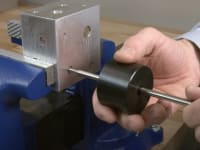
Engineers at the Massachusetts Institute of Technology (MIT) have created a synthetic, sticky hydrogel that is more than 90 percent water. The transparent, rubber-like hydrogel adheres to surfaces such as glass, silicon, ceramics, aluminum, and titanium with a toughness comparable to the bond between...
INSIDER: Medical
Hyperspectral Camera Peeks Below the Skin
A hyperspectral camera built by researchers at the University of Washington uses both visible and invisible near-infrared light to “see” beneath surfaces and capture unseen details. The HyperCam captures detailed images of vein and skin texture patterns that are unique to an individual.
INSIDER: Medical
Software Assembles a 3D Map of the Brain
Computer scientists and a professor of ophthalmology at the University of Utah have developed software that maps out a monkey’s brain. By gaining an accurate 3D model of the brain’s network of neurons, medical researchers can better understand how the brain’s connectivity is disrupted in mental and...
INSIDER: Medical
Creating Patient-Specific Medical Devices
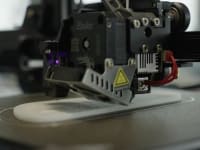
A 3D printer built by Northeastern University researchers uses magnetic fields to shape composite materials. The mixes of plastics and ceramics can be shaped into patient-​​specific products, including customized implants and catheters for premature babies.
INSIDER: Medical
Artificial Skin Registers and Transmits Sensation
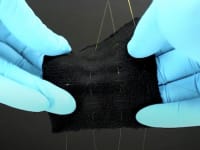
A plastic skin-like material created by Stanford University detects pressure and delivers a Morse code-like signal directly to a living brain cell. The development could add a sense of touch to prosthetic limbs.
INSIDER: Medical
New Memory Foam for Prosthetic Parts
Cornell University researchers have developed a lightweight, stretchable material that has potential for use in prosthetic body parts, artificial organs, and soft robotics. Air and liquid can be pumped through connected pores, allowing the material to change its length by up to 300 percent.
INSIDER: Medical
Laser-Based Imaging Could Ensure Safer Brain Surgery
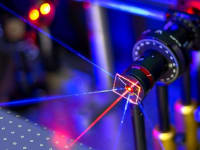
A stimulated Raman scattering (SRS) microscope currently being tested at the University of Michigan allows surgeons to quickly spot the difference between tumor tissue and normal brain tissue. Since June, the SRS microscope has imaged more than 60 patient samples from the operating room.
INSIDER: Medical
Anti-Corrosive Coating Strengthens Steel
A new surface coating developed by researchers at the Harvard John A. Paulson School of Engineering and Applied Sciences make steel stronger, safer, and more durable. The new anti-corrosive and anti-fouling surface material, made from rough nanoporous tungsten oxide, repels any kind of liquid, even after...
INSIDER: Robotics, Automation & Control
Virtual Models Improve Aortic Aneurysm Treatment
Researchers at the University of Montreal Hospital Research Centre (CRCHUM) have developed virtual models that can be used in angiography rooms to address aortic aneurysms and help medical professionals visualize the area being treated. To provide more personalized treatments, the new software...
INSIDER: Medical
UV-Light Robot Reduces Hospital Infection Rates
New research from Penn Medicine infection control specialists found that ultraviolet (UV) robots helped reduce the rates of transmission of the common bacterial infection known as Clostridium difficile. The robots flash UV lights across a hospital room to lock onto DNA of organisms and kill them.
INSIDER: Medical
FDA Issues Draft Guidance for Animal Studies for Medical Devices
On October 14, the FDA issued a draft guidance document to assist industry in designing evaluation strategies for, and reporting the results of, animal studies for medical devices. The studies utilized for the assessment of these devices typically provide initial evidence of device...
INSIDER: Medical
Scientist Creates Bio-Inspired Robotic Finger
Inspired by both nature and biology, a Florida Atlantic University scientist has built a lifelike robotic finger. The design required shape memory alloy (SMA), a three-dimensional CAD model of a human finger, a 3D printer, and a unique thermal training technique.
INSIDER: Medical
New Algorithm Tunes Powered Prosthetics
Biomedical engineering researchers at North Carolina State University and the University of North Carolina at Chapel Hill have built software that allows powered prosthetics to tune themselves automatically. The development lowers costs and makes the devices more functionally useful.
INSIDER: Medical
Brain Implant Re-Encodes Memories
Researchers at the University of Southern California and Wake Forest Baptist Medical Center have developed a brain prosthesis that is designed to help individuals suffering from memory loss. The prosthesis includes a small array of electrodes implanted into the brain.
INSIDER: Medical
Prosthetic Heart Valve Restores Blood Flow
VeloX, a prosthetic heart valve developed by National University of Singapore researchers, can be implanted through a small incision for the treatment of a serious heart valve disorder called mitral regurgitation. The device is particularly beneficial to patients who are of high surgical risk or are...
INSIDER: Medical
3D-Printed Guide Regrows Complex Nerves
Nerve damage is often permanent, and according to the Mayo clinic, regrowth of nerves is very rare. A 3D-printed guide built by University of Minnesota researchers regrows both the sensory and motor functions of complex nerves after injury.
INSIDER: Medical
Engineers Develop Non-Toxic Flame Retardant
Inspired by a naturally occurring material found in marine mussels, researchers at The University of Texas at Austin have created a new flame retardant to replace toxic commercial additives. The engineers' use of synthetic polydopamaine could prove valuable for a number of health-related applications,...
INSIDER: Medical
Low-Cost Patch Monitors Vital Signs
Researchers in the Cockrell School of Engineering at The University of Texas at Austin produced inexpensive wearable patches that continuously monitor the body’s vital signs. Their repeatable, “cut-and-paste” method cuts manufacturing time from several days to only 20 minutes.
INSIDER: Medical
Cancer Patient Receives 3D-Printed Titanium Rib Implants
In a collaboration between the Melbourne-based medical device company Anatomics and Australia's Commonwealth Scientific and Industrial Research Organisation (CSIRO), a cancer patient diagnosed with a chest wall sarcoma received a 3D-printed titanium sternum and rib implants.
INSIDER: Medical
Ultrasonic Tool Cleans Medical Instruments
An ultrasonic technology developed by researchers from the University of Southampton removes contaminants from surgical steel. The StarStream device creates tiny bubbles which automatically scrub surfaces.
INSIDER: Medical
Microscope Enables Material Analysis Below the Surface
A microscope from the Department of Energy’s Oak Ridge National Laboratory will allow scientists studying biological and synthetic materials to simultaneously observe chemical and physical properties on and beneath the surface. The Hybrid Photonic Mode-Synthesizing Atomic Force Microscope...
INSIDER: Medical
Smart Robot Finds Best Combinations for Cancer Treatments
A new research robot from Uppsala University engineers finds optimal treatment combinations for cancer treatments. The robotic system plans and conducts experiments with many substances, and draws its own conclusions from the results, according to Dr Claes Andersson, leading scientist in the...
INSIDER: Medical
Light Source Detects Minute Changes in Cells
The Institute of Photonic Sciences (ICFO), in collaboration with the Laboratory for Attosecond Physics at the Max Planck Institute for Quantum Optics (MPQ) and the Ludwig-Maximilians-Universität (LMU) in Munich, have developed a unique broadband and coherent infrared light source. The source enables...
INSIDER: Medical
Stretchable Conductor Supports Implantable Medical Devices
Researchers at the University of Houston have discovered a transparent conductor that can be folded or stretched and released, resulting in a large curvature or a significant strain, at least 10,000 times without showing signs of fatigue. The technology pairs gold nanomesh with a...
INSIDER: Medical
FDA Announces First Patient Engagement Advisory Committee
While historically, the development of new technologies to improve patients’ lives has relied upon experts’ opinions rather than asking patients and families directly what they consider important, this may be about to change. Patients and their care partners are becoming intimately...
INSIDER: Medical
Paralyzed Man 'Feels' Physical Sensations Through Prosthetic Hand
A 28-year-old who has been paralyzed for more than a decade has become the first person to be able to “feel” physical sensations through a prosthetic hand directly connected to his brain, and even identify which mechanical finger is being gently touched.
INSIDER: Medical
Noninvasive Brain Stimulation Improves Motor Symptoms of PD Patients
A team of Johns Hopkins University scientists discovered that noninvasive brain stimulation temporarily improves motor symptoms in patients with Parkinson's disease (PD). The Johns Hopkins study also revealed that people with Parkinson's disease are still capable of making quick,...
INSIDER: AR/AI
Augmented Reality Telementoring Offers Remote Assistance
An "augmented reality telementoring" system built by researchers at Purdue University and the Indiana University School of Medicine provides effective support to battlefield surgeons from specialists located thousands of miles away. The system uses a transparent display positioned between the...
INSIDER: Medical
Magnetic Fields Enable Full-Body Health Monitoring
Electrical engineers at the University of California, San Diego demonstrated a wireless communication technique that sends magnetic signals through the human body. The secure, low-power innovation could lead to a wireless sensor network for full-body health monitoring.

Ask the Expert

Ralph Bright on the Power of Power Cords

Feature Image

Understanding power system components and how to connect them correctly is critical to meeting regulatory requirements and designing successful electrical products for worldwide markets. Interpower’s Ralph Bright defines these requirements and explains how to know which cord to select for your application.

Inside Story

Inside Story: Trends in Packaging and Sterilization

Feature Image

Eurofins Medical Device Testing (MDT) provides a full scope of testing services. In this interview, Eurofins’ experts, Sunny Modi, PhD, Director of Package Testing; and Elizabeth Sydnor, Director of Microbiology; answer common questions on medical device packaging and sterilization.

Videos