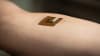

A plastic skin-like material created by Stanford University detects pressure and delivers a Morse code-like signal directly to a living brain cell. The development could add a sense of touch to prosthetic limbs.
The skin is a two-ply plastic construct. The top layer creates a sensing mechanism, and the bottom layer acts as the circuit to transport electrical signals and translate them into biochemical stimuli compatible with nerve cells. The top layer in the new work featured a sensor that detects pressure over the same range as human skin, from a light finger tap to a firm handshake.
Zhenan Bao, a professor of chemical engineering at Stanford, and her team used plastics and rubbers as pressure sensors, measuring the natural springiness of their molecular structures. They then increased the natural pressure sensitivity by indenting a waffle pattern into the thin plastic, further compressing the plastic's molecular springs.
The team scattered billions of carbon nanotubes through the waffled plastic. Increasing pressure on the waffled nanotubes squeezes them even closer together, allowing more electricity to flow through the sensor; the varied impulses are sent as short pulses to the sensing mechanism. When the pressure is removed, the flow of pulses relaxes, indicating light touch. When all the pressure is removed, the pulses cease entirely.
The engineers hooked the pressure-sensing mechanism to the second ply of their artificial skin, a flexible electronic circuit that could carry pulses of electricity to nerve cells.