INSIDER

-1
870
30
INSIDER: Medical
Manipulating Sound to Enhance Acoustic Imaging
Researchers from North Carolina State University, Raleigh, and Duke University have developed a metamaterial made of paper and aluminum that can manipulate acoustic waves to more than double the resolution of acoustic imaging, focus acoustic waves, and control the angles at which sound passes through...
INSIDER: Medical
Tiny LEDs Shed Light on Neural Pathways
University of Michigan researchers have built and tested neural probes that hold what are believed to be the smallest implantable LEDs ever made. The new probes control and record the activity of many individual neurons, measuring how changes in the activity of a single neuron can affect its neighbors. The...
INSIDER: Medical
Researchers Print 'Living' Blood Vessels
Using a 3D printer and a “bio-ink” made of materials compatible with the human body, Lawrence Livermore National Laboratory researchers have successfully created structures with living cells and biomaterials. The material and environment are engineered to enable small blood vessels, including human...
INSIDER: Medical
First Biologically Powered Integrated Circuit
Columbia University Engineering Department researchers have, for the first time, harnessed living systems to power an integrated circuit using adenosine triphosphate (ATP), the energy currency of life. The team integrated a conventional solid-state complementary metal-oxide-semiconductor (CMOS) circuit...
INSIDER: Medical
Researchers Study Biofilm Development on Catheter Materials
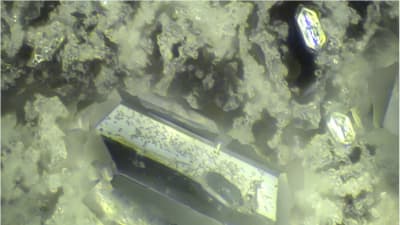
New research from the University of Southampton could lead to advanced treatments to prevent blockages and urinary tract infections experienced by many long-term catheter users. Using an imaging technique called episcopic differential interference contrast (EDIC) microscopy, researchers...
INSIDER: Medical
Portable Sensor Detects Severity of Eye Injury
A University of Illinois at Urbana-Champaign engineer and an ophthalmologist have developed a portable sensor that quickly and inexpensively determines whether an eye injury is mild or severe. The device, called OcuCheck, could speed efforts to determine the extent of eye injuries at accident sites, in...
INSIDER: Medical
Sensor Offers Real-Time View of Neural Activity
A new sensor developed by Duke University and Stanford University researchers provides a real-time, eagle-eye view of neural activity in mammalian brains. The technique watches the brain’s neurons with a temporal resolution of about 0.2 milliseconds.
INSIDER: Medical
Self-Healing Gel Supports Advanced Biosensors
Researchers in the Cockrell School of Engineering at The University of Texas at Austin have developed a self-healing gel that repairs and connects electronic circuits, creating opportunities to advance the creation of flexible electronics, biosensors, and batteries.
INSIDER: Medical
'Wiggle' Method Offers New Way to Generate X-Rays
By using plasmons to “wiggle” a free electron in a sheet of graphene, researchers at the Massachusetts Institute of Technology (MIT) have developed a new method for generating X-rays. The discovered phenomenon could lead to more compact, tunable X-ray devices made of graphene.
INSIDER: Medical
FDA Announces Training Program for Medtech Reviewers
The FDA’s Center for Devices and Radiological Health (CDRH) announced the 2015 Experiential Learning Program (ELP) General Training Program, which is intended to educate CDRH staff regarding the policies, laboratory practices, and challenges faced in broader disciplines that impact the medical...
INSIDER: Medical
Neuromuscular Model Gives Balance to Prostheses Users
A team of engineers at Carnegie Mellon University developed a neuromuscular control method that reproduces normal walking patterns and effectively responds to disturbances as the leg begins to swing forward. The discovered principles may aid not only leg prostheses, but also legged robots.
INSIDER: Medical
Imaging Technology Detects Oral Cancer
A noninvasive device developed by Texas A&M University researchers enables doctors to quickly and accurately identify cancerous tissue in a person’s mouth. Fluorescence Lifetime Imaging (FLIM) measures and visualizes the biochemical changes that occur in oral epithelial tissue as it turns cancerous.
INSIDER: Medical
Researchers Advance Development of Artificial Kidney Prototype
Thanks to a new grant from the National Institute of Biomedical Imaging and Bioengineering (NIBIB), researchers led by UC San Francisco bioengineer Shuvo Roy and Vanderbilt University nephrologist William Fissell will develop a surgically implantable artificial kidney. The Kidney...
INSIDER: Robotics, Automation & Control
Tiny Lenses Magnify Large Fields of View
Drawing inspiration from an insect's multi-faceted eye, University of Wisconsin-Madison engineers have created tiny lenses with vast range of vision. An array of the miniature lenses — each no bigger than the head of a pin — can capture a panorama image covering a 170-degree field of view.
INSIDER: Medical
Silicon Anodes Improve Lithium-Ion Batteries
Current lithium-ion batteries normally use graphite anodes. University of Waterloo researchers have created lighter, long-lasting batteries from silicon. The silicon anode materials have a much higher capacity for lithium and are capable of producing batteries with almost 10 times more energy.
INSIDER: Wearables
IEEE Advances Standards and Works to Expand Interoperable eHealth Communications
IEEE, Piscataway, NJ, has announced a new standard and two new standards development projects designed to support plug-and-play, interoperable communications across eHealth devices. The new eHealth standard is IEEE 2410™-2015, Biometrics Open Protocol Standard,...
INSIDER: Medical
Wearable Devices Monitor Cardiac Patients
Wearable devices developed by researchers at UMass Medical School non-invasively monitor patients with serious cardiac disease. A vest detects sub-clinical cardiac dysfunction, and a smartwatch finds life-threatening rhythm abnormalities.
INSIDER: Medical
Hydrogel Superglue Supports Biomedical Coatings
Engineers at the Massachusetts Institute of Technology (MIT) have created a synthetic, sticky hydrogel that is more than 90 percent water. The transparent, rubber-like hydrogel adheres to surfaces such as glass, silicon, ceramics, aluminum, and titanium with a toughness comparable to the bond between...
INSIDER: Medical
Hyperspectral Camera Peeks Below the Skin
A hyperspectral camera built by researchers at the University of Washington uses both visible and invisible near-infrared light to “see” beneath surfaces and capture unseen details. The HyperCam captures detailed images of vein and skin texture patterns that are unique to an individual.
INSIDER: Medical
Software Assembles a 3D Map of the Brain
Computer scientists and a professor of ophthalmology at the University of Utah have developed software that maps out a monkey’s brain. By gaining an accurate 3D model of the brain’s network of neurons, medical researchers can better understand how the brain’s connectivity is disrupted in mental and...
INSIDER: Medical
Creating Patient-Specific Medical Devices
A 3D printer built by Northeastern University researchers uses magnetic fields to shape composite materials. The mixes of plastics and ceramics can be shaped into patient-​​specific products, including customized implants and catheters for premature babies.
INSIDER: Medical
Artificial Skin Registers and Transmits Sensation
A plastic skin-like material created by Stanford University detects pressure and delivers a Morse code-like signal directly to a living brain cell. The development could add a sense of touch to prosthetic limbs.
INSIDER: Medical
New Memory Foam for Prosthetic Parts
Cornell University researchers have developed a lightweight, stretchable material that has potential for use in prosthetic body parts, artificial organs, and soft robotics. Air and liquid can be pumped through connected pores, allowing the material to change its length by up to 300 percent.
INSIDER: Medical
Laser-Based Imaging Could Ensure Safer Brain Surgery
A stimulated Raman scattering (SRS) microscope currently being tested at the University of Michigan allows surgeons to quickly spot the difference between tumor tissue and normal brain tissue. Since June, the SRS microscope has imaged more than 60 patient samples from the operating room.
INSIDER: Medical
Anti-Corrosive Coating Strengthens Steel
A new surface coating developed by researchers at the Harvard John A. Paulson School of Engineering and Applied Sciences make steel stronger, safer, and more durable. The new anti-corrosive and anti-fouling surface material, made from rough nanoporous tungsten oxide, repels any kind of liquid, even after...
INSIDER: Medical
Virtual Models Improve Aortic Aneurysm Treatment
Researchers at the University of Montreal Hospital Research Centre (CRCHUM) have developed virtual models that can be used in angiography rooms to address aortic aneurysms and help medical professionals visualize the area being treated. To provide more personalized treatments, the new software...
INSIDER: Medical
UV-Light Robot Reduces Hospital Infection Rates
New research from Penn Medicine infection control specialists found that ultraviolet (UV) robots helped reduce the rates of transmission of the common bacterial infection known as Clostridium difficile. The robots flash UV lights across a hospital room to lock onto DNA of organisms and kill them.
INSIDER: Medical
FDA Issues Draft Guidance for Animal Studies for Medical Devices
On October 14, the FDA issued a draft guidance document to assist industry in designing evaluation strategies for, and reporting the results of, animal studies for medical devices. The studies utilized for the assessment of these devices typically provide initial evidence of device...
INSIDER: Medical
Scientist Creates Bio-Inspired Robotic Finger
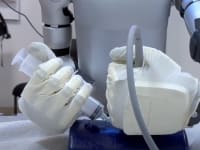
Inspired by both nature and biology, a Florida Atlantic University scientist has built a lifelike robotic finger. The design required shape memory alloy (SMA), a three-dimensional CAD model of a human finger, a 3D printer, and a unique thermal training technique.

Ask the Expert

Ralph Bright on the Power of Power Cords
Feature Image

Understanding power system components and how to connect them correctly is critical to meeting regulatory requirements and designing successful electrical products for worldwide markets. Interpower’s Ralph Bright defines these requirements and explains how to know which cord to select for your application.

Inside Story

Inside Story: Trends in Packaging and Sterilization

Feature Image

Eurofins Medical Device Testing (MDT) provides a full scope of testing services. In this interview, Eurofins’ experts, Sunny Modi, PhD, Director of Package Testing; and Elizabeth Sydnor, Director of Microbiology; answer common questions on medical device packaging and sterilization.

Videos