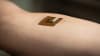

Researchers at the University of Houston have discovered a transparent conductor that can be folded or stretched and released, resulting in a large curvature or a significant strain, at least 10,000 times without showing signs of fatigue. The technology pairs gold nanomesh with a stretchable substrate made from polydimethylsiloxane, or PDMS.
The material showed no sign of fatigue when cyclically expanded to a strain of more than 50 percent. The gold nanomesh also proved conducive to cell growth – a valuable characteristic for implantable medical devices.
To weaken the constraint of the substrate, the interface between the gold nanomesh and PDMS was made slippery.
The researchers used mouse embryonic fibroblast cells to determine biocompatibility. The stretchability of the gold nanomesh on a slippery substrate resembled the bioenvironment of tissue or organ surfaces. The nanomesh, therefore, may be implanted in the body as a pacemaker electrode or a connection to nerve endings.