
A team of engineers at Carnegie Mellon University developed a neuromuscular control method that reproduces normal walking patterns and effectively responds to disturbances as the leg begins to swing forward. The discovered principles may aid not only leg prostheses, but also legged robots.
"Today’s prosthetics try to mimic natural leg motion, yet they can’t respond like a healthy human leg would to trips, stumbles and pushes," said Hartmut Geyer, assistant professor of robotics. "Our work is motivated by the idea that if we understand how humans control their limbs, we can use those principles to control robotic limbs.”
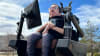
To evaluate the neuromuscular model, the researchers used computer simulations and a cable-driven device about half the size of a human leg, called the Robotic Neuromuscular Leg 2.
Geyer observed the role of the leg extensor muscles, which generally work to straighten joints. The force feedback from the muscles, he noted, automatically responds to ground disturbances, quickly slowing leg movement or extending the leg further, as necessary.
The resulting robotic leg prosthesis will help users recover their balance by using techniques based on the way human legs are controlled.