INSIDER

-1
1020
30
INSIDER: Medical
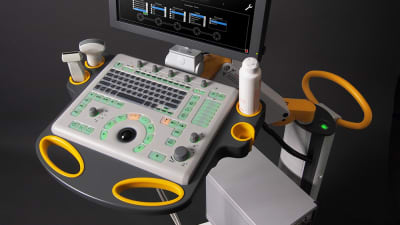
Researchers in Germany have developed a multichannel ultrasound platform that uses a modular configuration. The platform can be adapted to a set of applications that are entirely different...
Feature Image
INSIDER: Medical
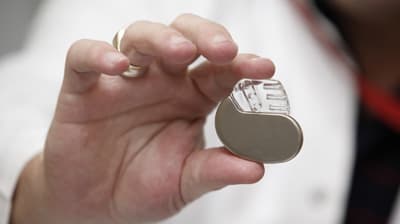
The Ladon security protocol, developed by Spain's University of the Basque Country/EHU researcher Jasone Astorga in the 12T (Telematics Research and Engineering) research group, protects the...
Feature Image
INSIDER: Sensors/Data Acquisition
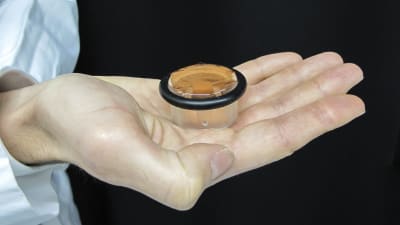
A new sensor gauges blood sugar through skin contact. The “Glucolight” is initially to be used in premature babies to avoid hypoglycemia and subsequent brain damage.
Feature Image
INSIDER: Medical
Potassium Salt Simplifies Catalyst Process for Pharmaceuticals
Caltech chemists have produced a group of silicon-containing organic chemicals. The resulting organic molecules could serve as powerful chemical building blocks for medicinal chemists to use in the creation of new pharmaceuticals.
INSIDER: Medical
New Preservation System Keeps Livers Healthy for Transplant
A new preservation system that pumps cooled, oxygen-rich fluid into donor livers not only keeps the organs in excellent condition for as long as nine hours before transplantation, but also leads to dramatically better liver function and increases survival of recipients, according to a...
INSIDER: Medical
Implantable Neurostimulator Alleviates Dry Eye
Stanford Biodesign fellows are testing two tiny devices that stimulate natural tear production. The technologies deliver micro-electrical pulses to the lacrimal gland.
INSIDER: Medical
New Fibers Deliver Simultaneous Stimuli
Conventional neural probes are designed to record a single type of signaling, limiting the information that can be derived from the brain at any point in time. By producing complex multimodal fibers that could be less than the width of a hair, MIT researchers have created a system that could deliver optical...
INSIDER: Medical
Neuroscientists Predict Hand's Grip Movements
Using electrophysiological measurements in the areas of the brain that are responsible for the planning and execution of hand movements, German Primate Center scientists predicted avariety of hand positions through the analysis of exact neural signals.
INSIDER: Medical
Wearable Nanowire Sensors Monitor Electrophysiological Signals
Researchers from North Carolina State University have developed a new, wearable sensor that uses silver nanowires to monitor electrophysiological signals, such as electrocardiography (EKG) or electromyography (EMG). The new sensor is as accurate as the “wet electrode” sensors used...
INSIDER: Medical
FDA Explores Single Audit Program for Multiple Countries
According to an FDA blog post, the FDA and regulatory agencies in Australia, Brazil, Canada, and Japan embarked in 2014 on a pilot called the Medical Device Single Audit Program (MDSAP). Its goal is to develop a process that allows a single audit, or inspection to ensure the medical device...
INSIDER: Medical
FDA Seeks Comments on Defining Medical Device Accessories
The FDA has developed a draft document to provide guidance to industry and FDA staff about the regulation of accessories to medical devices. This guidance is intended to clarify and modify the FDA’s policy concerning the classification of accessories and to discuss the application of that...
INSIDER: Medical
Zinc Oxide Materials Tapped for Implantable Medical Devices
A group of Korea Advanced Institute of Science and Technology (KAIST) researchers explored how the attractive physical features of zinc oxide (ZnO) materials could be more effectively used to tap into abundant mechanical energy sources to power micro devices.
INSIDER: Medical
Quantum Dots Enable Neuroimaging Possibilities
Berkeley Lab’s quantum dots have not only found their way into tablets, computer screens, and TVs; they are also used in biological and medical imaging tools. Now Lawrence Berkeley National Laboratory (Berkeley Lab) director Paul Alivisatos is exploring their use for solar cell as well as brain...
INSIDER: Medical
New Imaging Method Improves Prostate Cancer Detection
A team of scientists and physicians from the University of California, San Diego School of Medicine, with counterparts at University of California, Los Angeles, have developed a novel imaging technique that measurably improves upon current prostate imaging – and may have significant...
INSIDER: Medical
Spinal Cord Implant Mimics Living Tissue
New therapies are on the horizon for individuals paralyzed following spinal cord injury. The e-Dura implant developed by EPFL scientists can be applied directly to the spinal cord without causing damage and inflammation.
INSIDER: Medical
Comments Requested on Cybersecurity for Medical Devices
To address the cybersecurity challenges of wireless medical infusion pumps, the National Cybersecurity Center of Excellence (NCCoE), Rockville, MD, is now inviting comments on a draft project to secure those devices. The challenges include vulnerabilities to malware or hacking and access...
INSIDER: Medical
A bilateral shoulder-level amputee made history at the Johns Hopkins University Applied Physics Laboratory, Baltimore, MD, this summer when he became the first person to wear and...
Feature Image
INSIDER: Imaging
A team of researchers at UCLA has developed a lens-free microscope that, they say, can be used to detect the presence of cancer or other cell-level abnormalities with the same accuracy as...
Feature Image
INSIDER: Medical
TRUE Technology Focuses Diffuse Light Inside Living Tissue
Lihong Wang, the Gene K. Beare Professor of Biomedical Engineering in the School of Engineering & Applied Science at Washington University in St. Louis, has revealed for the first time a new technique that focuses diffuse light inside a dynamic scattering medium containing living...
INSIDER: Medical
Partnering with Co-robots
Most robots today work in manufacturing facilities where, for safety reasons, they are removed from being in close proximity with humans. But, Georgia Tech robotics researchers believe people and robots can accomplish much more as co-robots, which work beside, or cooperatively with, people. This symbiotic relationship...
INSIDER: Medical
Don't Forget to Vote
Don't forget to vote for the Medical Design Briefs' Annual Readers' Choice Product of the Year. You’re invited to cast your vote for the one product among the 12 Products of the Month that you feel was the most significant new product introduced to the engineering community in 2014.
INSIDER: Medical
Using Robot Control to Improve Prosthetic Legs
An engineering professor at the University of Texas at Dallas applied robot control theory to enable powered prosthetics to dynamically respond to the wearer’s environment and help amputees walk. The robotic leg wearers were able to walk on a moving treadmill almost as quickly as an able-bodied...
INSIDER: Sensors/Data Acquisition
Wearable Medical Sensors Using Organic Electronics
According to researchers at the University of California at Berkeley, future fitness trackers could soon add blood-oxygen levels to the list of vital signs they measure. By switching from silicon to an organic, or carbon-based, design, the researchers say that they were able to create a device that...
INSIDER: Medical
Haptic Feedback Technology Could Aid Diagnostics
Touch feedback, or haptics technology, has been changing rapidly over the last few years with new uses in entertainment, rehabilitation, and even surgical training. Now, using ultrasound, scientists have developed virtual 3D shapes that can be seen and felt in mid-air. The researchers from the UK...
INSIDER: Robotics, Automation & Control
‘Electronic Skin’ for Prosthetics Communicates Pressure
While touch may be subtle, the information it communicates can be understood and acted upon quickly. For the first time, scientists are reporting that they have developed a stretchable “electronic skin” that can detect not just pressure, but also which direction it’s coming from....
INSIDER: Materials
Inexpensive Hydrolyzable Polymer Developed
A team of researchers at the University of Illinois at Urbana-Champaign say that they know how to reverse the characteristics of a key bonding material—polyurea—to provide an inexpensive alternative for a broad number of applications, such as drug delivery, tissue engineering, and packaging.
INSIDER: Materials
Heat-Conducting Plastic Dissipates Ten Times Better
Engineers at the University of Michigan, Ann Arbor, have developed a plastic blend that, they say, can dissipate heat up to 10 times better than its conventional counterparts. While plastics are inexpensive, lightweight, and flexible, they tend to restrict the flow of heat, so their use has been...
INSIDER: Medical
Stroke Therapy Using Transcranial Magnetic Stimulation
A team of researchers at The Ohio State University Wexner Medical Center, Columbus, are trying to help stroke patients improve arm movement by using a device called a Transcranial Magnetic Stimulator (TMS) to reduce activity on the healthy side of the brain, so that the stroke-injured side may...
INSIDER: Medical
Printing Electrical Components on Paper
Seeking a way to print technology, improve device portability, and lower the cost of electronics, a team of engineers at the University of Tennessee, Knoxville, led by Assistant Professor Anming Hu, has discovered a way to print circuits on paper.

Ask the Expert

Eric Dietsch on the Benefits of Nitinol Wire
Feature Image

In collaboration with the Fort Wayne Metals Engineering team, Eric Dietsch focuses on supporting customers with material recommendations, product development, and education. Eric is available to help you and your company with any Nitinol-related questions or needs that you may have.

Inside Story

Inside Story: Trends in Packaging and Sterilization

Feature Image

Eurofins Medical Device Testing (MDT) provides a full scope of testing services. In this interview, Eurofins’ experts, Sunny Modi, PhD, Director of Package Testing; and Elizabeth Sydnor, Director of Microbiology; answer common questions on medical device packaging and sterilization.

Videos