

Inside this issue
Overview
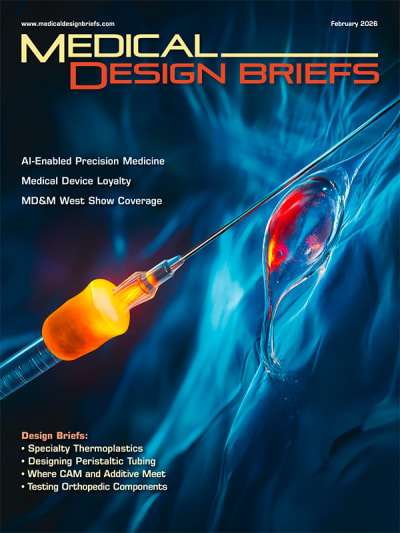
The February 2023 issue of Medical Design Briefs presents a comprehensive overview of the latest trends, innovations, and challenges in the medical device industry. This edition is packed with insightful articles, features, and keynotes that highlight the ongoing evolution of medical technology and its impact on patient care.
Keynotes and Networking
The issue opens with details about the Keynote Networking Breakfast held on February 7 and 8, where attendees, exhibitors, and speakers gathered to share insights and foster connections. This event set the tone for the discussions around trending challenges in the industry, emphasizing the importance of collaboration and networking in driving innovation.
Industry Trends
One of the standout features is the article titled "2023 Tech Trends: Why Digital Health Will Lead to Improved Patient Care." This piece explores how digital health technologies, including telehealth and remote monitoring, are transforming patient care. The integration of artificial intelligence (AI) and machine learning into healthcare systems is highlighted as a key driver for improving patient outcomes and streamlining processes.
Design for Manufacturing (DfM)
Another significant article, "DfM and Product Development for Micro Medical Device Applications," delves into the complexities of designing micro medical devices. It discusses the importance of DfM principles in ensuring that these devices are not only effective but also cost-efficient and manufacturable at scale. The article emphasizes collaboration between design and manufacturing teams to overcome challenges associated with miniaturization and precision engineering.
Alternatives to Animal Testing
In light of ethical concerns and regulatory pressures, the article "Eliminating Rabbit Testing in the Year of the Rabbit: Alternatives for Animal Testing in 2023" addresses the need for alternative testing methods in the medical device industry. It discusses various in vitro and computational models that can replace traditional animal testing, thereby reducing the reliance on animal subjects while still ensuring product safety and efficacy.
Innovations in Heart Failure Monitoring
The issue also features a compelling article on heart failure monitoring, highlighting the critical need for noninvasive solutions. With approximately 64 million cases of heart failure worldwide, the article discusses a prototype of a novel wearable device that continuously monitors physiological parameters associated with heart failure in real time. This innovation aims to provide patients and healthcare providers with valuable data to manage the condition more effectively.
Applications and Case Studies
The "Applications" section includes a case study on the use of rapid transfer ports in life science applications, showcasing how these devices can enhance efficiency and safety in laboratory settings. Additionally, the "Tech Briefs" section presents advancements in wearable technology, including a wearable belt with sensors that accurately measures heart failure 24/7 and a wearable sensor designed to guide precision drug dosing.
R&D Roundup and New Products
The "R&D Roundup" section provides a snapshot of the latest research and development efforts in the medical device field, highlighting innovative projects and collaborations. The "New Products & Services" section introduces readers to the latest offerings from various exhibitors, showcasing cutting-edge technologies and solutions that are shaping the future of healthcare.
Advertisers and Industry Support
The issue concludes with an Advertisers Index, featuring key players in the medical device industry, including Accorto Regulatory Solutions, Actuonix Motion Devices, and AMETEK/INTROTEK. These companies are instrumental in providing the tools and services necessary for the development and manufacturing of medical devices.
Conclusion
Overall, the February 2023 issue of Medical Design Briefs serves as a vital resource for professionals in the medical device industry. It not only highlights current trends and innovations but also addresses the challenges faced by the industry, such as regulatory compliance, ethical considerations, and the need for collaboration. As the medical technology landscape continues to evolve, this issue provides valuable insights that can help guide professionals in their efforts to improve patient care and drive innovation in the field.
With a focus on digital health, design for manufacturing, and alternatives to traditional testing methods, this edition underscores the importance of adapting to the changing needs of the healthcare environment while maintaining a commitment to safety, efficacy, and ethical practices.
Features
-
Articles
8 2023 Tech Trends: Why Digital Health Will Lead to Improved Patient Care
13 DfM and Product Development for Micro Medical Device Applications
16 Eliminating Rabbit Testing in the Year of the Rabbit: Alternatives for Animal Testing in 2023
-
R & D
56 Smart Jumpsuit Monitors Infant Motor Development
56 Tool Brings Touch to MIS Procedures
-
Global Innovations
66 Transparent Bio-Friendly Sensor Measures Temperature Changes by Light
-
From the Editor
-
Applications
60 The Case for Rapid Transfer Ports in Life Science Applications