

Inside this issue
Overview
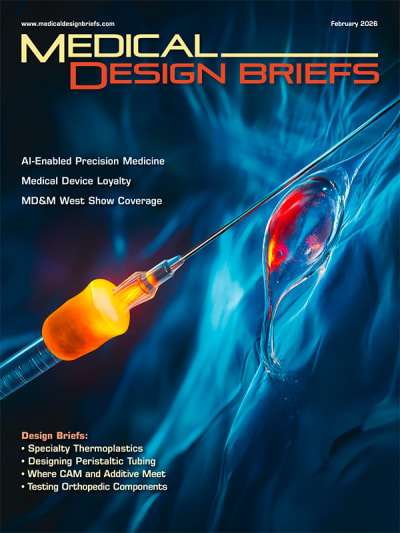
The January 2023 issue of Medical Design Briefs presents a comprehensive overview of the latest advancements and innovations in the medical technology field. This edition features a variety of articles that delve into surgical enhancements, diabetes management, and cutting-edge technologies in medical devices.
Editorial Insights and Features: The issue opens with an editorial column that sets the tone for the discussions on improving patient outcomes through innovative medical solutions. One of the standout features is titled "Enhancing Surgical Outcomes with Performance-Guided Surgery," which explores how performance metrics and data analytics can lead to better surgical practices and patient results. This article emphasizes the importance of integrating technology into surgical procedures to optimize outcomes and reduce complications.
Another significant feature, "Modernizing Therapeutic Cell Production," discusses the advancements in cell therapy and how modern techniques are revolutionizing the production of therapeutic cells. This is particularly relevant in the context of treating various diseases, including cancer, where cell-based therapies are becoming increasingly vital.
Diabetes Management: A compelling article titled "Enabling a Diabetic to Run the World Marathon Challenge" highlights the journey of Linda Carrier, who has successfully managed her diabetes with the help of Medtronic’s MiniMed™ 670G insulin pump and Guardian™ 3 continuous glucose meter (CGM). The article details how these devices allow for real-time monitoring and adjustment of insulin delivery, enabling individuals with diabetes to maintain stable blood sugar levels during strenuous activities like marathons. This personal story underscores the impact of technology on improving the quality of life for diabetic patients.
Technological Innovations: The issue also features several technical briefs that showcase the latest innovations in medical device technology. Notable among these is "Wireless, High-Speed, Low-Power Communications for Implantable Devices," which discusses the development of communication technologies that enhance the functionality of implantable medical devices. This advancement is crucial for improving patient monitoring and device management.
Another article, "Designing Feature-Rich Wearable Health and Fitness Devices," examines the growing trend of wearable technology in healthcare. It highlights how these devices are becoming integral to personal health management, providing users with valuable data to track their fitness and health metrics.
The article "Smart Wearable Sensors for Parkinson’s Disease" focuses on the development of sensors that can monitor symptoms and provide real-time feedback to patients and healthcare providers. This technology aims to improve the management of Parkinson’s disease, offering new hope for patients and their families.
Innovative Drug Delivery Systems: An intriguing piece titled "An Investigation to Test Remote-Controlled Drug-Delivery Implant Launched on SpaceX CRS-26" discusses a groundbreaking approach to drug delivery systems. This research aims to develop implants that can be controlled remotely, allowing for precise medication administration. The implications of this technology could be significant for patients requiring regular medication, as it offers a more convenient and effective method of treatment.
Material Science and Manufacturing: The issue also touches on advancements in material science with the article "Extrusion Process Enables Synthetic Material Growth." This piece explores how new manufacturing processes can lead to the development of synthetic materials that are more effective for medical applications, including implants and prosthetics.
R&D Roundup and New Products: The "R&D Roundup" section provides a snapshot of the latest research and development efforts in the medical field, highlighting innovative projects and collaborations. Additionally, the "New Products & Services" section showcases the latest offerings from various companies, providing readers with insights into emerging technologies and solutions available in the market.
Advertisers Index and Global Innovations: The issue concludes with an Advertisers Index, listing companies that support the publication, and a section on Global Innovations, which highlights significant advancements and trends in the global medical technology landscape.
Overall, the January 2023 issue of Medical Design Briefs serves as a valuable resource for professionals in the medical technology field, offering insights into the latest innovations, trends, and personal stories that illustrate the profound impact of technology on healthcare. The articles collectively emphasize the importance of integrating advanced technologies into medical practices to enhance patient care and improve health outcomes.
Features
-
Articles
8 Enhancing Surgical Outcomes with Performance-Guided Surgery
11 Modernizing Therapeutic Cell Production
14 Enabling a Diabetic to Run the World Marathon Challenge
17 Inside the OEM: Johnson & Johnson
21 Embedded Intelligence and Connectivity: High-Performance Modules for Mixed-Critical Applications
-
R & D
26 Novel Device Measures Nerve Activity
26 Printable, Transparent Plastic Is Highly Conductive
26 Printing Flexible Circuits on Curved Surfaces
26 Magnetic Sensors Track Muscle Length
-
Global Innovations
40 Microscope Could Speed Up and Simplify Breast Cancer Treatment
-
From the Editor
From the Editor - More Connected Devices Means More Cyberattacks
-
Applications
36 Renamic Neo Offers Complete Wireless Connectivity to Implants
Tech Briefs
-
28 Wireless, High-Speed, Low-Power Communications for Implantable Devices
29 Designing Feature-Rich Wearable Health and Fitness Devices
31 Smart Wearable Sensors for Parkinson’s Disease
32 Silicon Nanochip Could Treat Traumatic Muscle Loss
33 An Investigation to Test Remote-Controlled Drug-Delivery Implant Launched on SpaceX CRS-26