
Inside this issue
Overview
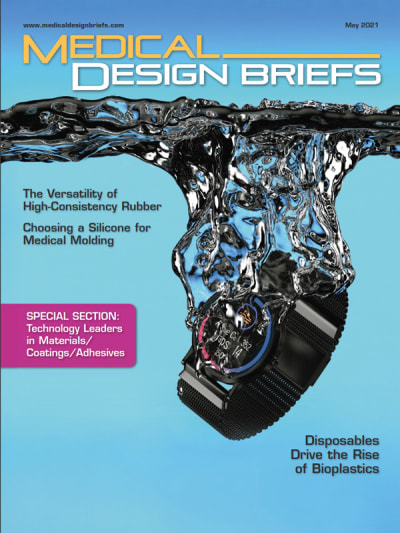
The May 2021 issue of Medical Design Briefs presents a comprehensive overview of the latest trends and innovations in the medical technology sector. This edition is particularly focused on advancements in materials, manufacturing processes, and the growing importance of sustainability in healthcare.
Key Features
-
Disposables Drive the Rise of Bioplastics in the Healthcare Industry: This feature discusses the increasing adoption of bioplastics in medical disposables. As healthcare providers seek sustainable alternatives to traditional plastics, bioplastics offer a promising solution due to their biodegradability and reduced environmental impact. The article highlights various bioplastic materials and their applications in medical devices, emphasizing the need for manufacturers to adapt to these eco-friendly options.
-
HCR Versatility Helps Manufacturers Shape Medical Devices: High-consistency rubber (HCR) is explored in this section, showcasing its versatility in the production of medical devices. The article outlines the benefits of HCR, including its durability, flexibility, and ability to withstand sterilization processes. Manufacturers are encouraged to leverage HCR in designing innovative medical solutions that meet stringent regulatory standards.
-
Molding: Comparing Liquid Silicone Rubber and High Consistency Rubber for Medical Applications: This technical brief compares liquid silicone rubber (LSR) and high-consistency rubber (HCR) in medical applications. It discusses the unique properties of each material, such as LSR's ability to be molded into complex shapes and HCR's strength and resilience. The article provides insights into selecting the appropriate material based on specific application requirements, production methods, and cost considerations.
-
Micromotor Winding Technology Uses AI to Improve Motor Performance: The integration of artificial intelligence (AI) in micromotor winding technology is examined, highlighting how AI can enhance motor performance in medical devices. The article discusses the potential for increased efficiency and precision in manufacturing, which can lead to improved functionality in devices such as surgical tools and diagnostic equipment.
-
Immersive Mixed Reality: Moving Automation Technologies to the Cloud: This feature explores the use of immersive mixed reality (MR) in automating medical device manufacturing. By moving automation technologies to the cloud, manufacturers can achieve greater flexibility and scalability. The article discusses the implications of MR for training, design, and production processes, emphasizing its potential to revolutionize the industry.
-
Affordable Smart Patches Capture Multiple Vital Functions: The development of affordable smart patches that can monitor multiple vital signs is highlighted. These patches represent a significant advancement in patient monitoring technology, allowing for continuous health tracking in a non-invasive manner. The article discusses the technology behind these patches and their potential applications in telemedicine and chronic disease management.
Study Proposes Low-Cost, High-Efficiency Mask Design: In light of the ongoing global health challenges, this study proposes a new design for masks that balances cost and efficiency. The article outlines the design principles and materials used, aiming to provide a solution that is both accessible and effective in protecting against airborne pathogens.
-
Conductive Cellulose Thread Shows Promise for Healthcare Applications: The potential of conductive cellulose thread in healthcare applications is explored. This innovative material could be used in wearable devices and smart textiles, enabling new functionalities such as health monitoring and data transmission. The article discusses the benefits of using biodegradable materials in medical technology.
-
Color Blindness-Correcting Contact Lenses: A groundbreaking development in vision correction is presented with the introduction of color blindness-correcting contact lenses. The article details how these lenses work to enhance color perception for individuals with color vision deficiencies, potentially improving their quality of life.
Special Section: Technology Leaders in Materials/Coatings/Adhesives
This special section focuses on the latest advancements in materials, coatings, and adhesives used in medical device manufacturing. Key topics include:
-
Using Dynamic Weld Mode Welder to Tackle Hard-to-Handle Plastic Part Applications: This article discusses the use of advanced welding technologies to improve the assembly of complex plastic components in medical devices.
-
Impact Modified Acrylic Copolymers: Understanding Chemical Resistance: The importance of selecting the right materials for chemical resistance in medical applications is emphasized, particularly for devices that come into contact with various substances.
-
Careful Selection of Seal Material Essential for Reliable Operations: This piece highlights the critical role of seal materials in ensuring the reliability and safety of medical devices, particularly in maintaining sterility.
Conclusion
The May 2021 issue of Medical Design Briefs serves as a valuable resource for professionals in the medical technology field, offering insights into the latest innovations, materials, and manufacturing techniques. As the industry continues to evolve, the emphasis on sustainability, efficiency, and advanced technology remains paramount. This edition encourages manufacturers to embrace new materials and methods to enhance the quality and effectiveness of medical devices, ultimately improving patient care and outcomes.
Features
-
Articles
6 Disposables Drive the Rise of Bioplastics in the Healthcare Industry
12 HCR Versatility Helps Manufacturers Shape Medical Devices
-
R & D
Artificial Pancreas System Upgraded with AI Algorithm
Wearable Sensor Measures Lactate Concentration in Real Time
AI System Enables Contactless Heart Monitoring
25 Biosensor Measures Extracellular Hydrogen Peroxide
-
Global Innovations
40 Biodegradable Nanoprobe Illuminates Tumors Brightly and Precisely
-
Technology Leaders
17 Using Dynamic Weld Mode Welder to Tackle Hard-to-Handle Plastic Part Applications
19 Impact Modified Acrylic Copolymers: Understanding Chemical Resistance
22 Careful Selection of Seal Material Essential to Ensure Reliable Operations
Tech Briefs
-
27 Molding: Comparing Liquid Silicone Rubber and High Consistency Rubber for Medical Applications
28 Micromotor Winding Technology Uses AI to Improve Motor Performance
30 Immersive Mixed Reality: Moving Automation Technologies to the Cloud
31 Affordable Smart Patches Capture Multiple Vital Functions
32 Study Proposes Low-Cost, High-Efficiency Mask Design
34 Conductive Cellulose Thread Shows Promise for Healthcare Applications