
Inside this issue
Overview
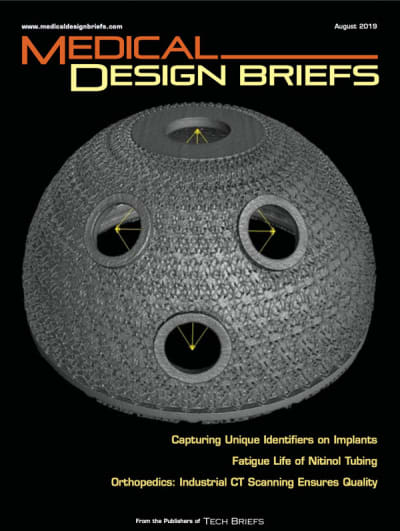
The August 2019 issue of Medical Design Briefs presents a comprehensive overview of advancements and insights in the medical device industry, focusing on innovative technologies and practices that enhance patient care and device performance. This edition features a variety of articles that cover topics ranging from orthopedic implants to the latest in additive manufacturing and rehabilitation technologies.
Key Highlights:
-
Capturing Unique Device Identifier Data on Non-Sterile Orthopedic Implants: This article discusses the importance of implementing Unique Device Identifiers (UDIs) for non-sterile orthopedic implants. UDIs are crucial for tracking devices throughout their lifecycle, improving patient safety, and facilitating recalls when necessary. The article outlines effective methods for capturing UDI data, emphasizing the need for standardized practices in the industry.
-
Effects of Tube Processing on the Fatigue Life of Nitinol: The first part of a two-part series, this article examines how different processing techniques affect the fatigue life of nitinol tubing, a material widely used in medical devices due to its unique properties. The findings highlight the significance of manufacturing processes in determining the durability and reliability of nitinol-based devices, which are critical for applications such as stents and guidewires.
-
Industrial CT is Hip: Quality of Life Enhanced with Additive Manufacturing: This feature explores the role of industrial computed tomography (CT) in the quality assurance of additively manufactured medical devices. The article discusses how CT scanning can detect internal defects and ensure the structural integrity of complex geometries produced through 3D printing. This technology is particularly beneficial in orthopedics, where precision is paramount for patient outcomes.
-
Advanced Design Tools for Additively Manufactured Medical Devices: As additive manufacturing continues to revolutionize the medical device landscape, this article highlights advanced design tools that facilitate the creation of customized implants and devices. These tools enable engineers to optimize designs for performance and manufacturability, ultimately leading to better patient-specific solutions.
Digitalizing Rehabilitation with Wearable Solutions: This article delves into the integration of wearable technology in rehabilitation processes. Wearable devices can monitor patient progress, provide real-time feedback, and enhance engagement in rehabilitation programs. The article discusses various applications of wearables in physical therapy and how they can lead to improved recovery outcomes.
-
Four Best Practices for Software Testing: Software is an integral part of modern medical devices, and this article outlines best practices for testing software to ensure reliability and compliance with regulatory standards. The practices discussed include thorough documentation, automated testing, and risk management strategies, all aimed at minimizing errors and enhancing device safety.
-
Wearable System to Sense and Stimulate the Brain: This innovative concept involves a wearable system designed to monitor brain activity and provide stimulation as needed. The article discusses the potential applications of such technology in treating neurological disorders and enhancing cognitive functions, showcasing the intersection of wearable tech and neuroscience.
-
Miniature Robot Could Check Colons for Early Signs of Disease: Highlighting advancements in robotic technology, this article presents a miniature robot designed for colon examinations. The robot aims to improve the accuracy and comfort of colonoscopies, potentially leading to earlier detection of colorectal diseases. This innovation represents a significant step forward in non-invasive diagnostic techniques.
-
Engineers 3D Print Flexible Mesh for Ankle and Knee Braces: This article discusses the development of flexible mesh structures through 3D printing for use in orthopedic braces. The ability to customize the fit and function of braces enhances patient comfort and support, demonstrating the benefits of additive manufacturing in creating tailored medical solutions.
Conclusion:
The August 2019 issue of Medical Design Briefs serves as a valuable resource for professionals in the medical device industry, offering insights into the latest technologies and practices that are shaping the future of healthcare. From the implementation of unique identifiers for implants to the advancements in additive manufacturing and wearable technologies, this edition highlights the ongoing innovation aimed at improving patient outcomes and enhancing the quality of life. As the industry continues to evolve, staying informed about these developments is crucial for engineers, designers, and healthcare providers alike.
Features
-
Articles
6 Capturing Unique Device Identifier Data on Non-Sterile Orthopedic Implants
12 Effects of Tube Processing on the Fatigue Life of Nitinol: Part 1
20 Industrial CT is Hip: Quality of Life Enhanced with Additive Manufacturing
-
R & D
24 Palm-Sized 3D Ultrasound for Scoliosis Mass Screening
24 Virtual Biopsy Device Detects Skin Tumors
24 Apple Watch Shows Promise in Detecting AFib
24 Graphene Monolayer Improves Implantable Neurostim Devices
-
Global Innovations
42 Flexible High-Energy Textile Lithium Battery Designed for Wearables
Tech Briefs
-
26 Advanced Design Tools for Additively Manufactured Medical Devices
28 Digitalizing Rehabilitation with Wearable Solutions
30 Four Best Practices for Software Testing
31 Wearable System to Sense and Stimulate the Brain
33 Miniature Robot Could Check Colons for Early Signs of Disease
34 Engineers 3D Print Flexible Mesh for Ankle and Knee Braces