
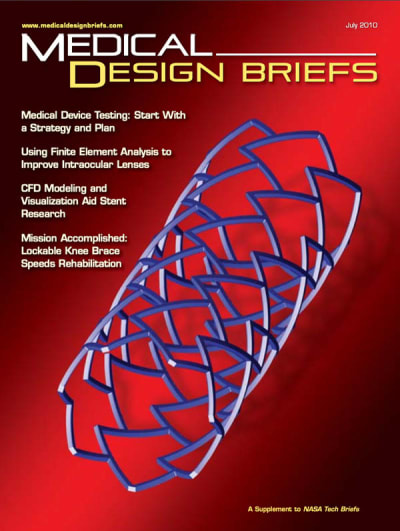
Inside this issue
Overview
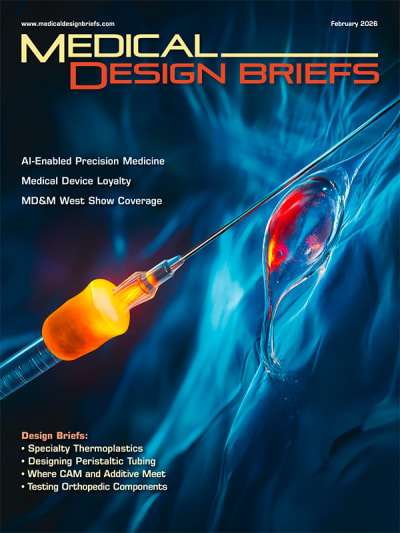
The July 2010 issue of Medical Design Briefs presents a comprehensive exploration of advancements and strategies in the medical device industry, focusing on innovative technologies and methodologies that enhance product development and patient care. This edition is particularly valuable for professionals involved in medical device design, testing, and implementation.
Key Highlights:
-
Medical Device Testing: Start With a Strategy and Plan
This article emphasizes the importance of a structured approach to medical device testing. It outlines the necessity of developing a comprehensive strategy that includes defining objectives, identifying regulatory requirements, and establishing testing protocols. The article advocates for early planning to streamline the testing process, reduce costs, and ensure compliance with industry standards. -
Using Finite Element Analysis to Improve Intraocular Lenses
The issue features a detailed discussion on the application of finite element analysis (FEA) in the design and optimization of intraocular lenses (IOLs). FEA allows engineers to simulate and analyze the mechanical behavior of lens materials under various conditions, leading to improved design choices that enhance patient outcomes. The article highlights case studies demonstrating how FEA has been instrumental in refining lens performance and safety. -
CFD Modeling and Visualization Aid Stent Research
Computational Fluid Dynamics (CFD) modeling is explored as a critical tool in stent research. The article discusses how CFD can simulate blood flow dynamics around stents, providing insights into their performance and potential complications. This technology aids in the design of stents that minimize thrombosis and improve hemodynamic performance, ultimately leading to better patient care. Mission Accomplished: Lockable Knee Brace Speeds Rehabilitation
A feature on a lockable knee brace showcases its innovative design aimed at enhancing rehabilitation for patients recovering from knee injuries. The brace allows for controlled movement, enabling patients to gradually regain strength and mobility. The article discusses the clinical benefits of this device, including improved patient compliance and faster recovery times.-
Technological Innovations in Medical Devices
The issue also highlights various technological advancements in medical devices, including miniaturized sensors and smart technologies that enhance monitoring and diagnostics. One notable innovation is a thin-film electrochemical sensor array capable of simultaneous detection of multiple analytes, which is particularly useful in bioprocess monitoring. This technology allows for real-time feedback in cell culture processes, optimizing growth conditions and production efficiency. -
Industry Insights and Expert Opinions
Throughout the magazine, industry experts share their insights on current trends and future directions in medical device design and manufacturing. Topics include the integration of user-centered design principles, the impact of regulatory changes, and the importance of collaboration between engineers, clinicians, and regulatory bodies to ensure successful product development. -
Sponsorship and Resources
The issue features a spotlight on Steute, a company dedicated to designing high-quality medical-grade foot controls. Their commitment to innovation and quality is highlighted, showcasing how their products contribute to improved functionality in medical devices. -
Navigational Features
The magazine includes user-friendly navigation tools, allowing readers to easily access articles, zoom in on content, and utilize a search function to find specific topics of interest. This enhances the reading experience and ensures that professionals can quickly locate relevant information.
Conclusion:
The July 2010 issue of Medical Design Briefs serves as a vital resource for professionals in the medical device field, offering a blend of practical strategies, technological advancements, and expert insights. By focusing on testing methodologies, innovative design practices, and the integration of advanced technologies, this edition equips readers with the knowledge needed to navigate the complexities of medical device development and improve patient outcomes. The articles encourage a proactive approach to design and testing, emphasizing the importance of collaboration and strategic planning in the ever-evolving landscape of medical technology.
Features
-
Mission Accomplished
Scheduling Accessory Assists Patients with Cognitive Disorders
Multispectral Imaging Broadens Cellular Analysis
Space Telescope Optics Aids Design of Eye-Saving Light Bulb
Tech Briefs
-
Orthotic Dynamically Adjusts to Changes in Foot Structure and Movement
Reusable Personal Radiation Dosimeter for Ultraviolet or Radioactive Radiation
High-Altitude Hydration System
Enhancing Tumor Drug Delivery by Laser-Activated Vascular Barrier Disruption
Fast, Quantitative Diagnostic Reader for Multiple Medical Tests
Miniature Bioreactor System for Long-Term Cell Culture
Fabrication and Modification of Nanoporous Silicon Particles