
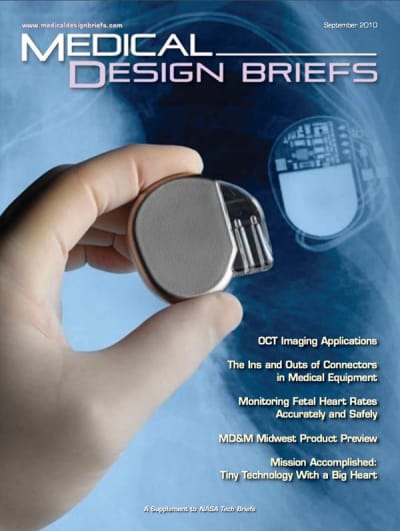
Inside this issue
Overview
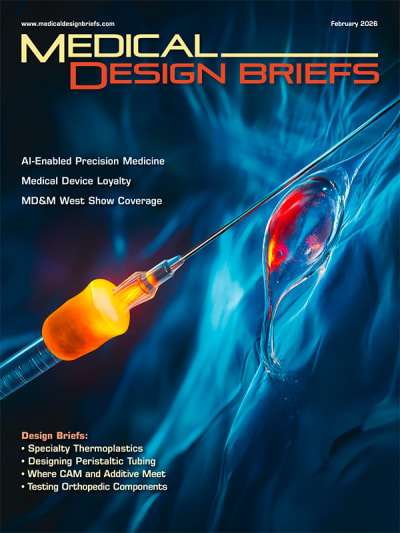
The September 2010 issue of Medical Design Briefs serves as a comprehensive resource for professionals in the medical design and technology fields. This edition is a supplement to NASA Tech Briefs, showcasing the intersection of advanced technology and medical applications. It features a variety of articles that highlight innovative solutions, emerging technologies, and practical insights relevant to medical device design and development.
One of the key themes of this issue is the application of NASA-developed technologies in the medical field. These technologies have been adapted for various medical-related applications, demonstrating the versatility and potential of aerospace innovations in improving healthcare outcomes. The magazine emphasizes how such advancements can lead to more effective medical devices and diagnostic tools.
Among the notable topics covered is Optical Coherence Tomography (OCT) imaging applications. OCT is a non-invasive imaging technique that provides high-resolution cross-sectional images of biological tissues. The article discusses the latest developments in OCT technology, its applications in medical diagnostics, and how it enhances the ability to monitor and diagnose conditions in real-time. This technology is particularly valuable in fields such as ophthalmology and cardiology, where precise imaging is crucial for effective treatment.
Another significant article focuses on the ins and outs of connectors in medical equipment. Connectors are critical components in medical devices, ensuring reliable and safe connections between various parts of the equipment. The article explores the different types of connectors used in medical applications, their design considerations, and the importance of selecting the right connectors to maintain device integrity and patient safety. It also addresses the challenges faced in connector design, such as miniaturization and the need for robust performance in demanding environments.
The issue also highlights advancements in monitoring fetal heart rates, emphasizing the importance of accurate and safe monitoring during pregnancy. The article discusses the latest technologies and methodologies used to track fetal heart rates, including non-invasive techniques that enhance patient comfort and safety. It underscores the significance of reliable fetal monitoring in prenatal care and the impact it has on maternal and fetal health outcomes.
In addition to these in-depth articles, the magazine features a preview of the MD&M Midwest event, which showcases the latest innovations and trends in medical device manufacturing. This event serves as a platform for industry professionals to network, share knowledge, and explore new technologies that can drive advancements in medical design. The preview highlights key exhibitors, sessions, and topics that will be covered at the event, providing readers with insights into what to expect and how to make the most of their attendance.
The issue also includes a section on liquid flow sensors designed for medical diagnostics and life science applications. Sensirion’s LGx16 series liquid flow sensors are highlighted for their ability to enable highly sensitive, non-invasive measurements of ultra-low flow rates, down to microliters per minute. This technology is particularly relevant for applications requiring precise fluid management, such as in drug delivery systems and laboratory diagnostics.
Throughout the magazine, readers will find a wealth of resources, including free catalogs and literature that can be ordered online. The publication encourages readers to explore these resources to stay informed about the latest products and technologies available in the medical design sector.
Overall, the September 2010 issue of Medical Design Briefs provides a rich tapestry of information that is both informative and practical for professionals in the medical design industry. It combines insights into cutting-edge technologies with practical applications, making it a valuable resource for anyone involved in the design, development, and manufacturing of medical devices. The issue not only highlights current trends and innovations but also emphasizes the importance of collaboration between different fields, such as aerospace and healthcare, to drive advancements that can ultimately improve patient care and outcomes.
Features
-
Applications
-
Mission Accomplished
Tiny Technology With a Big Heart
NASA's Image Enhancement Technology Brings Diagnostic Testing to New Level
Tech Briefs
-
Ultra-High-Molecular-Weight Polyethylene Technology for Minimally Invasive Devices
Circulatory Assist Pump for Implantable Artificial Heart Device
Ultrasonic Echo Probe With Measurement of Contact Pressure Distribution
Modifying Polyethylene Oxide for Melt-Processability
Topical Compositions and Glove for Protection and Shielding Against Radiation Exposure
Digital Microfluidics Sample Analyzer
Process to Selectively Distinguish Viable From Non-Viable Bacterial Cells