
Inside this issue
Overview
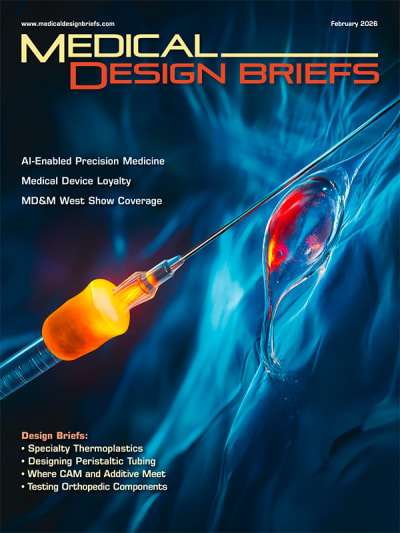
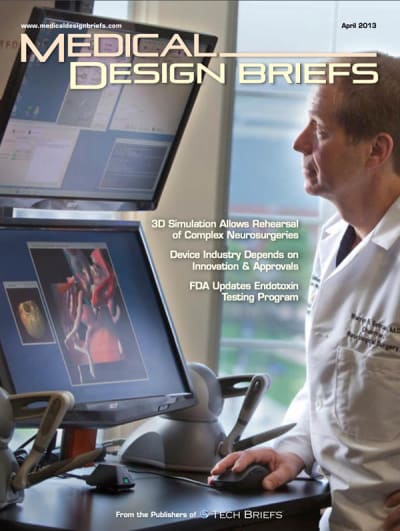
The April 2013 issue of Medical Design Briefs offers a comprehensive look at the latest advancements and trends in the medical device industry, focusing on innovation, regulatory updates, and technological advancements that are shaping the future of healthcare.
3D Simulation in Neurosurgery
One of the standout features of this issue is an article discussing the use of 3D simulation technology in rehearsing complex neurosurgeries. This innovative approach allows surgeons to visualize and practice procedures before performing them on patients, significantly enhancing surgical precision and outcomes. The article highlights how 3D models can be created from patient-specific imaging data, enabling tailored surgical planning and reducing the risk of complications.
Innovation and Approvals in the Device Industry
The magazine emphasizes the critical role of innovation in the medical device sector. It discusses how companies are increasingly relying on cutting-edge technologies to develop new products that meet the evolving needs of healthcare providers and patients. The article also addresses the challenges associated with regulatory approvals, particularly from the FDA, which can impact the speed at which new devices reach the market. The importance of navigating these regulatory pathways effectively is underscored, as it can determine the success of new medical technologies.
FDA Updates on Endotoxin Testing
Another significant topic covered in this issue is the FDA's updates to its endotoxin testing program. The article outlines the importance of endotoxin testing in ensuring the safety and efficacy of medical devices, particularly those that come into contact with the bloodstream. The FDA's revised guidelines aim to streamline the testing process while maintaining high safety standards, which is crucial for manufacturers looking to bring their products to market efficiently.
Customized Medical-Grade Foot Controls
The issue also features an insightful piece on the design and development of customized medical-grade foot controls. These controls are essential for various medical devices, allowing healthcare professionals to operate equipment hands-free. The article discusses how manufacturers can create these controls to meet specific user requirements without lengthy development times, thereby enhancing the functionality and usability of medical devices.
Industry Insights and Trends
Throughout the magazine, various companies and their innovations are highlighted, showcasing the diversity of solutions available in the medical device market. For instance, companies like TRUMPF Inc. and Phillips-Medisize Corporation are featured for their contributions to medical technology, emphasizing the importance of collaboration and innovation in driving the industry forward.
Advertising and Reader Services
The magazine also includes a section dedicated to reader services, providing information on how to access product literature from various advertisers. This feature is particularly useful for professionals seeking to stay informed about the latest products and technologies in the medical field.
Conclusion
Overall, the April 2013 issue of Medical Design Briefs serves as a valuable resource for professionals in the medical device industry. It not only highlights the latest technological advancements and regulatory updates but also emphasizes the importance of innovation in improving patient care. The articles provide insights into practical applications of new technologies, making it a must-read for anyone involved in the design, development, or regulation of medical devices.
This issue encapsulates the dynamic nature of the medical device industry, where continuous improvement and adaptation are essential for success. As healthcare evolves, so too must the devices and technologies that support it, and this magazine issue provides a glimpse into the future of medical innovation.
Features
-
Global Innovations
-
From the Editor
-
Applications
Eye on the Medical Device Industry: Technology Is Key to Compliance
-
Mission Accomplished
Tech Briefs
-
Functional Near-Infrared Spectroscopy Signals Measure Neuronal Activity in the Cortex
Using CT Scanning to Test/Inspect Medical Devices in the Design or Production Phase