
Inside this issue
Overview
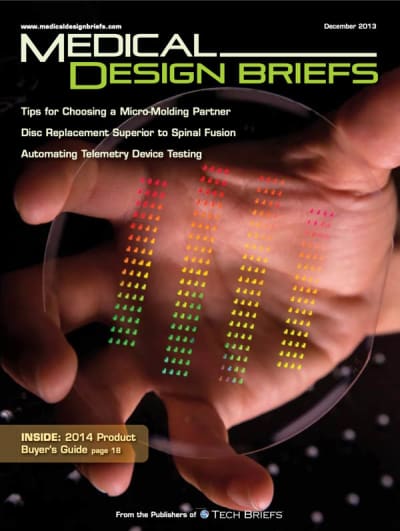
The December 2013 issue of Medical Design Briefs presents a comprehensive overview of current trends, innovations, and challenges in the medical device industry. This issue is particularly focused on enhancing the innovation ecosystem in the U.S., which is perceived to be under stress. It features insights from Douglas W. Elmendorf, director of the Congressional Budget Office, who discusses potential federal policy changes that could spur innovation in the sector.
Key Features and Articles
-
Disc Replacement vs. Spinal Fusion: One of the highlighted articles discusses the advantages of disc replacement as a superior alternative to traditional cervical spinal fusion. This piece explores the benefits of disc replacement, including reduced recovery time and improved patient outcomes, making it a compelling option for patients suffering from spinal issues.
-
Choosing a Micro-Molding Partner: The issue includes a feature on selecting the right vendor for micro-molding projects, which is crucial for the production of small, intricate medical devices. The article outlines key considerations such as vendor experience, technology capabilities, and quality assurance processes, providing valuable guidance for manufacturers looking to optimize their production processes.
-
Automating Telemetry Device Testing: Another significant article focuses on the automation of telemetry device testing. It discusses the importance of efficient testing methods in ensuring the reliability and safety of medical devices. The article highlights various technologies and methodologies that can streamline testing processes, ultimately leading to faster time-to-market for new devices.
FDA’s UDI Rule: The issue also addresses the finalization of the FDA’s Unique Device Identification (UDI) rule, which aims to improve the tracking and identification of medical devices. This regulation is expected to enhance patient safety and facilitate better post-market surveillance. The article discusses the implications of the UDI rule for manufacturers and the steps they need to take to comply.
-
Innovative Research: The magazine features cutting-edge research from the U.S. Department of Energy’s SLAC National Accelerator Laboratory and Stanford University, which could lead to significantly smaller particle accelerators for scientific and medical applications. This research represents a potential breakthrough in the field, promising to enhance capabilities in both research and clinical settings.
Editorial Insights
The editorial section emphasizes the need for collaboration within the medical device industry to foster innovation. It calls for stakeholders, including government, businesses, and researchers, to work together to address the challenges facing the innovation ecosystem. The editorial stresses that by leveraging collective expertise and resources, the industry can better meet emerging market needs and improve patient outcomes.
Special Supplement
The issue includes a special supplement, the 2014 Product Buyer’s Guide, which serves as a valuable resource for professionals seeking the latest products and services in the medical device sector. This guide is designed to help readers navigate the vast array of options available, making it easier to find solutions that meet their specific needs.
Conclusion
Overall, the December 2013 issue of Medical Design Briefs provides a rich tapestry of information that reflects the current state of the medical device industry. It addresses critical topics such as innovation, regulatory changes, and technological advancements, all of which are essential for professionals in the field. The articles are not only informative but also actionable, offering insights that can help manufacturers and stakeholders make informed decisions in a rapidly evolving landscape.
This issue serves as a reminder of the importance of innovation and collaboration in the medical device industry, encouraging readers to stay informed and engaged with the latest developments. Whether through adopting new technologies, complying with regulations, or exploring alternative treatment options, the insights provided in this issue are invaluable for anyone involved in the design and manufacturing of medical devices.
Features
-
Articles
Thermally Optimized Medical Devices Improve Patient Outcomes
Disc Replacement Can Be a Superior Alternative to Cervical Spinal Fusion
-
R & D
Accelerator on a Chip Could Lead to Improved Lasers, X-Rays
-
From the Editor
-
Applications
-
Mission Accomplished
Tech Briefs
-
On-Command Force and Torque Impeding Devices (OC-FTID) Using ERF
Aluminum Anodizing Technology for Reusable Medical Equipment