
Inside this issue
Overview
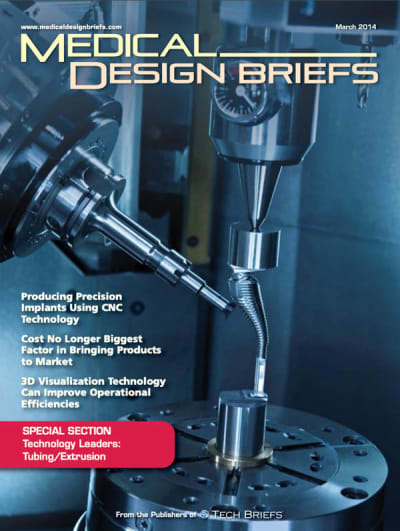
The March 2014 issue of Medical Design Briefs offers a comprehensive look at the latest advancements and trends in the medical device industry. This edition is designed to inform and inspire professionals involved in the design, development, and manufacturing of medical technologies. Below is a summary of the key topics and features covered in this issue.
Precision Implants and CNC Technology
One of the standout articles discusses the production of precision implants using Computer Numerical Control (CNC) technology. This technology allows for the creation of highly accurate and complex geometries that are essential for modern medical implants. The article highlights the benefits of CNC machining, including improved consistency, reduced waste, and the ability to produce custom implants tailored to individual patient needs. The integration of CNC technology in the manufacturing process is transforming how implants are designed and produced, leading to better patient outcomes.
3D Visualization in Medical Operations
Another significant feature focuses on the impact of 3D visualization technologies on operational efficiencies within healthcare settings. The article explores how 3D imaging and modeling can enhance surgical planning, improve training for medical professionals, and facilitate better communication among healthcare teams. By providing a more detailed view of anatomical structures, 3D visualization tools help surgeons prepare for complex procedures, ultimately leading to reduced surgery times and improved patient safety.
Tubing and Extrusion Innovations
The issue also includes a special section dedicated to tubing and extrusion technologies, which are critical components in many medical devices. This section covers the latest innovations in materials and manufacturing processes that enhance the performance and reliability of medical tubing. Topics include advancements in biocompatible materials, the importance of regulatory compliance, and the role of extrusion in producing high-quality medical devices. The articles emphasize the need for manufacturers to stay updated on industry standards and best practices to ensure the safety and efficacy of their products.
Designing Medical-Grade Foot Controls
In addition to the technical articles, the magazine features insights into the design of medical-grade foot controls. These controls are essential for various medical devices, including surgical equipment and diagnostic tools. The article discusses the unique challenges faced by OEMs (Original Equipment Manufacturers) in creating foot controls that are not only functional but also ergonomic and safe for use in clinical environments. Key considerations include user interface design, durability, and compliance with medical device regulations.
Industry Trends and Future Directions
The issue also provides an overview of current industry trends and future directions in medical device design and manufacturing. Topics such as the increasing use of automation in production, the rise of personalized medicine, and the growing importance of cybersecurity in medical devices are explored. The articles encourage professionals to think critically about how these trends will shape the future of healthcare and the medical device industry.
Expert Insights and Case Studies
Throughout the issue, readers will find expert insights and case studies that illustrate real-world applications of the technologies and concepts discussed. These contributions from industry leaders provide valuable perspectives on the challenges and opportunities facing the medical device sector. By sharing success stories and lessons learned, the magazine aims to foster a collaborative environment where professionals can learn from one another and drive innovation forward.
Conclusion
The March 2014 issue of Medical Design Briefs serves as a vital resource for anyone involved in the medical device industry. With its focus on cutting-edge technologies, regulatory considerations, and practical design strategies, this edition equips readers with the knowledge they need to navigate the complexities of medical device development. Whether you are a designer, engineer, or manufacturer, the insights provided in this issue will help you stay informed and competitive in a rapidly evolving field.
In summary, this issue not only highlights the latest advancements in medical technology but also emphasizes the importance of collaboration, innovation, and adherence to industry standards. As the medical device landscape continues to evolve, staying abreast of these developments will be crucial for success in delivering safe and effective healthcare solutions.
Features
-
Articles
Long Live Quality! Why Cost Is no Longer the Most Important Factor in Bringing Products to Market
-
Global Innovations
-
From the Editor
-
Applications
Material Property Simulation Offers Longer-Lasting Spinal Disc Implants
3D Visualization Technology Can Improve Operational Efficiencies
-
Technology Leaders
Tips for Medical Device Tubing Selection
Minimally Invasive, Maximally Innovative: Polymer Science and Extrusion Plays Vital Role
Tech Briefs
Products
-
CNC Swiss Turning Capabilities Added
Extreme Resolution Micro Flex Circuits
Configurable DC Motors and Gearheads
Spectrum II Precision Dispensing System
Carbon Fiber Reinforced Thermoplastic Compounds
Medical Internal Open Frame Power Supply
Product of the Month: High Sensitivity Latching Digital Hall-Effect Sensor Integrated Circuits
Ultra-Soft Liquid Silicone Rubber
TLI Series of Rechargeable Li-Ion Cells
Retractable Medical Cord Reels
Three New High-Performance Polymer Lines
Enhanced Parametric Test System Capabilities
COMSOL Multiphysics, Version 4.4
World’s Smallest CAPTO Interface