
Inside this issue
Overview
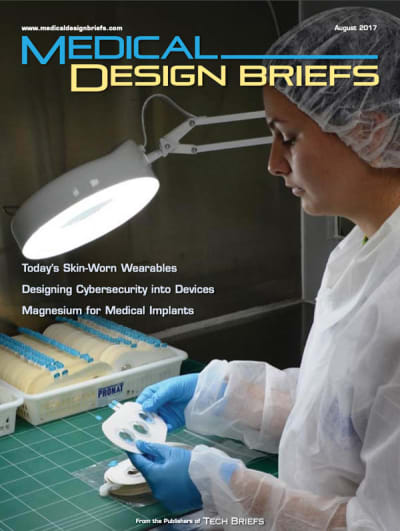
The August 2017 issue of Medical Design Briefs presents a comprehensive exploration of current trends and innovations in the medical device industry. This edition features a variety of articles that delve into the latest advancements in technology, materials, and design considerations for medical devices.
Key Features:
-
Skin-Worn Wearable Devices: Tomorrow’s Vision, Today’s Realities - This article discusses the evolution and current state of wearable technology in healthcare. It highlights how skin-worn devices are becoming integral to patient monitoring and health management, providing real-time data that can enhance patient outcomes. The article also addresses challenges such as user acceptance, data privacy, and the need for robust design to ensure comfort and functionality.
-
The Benefits of Magnesium Alloy for Medical Implants - This feature examines the advantages of using magnesium alloys in medical implants. Magnesium is noted for its biocompatibility, biodegradability, and mechanical properties that closely resemble those of human bone. The article discusses how magnesium implants can reduce the need for secondary surgeries and improve patient recovery times, making them a promising option in orthopedic and cardiovascular applications.
-
Designing Cybersecurity into Connected Medical Devices - As medical devices become increasingly connected, cybersecurity has emerged as a critical concern. This article outlines strategies for integrating cybersecurity measures into the design process of connected devices. It emphasizes the importance of proactive security measures to protect patient data and ensure device integrity, highlighting the need for collaboration between manufacturers, healthcare providers, and regulatory bodies.
-
Ensuring a Safe Medical Design - This piece focuses on the importance of safety in medical device design. It discusses regulatory requirements and best practices for ensuring that devices are safe for patient use. The article covers risk assessment, user-centered design principles, and the role of testing and validation in the development process.
-
New HAI-Prevention Cleaning Protocols Reinforce Need for Material Consideration for Medical Device Housings - This article addresses the growing concern of healthcare-associated infections (HAIs) and the role of device materials in infection prevention. It discusses new cleaning protocols and the importance of selecting materials that can withstand rigorous cleaning without degrading, thus ensuring the longevity and safety of medical devices.
-
Understanding Proper Cleaning Procedures for Medical Device PCBs - This feature provides insights into the cleaning of printed circuit boards (PCBs) used in medical devices. It emphasizes the need for proper cleaning techniques to prevent contamination and ensure device reliability. The article outlines various cleaning methods and the importance of adhering to industry standards.
-
Embedded System Design and Development for ARM-Based Laboratory Analyzers - This article explores the design and development of embedded systems for laboratory analyzers using ARM architecture. It discusses the benefits of ARM-based systems, including power efficiency and processing capabilities, which are crucial for modern laboratory applications.
Tech Briefs:
The issue also includes several tech briefs that highlight innovative research and developments in the field:
-
New Technique Makes Brain Scans Better - This brief discusses advancements in imaging techniques that enhance the quality and accuracy of brain scans, potentially leading to better diagnosis and treatment of neurological conditions.
-
Sugar-Coated Nanomaterial Excels at Promoting Bone Growth - This brief presents research on a novel nanomaterial that promotes bone growth, which could have significant implications for orthopedic surgery and regenerative medicine.
-
Drug-Loaded Collagen Scaffolds Prevent Implant Infection - This brief highlights the development of collagen scaffolds that can deliver drugs to prevent infections in implants, addressing a major concern in surgical procedures.
-
Active Implants: How Gold Binds to Silicone Rubber - This article discusses the use of gold in active implants and its binding properties with silicone rubber, which can enhance the performance and longevity of medical devices.
-
Intelligent Materials Enable In-Situ Heart Valve Tissue Engineering - This brief explores the use of intelligent materials in tissue engineering for heart valves, offering potential solutions for heart valve replacement therapies.
-
Hydrogel Material Improves Success of Transplanting Islet Cells - This article discusses the use of hydrogel materials to improve the success rates of islet cell transplants, which are critical for diabetes treatment.
Conclusion:
The August 2017 issue of Medical Design Briefs provides a rich resource for professionals in the medical device industry, offering insights into the latest technologies, materials, and design practices. With a focus on safety, innovation, and the integration of new materials and technologies, this issue serves as a valuable guide for navigating the evolving landscape of medical device design and development. The articles and tech briefs collectively underscore the importance of collaboration, research, and adherence to best practices in ensuring the safety and efficacy of medical devices in improving patient care.
Features
-
Articles
Designing Cybersecurity into Connected Medical Devices
Understanding Proper Cleaning Procedures for Medical Device PCBs
Skin-Worn Wearable Devices: Tomorrow’s Vision, Today’s Realities
-
R & D
New System Eliminates Need for Pacemaker Batteries
Smart Materials Used in Ultrasound Behave Like Water
Microhole Chip Allows Analysis of Single Cells
Ultrasound ‘Drill’ Targets Deep Vein Blood Clots
-
Global Innovations
Metamaterial-Enhanced MRI Technology Provides Higher-Quality, More Detailed Images
-
From the Editor
Tech Briefs
-
Hydrogel Material Improves Success of Transplanting Islet Cells
Sugar-Coated Nanomaterial Excels at Promoting Bone Growth
New Technique Makes Brain Scans Better
Intelligent Materials Enable In-Situ Heart Valve Tissue Engineering